Best Outdoor Security Cameras for Homes: Top Picks for 2026
Protecting your home outdoors requires reliable cameras with long battery life, weather resistance, and smart motion features. The following selections emphasize wireless setups, solar options, and clear video with color night vision. Each product is chosen for American homes seeking easy installation, dependable alerts, and flexible storage. Read on for concise profiles, a buying guide, and a quick comparison to help you decide which system fits your needs.
| Product | Brand | Key Benefit |
|---|---|---|
| Blink Outdoor 4 (2-Camera System) | Blink | Long battery life, easy setup |
| Blink Outdoor 4 (3-Camera System) | Blink | Expanded coverage, simple integration |
| LITYMOL 2K Solar Security Camera | LITYMOL | 360° view, color night vision |
| aosu Security Cameras Outdoor (4-Cam Kit) | aosu | 360° pan/tilt, AI detection |
| INFIYA Wireless Outdoor Security (2K, Solar/Battery) | INFIYA | Solar plus AI detection, color night vision |
Blink Outdoor 4: 2-Camera Wireless System

Blink Outdoor 4 represents an affordable wireless security option with notable battery life. With up to two years of power from included AA Energizer lithium batteries and the Blink Sync Module Core, it delivers around-the-clock monitoring without frequent recharging. It offers 1080p HD live view, infrared night vision, and two-way audio, enabling real-time communication with visitors or intruders via the Blink app. Local storage is not included with the Sync Module Core, which influences how you manage recorded clips and backups.
Blink Outdoor 4: 3-Camera System

This expanded Blink setup maintains the same core benefits—long battery life, 1080p HD live view, infrared night vision, and two-way audio—while increasing coverage with three cameras. It’s suitable for larger yards, multi-entryways, or homes with multiple vantage points. As with the two-camera version, the Sync Module Core is included, but note that local storage isn’t included and requires pairing with the module for recording management. Quick setup makes it a practical choice for renters or homeowners seeking simple, scalable security.
LITYMOL 2K Solar Security Camera

LITYMOL offers a 2K 360° viewing experience with 355° pan and 120° tilt, delivering broad coverage and crisp color night vision up to 33 feet with a built-in spotlight. The solar-powered design reduces ongoing charging needs, supported by a 5200mAh battery and an IP65 weather rating to withstand harsh conditions. It features smart PIR detection and optional AI recognition for people, vehicles, pets, and packages, helping reduce false alarms. Two-way audio supports real-time communication, making it a strong all-around outdoor option.
aosu 4-Camera Outdoor Kit

aosu’s 4-camera kit provides a robust multi-view setup with 360° pan and smart tracking. It’s solar-powered for ongoing operation with minimal wiring, and does not require a monthly subscription for basic storage via Homebase. The system supports 4-area live viewing on one screen, making it suitable for larger properties or configurations that require synchronized monitoring. AI-assisted features help fine-tune alert accuracy and reduce unnecessary notifications, which is beneficial for busy households and multi-entrance properties.
INFIYA Wireless Outdoor Solar & Battery Cameras (2K)
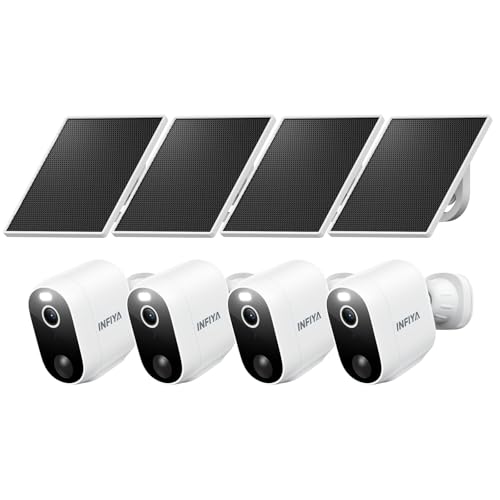
INFIYA’s 2K wireless outdoor cameras combine solar and battery power to reduce wiring while delivering color night vision and a 2-way talk feature. The system emphasizes longer standby times through a substantial battery and solar charging, with AI-enhanced PIR detection to minimize false alerts. The color night vision helps identify details at night, and the setup supports SD storage for local backups along with potential cloud options. This blend of power efficiency and AI capabilities makes it a versatile choice for homes seeking uninterrupted outdoor surveillance.
Buying Guide: Key Purchase Considerations
Choosing the right outdoor camera system involves weighing power options, storage, AI features, and environmental durability. Here are the main considerations from multiple perspectives:
- Power and installation: Battery-powered, solar-powered, or hybrid options impact maintenance and placement. Solar can reduce ongoing battery replacements but requires adequate sun exposure and weatherproof mounting.
- Video quality and night vision: Look for 1080p or higher, color night vision, and infrared modes. A wider field of view and 2K/3K options improve detail recognition for faces and license plates.
- Motion detection and AI: PIR sensors, object recognition (people, vehicles, pets), and customizable activity zones improve alert relevance and reduce false alarms. Consider whether a subscription is required for advanced AI features.
- Storage and accessibility: Local storage via Homebase or SD cards reduces recurring costs, while cloud storage offers remote access and long-term retention. Ensure privacy terms and data encryption meet your standards.
- Weather resistance and durability: An IP65 or higher rating is important for cameras exposed to rain, dust, or snow. Temperature tolerance matters for regional climates.
- System scalability: If you plan to expand, choose a system that supports adding cameras without reconfiguring the entire setup. Check compatibility with existing hubs or ecosystems.
- Commercial vs. residential use: Some systems are optimized for home use with simple mobile apps, while others offer enterprise-like features that may exceed typical home security needs.
- Usability and support: App quality, ease of installation, motion sensitivity settings, and customer support responsiveness influence long-term satisfaction.
In summary, the best choice depends on your property size, desired coverage, and tolerance for wires or solar options. If you value minimal maintenance and simple expansion, a battery- or solar-powered multi-camera kit with color night vision and AI alerts is ideal. For larger properties with multiple entry points, a 3- or 4-camera system with wide coverage and synchronized viewing can deliver comprehensive protection. Always confirm that the chosen model supports your preferred storage solution and network compatibility (2.4 GHz versus 5 GHz).