Best Camera Monopods for Hiking Sticks: Lightweight, Portable Options
When hiking or traveling, a stable, lightweight monopod can expand your photography and videography options without the bulk of a full tripod. This guide highlights practical, travel-ready monopods designed to help you capture sharp images on the trail. Each option balances height, weight, and load capacity, so you can choose the right fit for your kit and shooting style. Below you’ll find a quick product summary, followed by detailed sections for five top picks and a buying guide to compare features side by side.
| Product | Max Height | Weight | Load Capacity |
|---|---|---|---|
| Amazon Basics 67-Inch Monopod | 67 in | — | Up to 6.6 lbs |
| ULANZI TB12 61-Inch Monopod | 61 in | 0.83 lb | Up to 11.02 lbs |
| Cascade Mountain Tech Trekking Pole (Carbon Fiber) Monopod |
28.5 – 60 in | 8.6 oz | — |
| Altura Photo 62-Inch Monopod | 62 in | 0.59 lb | Up to 5 lbs |
| Manbily E-222 65-Inch Monopod | 65 in | 0.93 lb | Up to 15.4 lbs |
Note: Specifications vary by model and may include additional features such as quick-lock mechanisms, universal mounting threads, and carrying pouches. Always verify compatibility with your camera gear before purchasing.
Amazon Basics 67-Inch Monopod
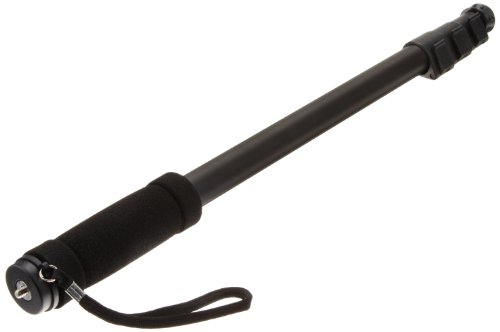
The Amazon Basics 67-Inch Monopod offers a straightforward, budget-friendly option for photographers who need extra reach in outdoor settings. It supports video cameras, still cameras, and scopes up to 6.6 lbs, making it suitable for mid-weight mirrorless or DSLR setups. The 1/4-inch universal thread mount ensures broad compatibility with many cameras and accessories. Four leg sections extend to reach maximum height while remaining compact for travel. A simple, reliable option for hikers who want an unobtrusive monopod without extra bulk.
ULANZI TB12 61-Inch Monopod

The ULANZI TB12 is a compact aluminum monopod designed for on-the-go shooting. It extends to a maximum height of 61 inches and weighs only about 0.83 pounds, offering a balance of reach and portability. It supports up to 11.02 pounds, making it capable of handling many mirrorless and small DSLR configurations. Its five-section design provides multiple height options, including short stowed lengths ideal for backpacking. The TB12 folds down to a compact size, fitting easily into carry-on luggage or a hiking pack, and is optimized for travelers who want quick setup and reliable stability.
Cascade Mountain Tech Trekking Pole (Carbon Fiber) Monopod
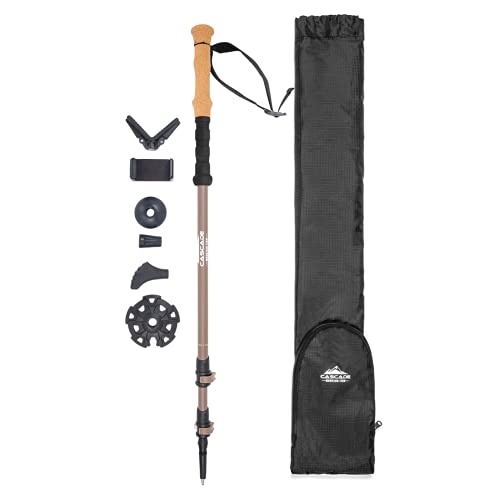
This carbon fiber monopod from Cascade Mountain Tech emphasizes ultralight design for hikers who prioritize speed and mobility. At 8.6 oz for a single pole, it remains remarkably light while offering solid stiffness typical of carbon fiber. The Quick Lock and extendable mechanism allows height adjustments from roughly 28.5 inches to 60 inches, providing flexibility for low or high shooting angles on the trail. While the product page highlights lightweight performance, it also serves as a rugged support option for cameras and small scopes, ideal for ultralight hikers seeking steady handheld shots without carrying a full tripod.
Cascade Mountain Tech Trekking Pole (Carbon Fiber) Mossy Oak
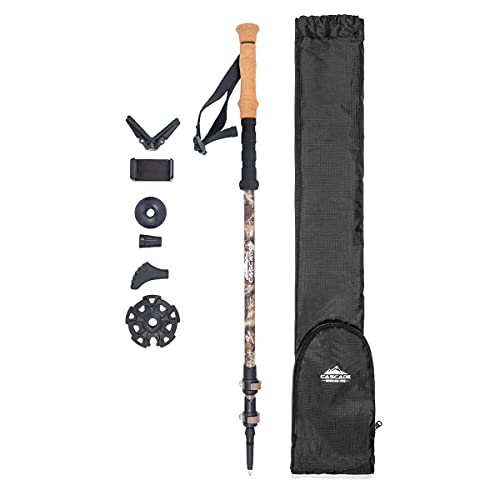
Another carbon fiber option from Cascade Mountain Tech, this monopod mirrors the brand’s lightweight approach with a compact build and reliable Quick Lock system. The combination of carbon fiber’s strength-to-weight ratio and a simple height range makes it suitable for hikers who need a sturdy monopod that won’t weigh down their pack. The Mossy Oak finish adds a rugged outdoor aesthetic that blends well with natural surroundings while maintaining practical performance for cameras and small video gear on the move.
Altura Photo 62-Inch Monopod

Altura Photo’s 62-Inch Monopod emphasizes a lightweight aluminum design with a retractable build that collapses to a compact size for travel. It features a 1/4 inch universal thread mount compatible with DSLR or mirrorless cameras, video cameras, and ball heads. The included 3/8 inch screw adapter expands compatibility with larger rigs. A soft foam grip and safety wrist strap contribute to stable handling on uneven terrain, while the lightweight construction supports extended shooting sessions without excessive fatigue.
Manbily A-555L Monopod

The Manbily A-555L is a six-section aluminum monopod designed for portability and stability. With a maximum height of 61 inches and a fold-down length of 15.7 inches, the monopod is well-suited for travel and wildlife photography. The 28mm maximum leg provides good stiffness, supporting up to 15.4 pounds. A reinforced mounting platform with riveted screws ensures a secure mounting surface, and the reversible 1/4″ and 3/8″ screw compatibility covers a wide range of cameras and camcorders. This model balances durability with a lightweight form factor for hikers and outdoor shooters.
Manbily 65-Inch Monopod (E-222)

The Manbily E-222 65-Inch Monopod combines travel-friendly dimensions with robust load capacity. This five-section aluminum monopod collapses to 19.7 inches and weighs about 0.93 pounds, ideal for backpacking and on-the-go photography. A CNC aluminum construction with a 25mm leg diameter provides added strength and stability, while a reinforced mounting platform and reversible screws (1/4″ and 3/8″) enable mounting a wide range of cameras, camcorders, or ball heads. The E-222 is designed for photographers who need a compact solution that doesn’t compromise on support when shooting in rugged environments.
Buying Guide: Key Purchase Considerations
- Height versus packability: Higher monopods extend reach for low-angle landscapes or tall subjects, but may be heavier. Look for models that collapse to a compact length for easy packing.
- Weight and balance: Lighter options are easier to carry on long hikes but may feel less stable for heavier cameras. Carbon fiber generally offers a favorable strength-to-weight ratio.
- Load capacity: Compare the camera and lens weight you typically use. Choose a monopod with a load rating comfortably above your gear’s combined weight.
- Material and construction: Aluminum is affordable and strong; carbon fiber is lighter but often pricier. Quick-lock mechanisms save setup time in the field.
- Mounting compatibility: Ensure a standard 1/4-inch or 3/8-inch screw thread (and adapters if needed) for your camera or ball head.
- Stability accessories: Look for non-slip feet, wrist straps, and carrying pouches that prevent loss during movement on uneven terrain.
- Portability vs. durability: For rugged hikes, prioritize robust build quality and weather-resistant features over the lightest option.
- Price and warranty: Budget-friendly models may suffice for casual use, but consider warranty and replacement parts for durability on remote trips.
- Accessories compatibility: If you plan to use accessories like a ball head or scope, verify mounting compatibility and weight support.
These considerations help compare options across the provided choices. By balancing height, weight, and load capacity, hikers can select a monopod that enhances stability without compromising mobility on trails and in unpredictable outdoor conditions.