Best USB Conference Room Cameras for Clear Meetings
Choosing the right USB camera for conference rooms involves balancing video quality, audio integration, field of view, and ease of use. This guide highlights five top options that fit typical small to medium meeting spaces, offering reliable USB or USB3.0 connectivity, robust replication across platforms, and strong audio features. Each product section below covers key specs and how it serves professional meetings, hybrid work, and live streaming needs.
| Product | Brand | Key Benefit |
|---|---|---|
| TONGVEO All-in-One Conference Room Video Camera System Bundle | TONGVEO | |
| TONGVEO 4K Conference Room Camera System with AI Auto-Tracking | TONGVEO | |
| j5create 360 Degree All Around Meeting Webcam | j5create | |
| Pyle 4K USB Video Conference Room Camera System | Pyle | |
| Logitech MeetUp Video Conferencing System | Logitech |
TONGVEO All-in-One Conference Room System

The TONGVEO All-in-One Conference Room Video Camera System bundles an HD 1080p PTZ camera with a Bluetooth conference speakerphone in a single design. It outputs via HDMI or USB 3.0 and is optimized for small-to-medium spaces. The full-duplex microphone array supports echo cancellation and covers up to 16.4 feet, while the camera rotates 350° horizontally and 180° vertically with a 114° field of view, delivering clear video of meeting participants. This combination minimizes the need for separate devices and cables, streamlining setup for hybrid meetings.
Key features include: a 1080p HDMI/PTZ camera, USB 3.0 output, and Bluetooth speakerphone with a 2400mAh battery for wireless operation. The system supports simultaneous video and audio, enabling participants to see and hear clearly. It is ideal for small-to-medium conference rooms and live meetings with 8–12 attendees. The built-in microphone array helps reduce ambient noise, and the 3X optical zoom preserves image sharpness during speaker movement.
Considerations: While offering solid performance, users should verify compatibility with their preferred conferencing platform and ensure the room’s acoustics are suitable for the Bluetooth speaker and microphone pickup. The system’s all-in-one design reduces clutter but may limit expansion if you need more microphones or conference room peripherals.
TONGVEO 4K Conference Room Camera System
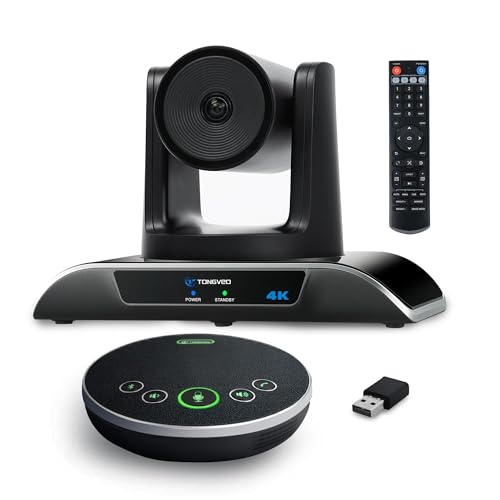
This package centers on 4K quality with AI auto-tracking and a 120° wide-angle lens. The camera supports 350° horizontal and 180° vertical movement with gesture and remote control options, making it easy to keep speakers in frame as they move. It outputs via USB 3.0, HDMI, and LAN, enabling versatile live streaming and integration with platforms like Zoom, YouTube, Teams, and OBS. The 5X digital zoom with 20x optical zoom possibilities provides flexibility for larger rooms while maintaining image fidelity.
Features include AI auto-tracking for multi-person environments, gesture controls for simple tracking without a separate control device, and a built-in professional speakerphone with a 5m audio pickup range. The unit supports power options through USB-C, dongle, and direct power, with compatibility across many conference room setups. It is well-suited for mid-to-large rooms that demand precise subject tracking and high-resolution output.
Pros and limits: The 4K output is ideal for high-quality video presentations and streaming, but setup can be more involved than entry-level kits. The AI features improve engagement in meetings, yet require some initial configuration for optimal performance across room layouts.
j5create 360 Degree Meeting Webcam
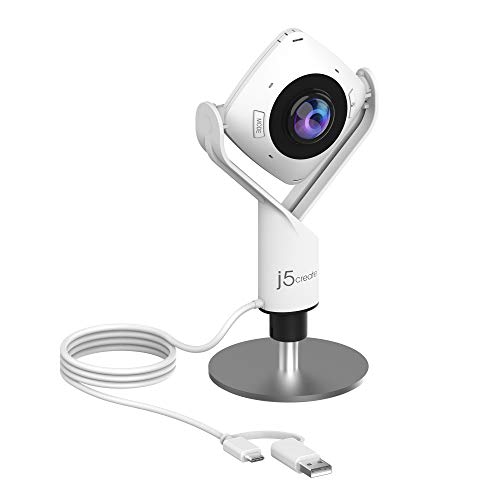
The j5create 360 Degree All Around Meeting Webcam offers full 360° coverage with a built-in omnidirectional microphone, making it a strong option for small offices or home offices that require flexible placement and complete room capture. The camera delivers Full HD 1080p video at 30 Hz, ensuring smooth playback for video calls and live streaming. USB-C connectivity provides straightforward plug-and-play compatibility with many devices and platforms, reducing setup time for quick meetings.
Highlights include the all-around field of view, which minimizes the need for manual camera adjustments during discussions, and the single-cable USB-C interface for easy integration with laptops, desktops, and meeting rooms. While its 1080p resolution is strong for many scenarios, it may not meet the needs of users requiring native 4K output for large displays or detailed presentations.
Operational considerations: The device relies on software-driven audio pickup, so environments with significant ambient noise or poor room acoustics may benefit from additional sound treatment or a separate microphone system. It’s best suited for informal meetings, remote classes, and collaborative sessions where broad room visibility is the priority.
Pyle 4K USB Conference Room Camera System

The Pyle 4K USB Conference Room Camera System emphasizes 4K video quality with AI-based framing and a 120° field of view. It supports 5X digital zoom and a MEMS microphone array for clear voice pickup. The system is designed for quick plug-and-play setup and broad platform compatibility, including Zoom and Microsoft Teams, making it suitable for various business environments. The USB3.0 interface delivers high bandwidth for reliable video and audio transmission.
Strengths include crisp 4K output and AI auto-framing to keep participants centered in the frame. This model aims to deliver a balance of video fidelity and ease of use, which is beneficial for hybrid meetings that require professional presentation without complex configuration. Room acoustics and proper mic placement will further enhance audio performance.
Trade-offs: 4K video requires more bandwidth and may necessitate higher processing power on client devices. Users should confirm that their network handles 4K streaming and consider using a dedicated display or capture card if needed.
Logitech MeetUp Video Conferencing System
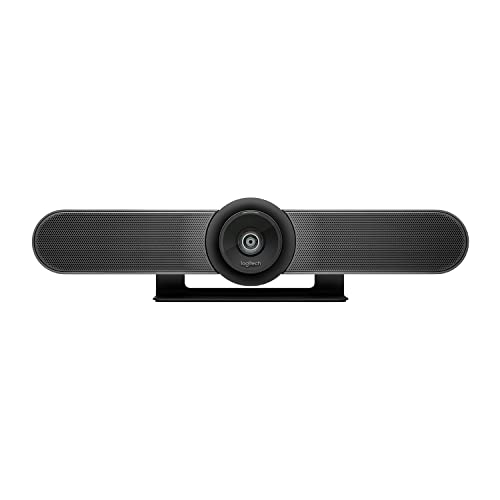
Logitech MeetUp is designed for huddle and small rooms, delivering an all-in-one solution with a wide 120° field of view, three microphones, and adjustable speakers. The Ultra HD 4K sensor supports sharp video with room-wide coverage, while the integrated mics are designed to pick up voices from across a small space. It emphasizes straightforward setup with compatibility across major platforms and devices, making it a reliable choice for teams that prioritize simplicity and solid audio-visual performance in compact spaces.
Strengths include a compact, integrated design and strong audio pickup for small rooms. The 4K/1080p options and ease of use are appealing for teams seeking reliable performance without extensive customization. The main limitation is that larger meeting rooms may require additional cameras or mics to maintain coverage.
Buying Guide: Key Purchase Considerations
When selecting a USB camera system for a conference room, consider the following factors:
- Room size and layout: Choose cameras with appropriate field of view (FOV) and zoom options. Small rooms benefit from wide-angle lenses, while larger rooms may need PTZ cameras with tracking capabilities.
- Video quality: 1080p is common and adequate for many setups; 4K offers sharper detail but requires more bandwidth and processing power. For live streaming, ensure your network can handle higher resolutions.
- Audio integration: Built-in microphones and speakers improve ease of use, but echo cancellation, noise suppression, and voice pickup range matter for clarity in meetings. Consider external mics for noisy environments.
- Connectivity and compatibility: USB 3.0/USB-C devices offer reliable plug-and-play performance with most platforms (Zoom, Teams, Meet, etc.). HDMI outputs help with displays and capture workflows.
- AI and tracking features: Auto-tracking, gesture control, and AI framing can improve engagement in larger rooms or when presenters roam. These features require some setup and room calibration.
- Power and installation: Battery-powered speakerphones offer flexibility but may require charging; wired setups reduce maintenance. Ensure cable management fits your space.
- Future-proofing: Consider cameras that support multiple outputs (USB, HDMI, LAN) and firmware updates to extend compatibility with new collaboration tools.
- Budget and scalability: Start with a core system for the room size and add microphones or speakers if needed as space or team size grows.
The options highlighted balance ease of use, video and audio quality, and room versatility. For hybrid environments, prioritize models with reliable USB connectivity, robust mic arrays, and clear speaker performance. For larger meeting rooms or streaming needs, 4K output, AI tracking, and multiple output interfaces can justify higher investment. Always test a setup in your actual room to confirm coverage, audio clarity, and platform compatibility before deployment.