Best Transfer Slides to Photos for Easy Digital Archives
Answer: If you want to convert old slides and film into ready-to-share digital photos, choose a dedicated slide and film scanner with a large display, easy load, and standalone operation. This guide highlights five solid options, describing who they’re best for and why they’re suitable for transferring slides to photos. Ideal buyers include family historians, seniors digitizing vintage collections, and hobbyists seeking a simple, all-in-one solution without a computer.
Summary of chosen products
- KODAK Slide N SCAN Film & Slide Scanner — best for older film formats (135/110/126) with a 5″ LCD display.
- DigitPro 35mm Film & Slide Scanner — best for standalone 35mm digitizing with quick loader.
- DigitPro Film And Slide Scanner (Two Models) — best for versatile formats including 35mm, 110, 126 and slides with built-in memory.
- Magnasonic All-in-One 24MP Film Scanner — best for high resolution and HDMI viewing options.
- ClearClick QuickConvert 2.0 — best for quick, no-computer scanning with portable, battery-capable design.
KODAK Slide N SCAN Film & Slide Scanner
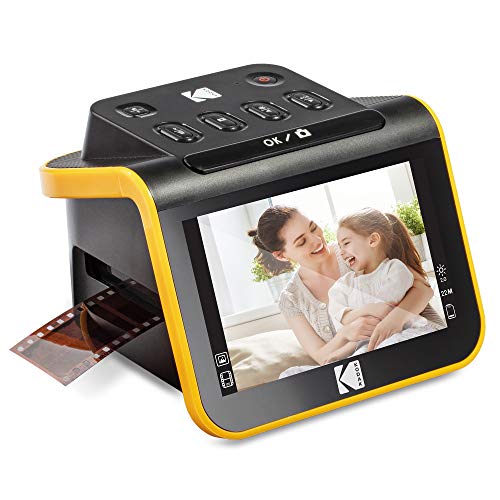
The KODAK Slide N SCAN is designed to convert old negatives and slides into digital JPEGs with a 22MP capability. It supports 135, 126, and 110 film formats and offers a 5″ LCD display for on-device viewing and editing. The device includes a quick-load tray for continuous scanning, plus adapters and a slide holder, making it a strong pick for general archival work. Best for: users who want a large built-in screen and straightforward loading for mixed-format slides.
Who it’s best for and why: This model suits families with mixed-format archives who value a single, dedicated scanner for fast, on-device viewing. The 5″ LCD helps preview results without a PC. Limitation: SD card storage is not included, so you’ll need to supply your own memory card.
Caution: Ensure you have compatible film holders for 135/110/126 formats to minimize loading issues. The device relies on external storage, so plan ahead for capacity needs.
DigitPro 35mm Film & Slide Scanner

DigitPro’s 2.4″ LCD model is a self-contained unit that converts 135 negatives and slides to digital JPEGs. It operates without a computer and supports color, negative, and black-and-white modes. The built-in screen provides instant playback, and the device can output to a TV via NTSC/PAL for bigger viewing. Best for: individuals who want a compact, PC-free solution with a TV-out option for sharing memories on a larger screen.
Who it’s best for and why: Ideal for seniors or casual collectors who prefer a small, simple workflow. Limitation: The smaller LCD may require careful viewing for detailed edits, and it uses internal memory plus optional media cards for storage.
Caution: 2.4″ display is compact for detailed color correction; consider models with a larger screen if frequent editing is needed.
DigitPro Film And Slide Scanner (All-in-One)

This all-in-one scanner converts 35mm, 126, and 110 film negatives and slides to 22MP digital images. It includes a 5″ LCD and easy-load inserts, plus internal memory and support for an external SD card. It’s a solid pick for multi-format archiving with a user-friendly interface. Best for: households digitizing mixed formats (negatives, slides, and select photo formats) in one device.
Who it’s best for and why: Good for families looking to digitize a variety of formats without multiple devices. Limitation: SD card capacity will determine batch size; external storage needs may be necessary for large collections.
Caution: The data notes external SD card support up to a specific size; verify compatibility before heavy use in large projects.
22MP Photo And Slide Scanner With 2.4″ LCD

DigitConvert’s all-in-one scanner handles 35mm/135 negatives and slides, plus 3R, 4R, and 5R prints. It can save to the built-in memory or a 4GB SD card (card included is 4GB or 128MB internal memory). This device is designed for standalone operation with a 4GB SD card included for immediate use. Best for: those who want an affordable, all-in-one device for photos and slides with quick 1-2 second scans.
Who it’s best for and why: Suitable for casual users who value simple, fast scanning with minimal setup. Limitation: It includes a smaller internal memory option; use the SD card for larger jobs.
Kedok Photo, NameCard, Slide & Negative Scanner

Kedok’s 5″ LCD-equipped scanner handles 35mm and 110 film, slides, 3R/4R/5R photos, and name cards. It saves directly to internal memory and an included 8GB SD card. The device promotes family-friendly sharing with a stylish digital frame-like display. Best for: households seeking a multi-use device that can also digitize name cards and basic prints.
Who it’s best for and why: Great for gifts and family projects that include a mix of slides, negatives, and printed photos. Limitation: SD card capacity and compatibility should be checked for large batches; the included card may need expansion.
ClearClick QuickConvert 2.0
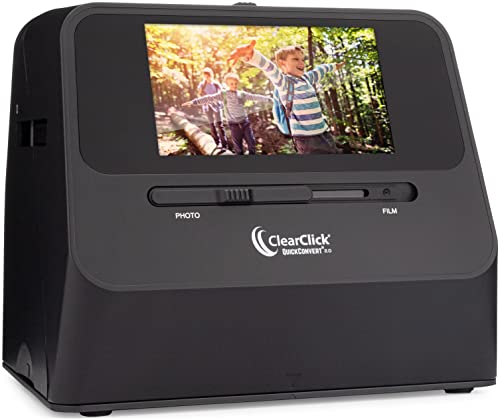
ClearClick QuickConvert 2.0 is designed for quick, standalone scanning of 4×6 photos and 35mm, 110, and 126 film. It emphasizes speed, scanning in seconds, and JPEG output to a built-in memory or SD card. It does not require a computer or drivers. Best for: users who prioritize speed and simplicity for small batches of photos and slides.
Who it’s best for and why: Ideal for quick archival tasks and on-the-go scanning with portable power. Limitation: It scans one item at a time and lacks an autofeeder, which makes large batches slower to process.
Buying Guide: Key Considerations For Choosing A Slide-To-Photo Scanner
- Format compatibility: Check which film formats (35mm, 110, 126, etc.) and slide sizes the unit supports. If you own a mixed collection, prioritize a model that handles multiple formats.
- Display and editing: A larger LCD helps preview scans and perform on-device edits. Consider 4–5 inches for easier viewing.
- Storage options: Look for internal memory plus external SD/SDHC support. Plan capacity for your expected batch sizes and future collections.
- Standalone operation: If you prefer not to use a computer, choose devices advertised as standalone with simple one-touch scanning.
- Loading speed vs. accuracy: Quick loaders and feeders save time but ensure they don’t compromise alignment or color accuracy. Balance speed with your archival needs.
- Output quality: Aim for at least 22MP or higher when possible for future-proof, crisp digital copies suitable for printing.
- Connectivity for display: TV-out or HDMI can help share slides on larger screens, which is useful for family events or classrooms.
- Power and portability: Battery options and compact form factors help if you plan to scan at gatherings or away from a desk.
FAQ: Quick Answers For Buyers
- What formats can these scanners convert?
Most support 35mm and common stand-alone formats like 110 and 126 slides, plus compatible negatives and prints depending on the model. - Do I need a computer to use these devices?
Some models are standalone and do not require a computer, while others may offer computer-based transfer options. - How much storage do these devices provide?
Many include internal memory and support SD cards; sizes vary by model, so plan for large archives. - Can I preview slides before saving?
Yes, most models include an LCD screen for real-time preview and basic editing like brightness or color adjustments. - Is an autofeeder available?
Autofeeders are rare in standalone units; most rely on manual loading for each item, which can affect throughput on large collections. - Are there compatibility caveats I should know?
Check for specific film types and card compatibility (FAT32/EXFAT) to ensure smooth saving and retrieval.