Best Micro Four Thirds Lenses for Versatile Photography and Video
Finding the right Micro Four Thirds lens can transform how you shoot with your MFT camera. This guide highlights five compatible options that cover a range of needs—from everyday portraits to travel telephoto. Each lens is chosen for portability, image quality, and value for different buyers, such as hobbyists, vloggers, and enthusiasts seeking compact systems. The summary table below helps you compare core capabilities at a glance.
| Product | Typical Use | Best For |
|---|---|---|
| OM SYSTEM Olympus M.Zuiko Digital 40-150mm F4.0-5.6 R Silver | Telephoto zoom with portable design | Travelers needing reach without bulk |
| Panasonic LUMIX G Lens 25mm F1.7 ASPH | Bright standard prime | Low-light street and portrait work |
| OM SYSTEM Olympus M.Zuiko Digital 40-150mm F4.0-5.6 R Black | Telephoto zoom with compact build | Budget-conscious telephoto for everyday shooting |
| Panasonic LUMIX G Vario 45-150mm F4.0-5.6 ASPH | All-around telephoto zoom with stabilization | Occasional telephoto needs with steadiness |
| Meike 25mm F1.8 | Fast prime for creative photography | Budget-friendly low-light prime |
OM SYSTEM Olympus M.Zuiko Digital 40-150mm F4.0-5.6 R Silver

Optical design centers on a lightweight telephoto zoom with practical range. The 40-150mm focal length covers standard to moderate telephoto perspectives, suitable for sports, portraits, and distant subjects. The compact form helps travel shooters retain a slim kit while still delivering usable reach. The lens uses a high-speed MSC autofocus system for faster, quieter focusing—beneficial for both stills and video. This variant is ideal for users who want a bright, portable telephoto option without stepping up to larger super-telephotos. Best for travelers and event shooters who prioritize mobility.
Best for: travelers and photographers who need a compact telephoto with versatile reach. Limitations: not the brightest option in low light due to variable aperture, but its portability and zoom range compensate for many scenarios.
Panasonic LUMIX G Lens 25mm F1.7 ASPH

This prime offers a natural 50mm equivalent field of view with a bright f/1.7 maximum aperture. The compact, lightweight design makes it a staple kit lens for street, portrait, and low-light conditions. Optical construction adds sharpness and pleasing background separation, while remaining easy to carry for daily use. It’s a reliable, budget-friendly option for those who want a fast standard prime without adding bulk. Best for: street photographers and vloggers who need a bright, unobtrusive prime. Limitation: fixed focal length means less flexibility than zooms in dynamic shooting scenarios.
OM SYSTEM Olympus M.Zuiko Digital 40-150mm F4.0-5.6 R Black

This black variant mirrors the silver model with the same 40-150mm range and a lightweight body. The 3.75x zoom provides flexible framing from mid-range to telephoto without changing lenses. It is well-suited for travelers and hobbyists who want a low-profile tele lens that still performs well in daylight and moderate indoor lighting. Best for: users prioritizing a compact, affordable telephoto option. Limitation: like other upsides, the aperture is variable (f/4-5.6), so very low-light situations may require additional lighting or a slower shutter speed.
Panasonic LUMIX G Vario 45-150mm F4.0-5.6 ASPH

This telephoto zoom offers stabilization and a practical focal range for everyday telephoto needs. A multisample coating reduces ghosting and flare, while the inner focus system supports smooth, quiet focusing for video and stills. The Mega O.I.S. stabilization helps stabilize shots in low light or when handheld. Best for: shooters who want video-friendly autofocus and stabilization in a compact telephoto option. Limitation: the aperture range remains modest (f/4-5.6), which can limit subject isolation in very bright or very dark settings without additional lighting or higher ISO.
Meike 25mm F1.8
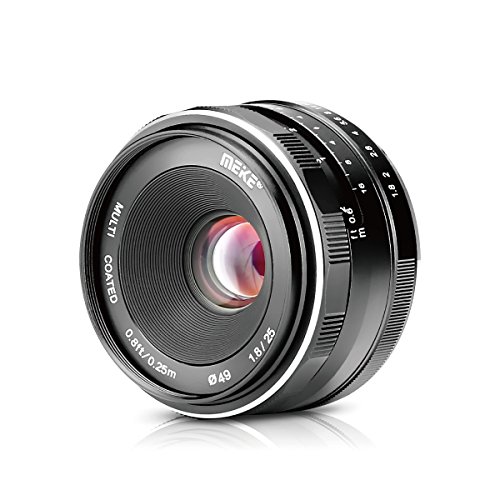
Meike’s 25mm F1.8 is a budget-friendly wide-angle prime suitable for portraiture and street photography with a bright aperture that fosters shallow depth of field. It’s a fixed focal length, manual focus lens intended for Micro Four Thirds cameras. The lens construction includes multiple elements with coatings to reduce flare. Best for: photographers who want a fast prime on a budget and are comfortable with manual focus. Limitation: manual focus only requires careful focusing, and the lens must be set to M mode for operation on many bodies.
Buying Guide
- What to consider when choosing a Micro Four Thirds lens: focal length range, aperture, size and weight, autofocus performance, and stabilization. A telephoto zoom is ideal for travel and events; a fast prime excels in low light and subject isolation.
- How to decide between zooms and primes: use zooms for versatility and framing flexibility; primes for image quality, speed, and lighter setups.
- How to evaluate compatibility: ensure the lens supports your Micro Four Thirds camera’s autofocus system and sensor size. Check whether in-body stabilization (IBIS) complements lens IS for the smoothest handheld results.
- Practical buying tips: consider where you shoot most—travel, street, portraits, or video—and choose a lens that minimizes kit weight while meeting your primary needs.
- Budget considerations: entry-level primes like the Meike or Panasonics provide value, while branded lenses from OM SYSTEM and Panasonic offer optimized autofocus and coatings for better performance in challenging lighting.
Frequently Asked Questions
- What is Micro Four Thirds compatibility?
A: It refers to lenses designed for the Micro Four Thirds mount used by many Olympus and Panasonic cameras, enabling compact lenses with good image quality and in-body or optical stabilization options. - Are prime lenses better than zooms for low light?
A: Generally, yes. Primes with wide maximum apertures (for example, f/1.7 or f/1.8) gather more light and enable shallower depth of field, though high-quality zooms provide flexible focal lengths with good performance. - Is stabilization important for telephoto lenses?
A: Yes. Telephoto lenses benefit from stabilization to counteract hand shake, especially at longer focal lengths and in lower light. - Can I use these lenses on any Micro Four Thirds camera?
A: Most Micro Four Thirds bodies share a common mount; however, autofocus performance and feature support can vary by camera model. Always verify compatibility with your specific body. - Which lens is best for travel?
A: A compact telephoto zoom (like the 40-150mm options) or a fast standard prime (like the 25mm f/1.7) can be ideal, depending on whether you prioritize versatility or speed in changing lighting conditions. - Do these lenses have weather sealing?
A: Weather sealing varies by model. If you shoot in harsh or wet environments, check the official specs for each lens; consider protective accessories when needed.