Best Low F-Stop Lenses for Low-Light Photography
The following guide highlights top wide-aperture lenses and select accessories that help capture sharp, well-exposed images in dim conditions. Designed for American readers and tested across popular camera systems, these picks emphasize fast apertures, reliable autofocus, and practical handling. Whether you shoot portraits, street scenes, or events, a lens with a large maximum aperture unlocks creative depth of field and dramatic subject isolation. The included buying guide covers considerations for primaries and zooms, as well as how accessories like neutral density filters can complement wide-open shooting in bright light.
| Product | Brand | Maximum Aperture | Best For |
|---|---|---|---|
| Canon EF 50mm f/1.8 STM | Canon | f/1.8 | Portraits, low light |
| Sony SEL35F18 35mm f/1.8 | Sony | f/1.8 | Street, documentary, travel |
| Nikon AF-S DX NIKKOR 35mm f/1.8G | Nikon | f/1.8 | DX-format portraits, everyday |
| Nikon AF-S FX NIKKOR 24-70mm f/2.8E ED VR | Nikon | f/2.8 | Versatile events and travel |
| K&F Concept 77mm Ultra-Low Reflectivity ND Filter | K&F Concept | 1-9 stops (ND2-ND400) | Light control for bright-light shoots |
Canon 50mm F/1.8 STM Lens

The Canon EF 50mm f/1.8 STM offers a compact prime with a bright maximum aperture of f/1.8, enabling striking subject separation and strong low-light performance. With a 50 millimeter focal length, it presents a versatile normal perspective ideal for portraits, street scenes, and everyday photography. On Canon APS-C bodies, the field of view is similar to an 80 millimeter lens, which helps isolate subjects while keeping working distance comfortable. It features a minimum focusing distance of 0.35 meters and a maximum magnification of 0.21x, supporting close-up portraits and small details with shallow depth of field.
Autofocus benefits from smooth operation that suits both stills and video, while the lightweight, affordable design makes it a popular choice for beginners and seasoned shooters alike. While edge performance improves when stopped down, the lens remains exceptionally sharp in the frame center at wider apertures. The combination of affordability, portability, and bright focal performance makes this Canon prime a dependable option for those who prioritize speed in low-light conditions.
Sony 35mm F/1.8 Prime Lens
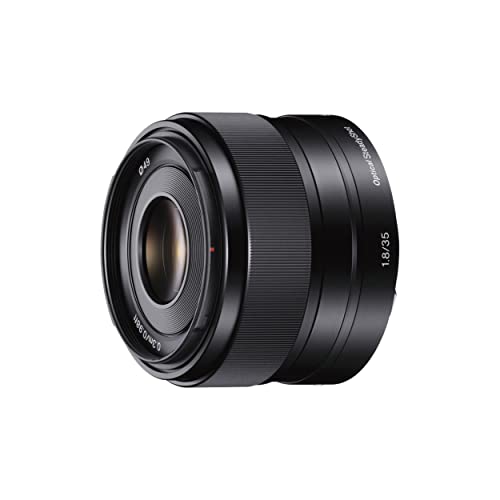
The Sony SEL35F18 35mm f/1.8 Prime Fixed Lens is a compact, lightweight option designed for Sony APS-C cameras. Its fixed f/1.8 aperture delivers excellent low-light capability and natural perspective for street, documentary, and everyday photography. The 35mm focal length on APS-C sensors yields a versatile field of view that closely resembles the human eye, providing an intimate yet expansive framing. A 0.99-foot minimum focus distance and a maximum magnification of 0.15x support close-up work, while the lens’ optical design emphasizes sharpness and contrast across the frame.
With built-in stabilization, this lens helps reduce camera shake in handheld shooting, making it helpful for low-light situations and video work. The compact build suits travel and daily carry, letting photographers shoot at wide apertures without added bulk. The combination of bright glass, modern optics, and a practical focal length makes it a strong all-around choice for Sony mirrorless shooters seeking speed and portability.
Nikon 35mm F/1.8G DX Lens

The Nikon AF-S DX NIKKOR 35mm f/1.8G is a budget-friendly fast prime designed for Nikon DX-format bodies. The bright f/1.8 aperture enables strong performance in lower light and helps achieve a shallow depth of field for portraits and candid street photography. With a 44-degree angle of view on DX sensors and a compact, lightweight design, the lens is ideal for travel and daily use. Rear focusing provides quick and quiet autofocus, while manual focus override offers precise control when needed.
The lens offers solid sharpness across the frame, especially when stopped down slightly, making it a practical choice for enthusiasts who want a fast, portable prime without a high price tag. Its modest size and dependable performance make it a staple for Nikon shooters building a fast, everyday prime kit that works well in varied lighting.
Nikon 24-70mm F/2.8E ED VR

The Nikon AF-S FX NIKKOR 24-70mm f/2.8E ED VR is a versatile standard zoom designed for Nikon FX-format cameras, delivering a constant f/2.8 maximum aperture across the zoom range. This consistency supports reliable exposure and depth-of-field control across a wide range of scenes, from environmental portraits to landscapes. The lens incorporates electromagnetic diaphragm for precise exposure and Vibration Reduction (VR) to stabilize handheld shots at slower shutter speeds. Covering 24-70mm, it serves as a flexible workhorse for professionals and enthusiasts.
While its size is more substantial than prime lenses, the 24-70mm f/2.8E ED VR offers a professional-grade solution for photographers who require fast, dependable performance across many genres without changing lenses. The slightly heavier build is balanced by robust image quality, consistent performance in varied lighting, and a reliable autofocus system, making it a staple for events, travel, and studio work.
K&F Concept 77mm Ultra-Low ND Filter

The K&F Concept 77mm Ultra-Low Reflectivity ND Filter provides practical exposure control for bright daylight while preserving color fidelity. Offering 5-9 stops of light reduction, this filter enables longer shutter speeds or wider apertures to achieve motion blur effects or smoother skin tones in daylight shooting. Built with imported AGC optical glass and 28-layer nano coatings on both sides, it minimizes reflections and resists scratches, dust, water, and oil. The push-pull lever design allows for precise, quick adjustments, and 360-degree rotation supports use across many angles and scenes.
When using a variable ND like this, some displays may show a faint cross pattern at particular stops with certain lenses and focal lengths. This is a known aspect of the technology and is typically mitigated by adjusting framing or selecting a fixed-stop setting for critical shots. Overall, the ND filter is a valuable accessory for extending creative options when shooting with wide-open apertures in bright light.
Buying Guide
Key purchase considerations start with camera system compatibility. Full-frame lenses generally deliver the best low-light performance, but many users shoot on APS-C or DX bodies where focal length and angle of view shift. Prime lenses with wide apertures (such as f/1.8) typically yield superior sharpness and subject isolation at a given focal length, while zooms with constant f/2.8 provide flexibility across framing without changing lenses. Weight, size, and budget are practical constraints that influence choice, especially for travel or street photography.
Another factor is autofocus performance and stabilization. Lenses with fast, accurate AF and built-in stabilization are advantageous for handheld shooting in low light or video work. For those who shoot in bright environments but still want shallow depth of field, neutral density filters can help extend shutter speeds or maintain a wide aperture without overexposing the image. Finally, build quality and weather resistance may matter for outdoor use, while compatibility with your camera’s sensor format (full-frame vs. crop) affects field of view and depth of field expectations.
Use-case scenarios can guide the decision. Portrait shooting often benefits from a fast prime like f/1.8 for smooth bokeh and edge-to-edge sharpness. Street and travel photography typically leverage a 35mm or 50mm prime for a natural perspective, while events or landscapes may benefit from a zoom with a constant aperture to maintain consistent exposure. The products above span these scenarios, offering strong performance in low-light situations and flexibility in everyday shooting. Pairing fast glass with suitable accessories can maximize potential in variable lighting and creative expression.