Best Low Budget Film Cameras for Beginners
Film photography remains a creative, affordable option for hobbyists and travelers. This guide highlights five budget-friendly film cameras that offer reliable performance without breaking the bank. Each model balances simplicity, weight, and exposure options to help you start shooting today. We also include a quick buying guide to help you compare formats, film types, and features. The curated list emphasizes reusable cameras and beginner-friendly options that pair with common 35mm film or half-frame formats, keeping costs low while delivering classic analog results.
| Product | Notable Feature |
|---|---|
| Kodak Ektar H35 Half Frame | Double exposures per roll; pocket-sized with built-in flash |
| Kodak Funsaver One Time Use | Two-camera bundle; 27-exposure film with vibrant color |
| Reto Ultra Wide And Slim 35mm | 22mm ultra-wide lens; beginner-friendly |
| Kodak M35 | Built-in flash; compatible with 35mm color or B&W film |
| Canon Rebel 2000 SLR | Aut focus with built-in flash; renewed option |
Kodak Ektar H35 Half Frame

The Kodak Ektar H35 Half Frame is a pocket-size 35mm camera that uses half-frame exposures to double the number of pictures per roll. This model is lightweight and simple to operate, making it suitable for everyday carry and quick snapshots. A built-in flash can be activated by turning a ring around the lens, enabling use in varying lighting conditions.
- Film-saving: up to 2x exposures per roll (e.g., 72 from a 36-exposure roll)
- Lightweight and easy to use: compact, user-friendly design
- Built-in flash: enable shooting indoors or after dark
Kodak Funsaver One Time Use Film Camera

The Kodak Fun Saver is a disposable camera bundle designed for simplicity and convenience. It arrives preloaded and ready to shoot, ideal for quick events or travel days. The included Kodak 800 speed film offers bright, vibrant color in a compact package.
- Bundle Includes: 2 x Kodak Fun Saver single-use cameras
- Brighter, vibrant colors: 800 speed, 27 exposure film
- Simple point-and-shoot experience
Reto Ultra Wide And Slim 35mm Reusable Daylight Camera
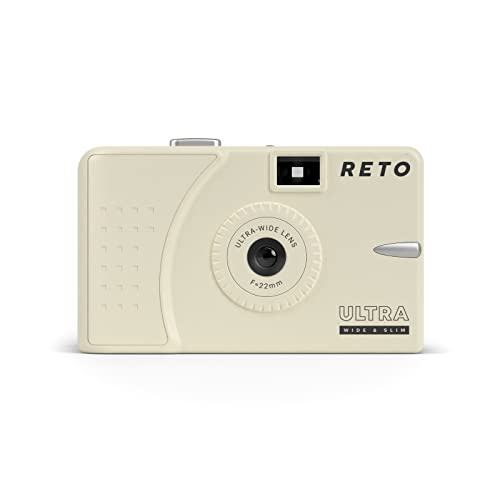
The Reto Ultra Wide And Slim offers a lightweight 35mm option with a 22mm ultra-wide lens, enabling expansive compositions. It is designed for beginners and features a focus-free design, making it easy to capture wide scenes and everyday moments without adjusting settings.
- 35mm format: suitable for color or black-and-white film
- 22mm ultra-wide lens: broad field of view
- Focus-free and easy to use for beginners
Kodak M35 35mm Film Camera

The Kodak M35 is a reusable 35mm camera with a built-in flash and a fixed-focus lens. It supports 35mm color or black-and-white film, making it a versatile starter option for casual shoots.
- Built-in flash for low-light situations
- Accepts 35mm color or Black & White film
- Fixed-focus lens; simple operation
Canon Rebel 2000 SLR With 28-80mm Lens

The Canon Rebel 2000 is a 35mm SLR that offers beginner-friendly automation and an included 28-80mm zoom lens. While renewed, the camera provides autofocus performance and a built-in flash to help with low-light shots.
- 35mm SLR with a standard 28-80mm lens
- Autofocus system helps with quick, accurate focusing
- Built-in flash with red-eye reduction
Buying Guide
Choosing a budget film camera involves weighing format, ease of use, and ongoing costs. The following considerations help compare reusable cameras, disposable options, and entry-level SLRs without relying on price alone.
Film Format And Exposure Count
Two common formats appear in this guide: half-frame and standard 35mm. Half-frame cameras can double the number of exposures per roll, which lowers the per-shot cost and extends the life of a single film roll. If you’re traveling or shooting spontaneously, a camera that maximizes exposures can be a practical choice. Conversely, standard 35mm offers more widely available film and simpler processing in many labs, especially for color film.
Reusable Versus Disposable
Reusable cameras provide ongoing control and the option to choose your film stock. They require occasional loading and handling, but give you a broader range of creative options. Disposable cameras are convenient for events and quick snapshots, though you’ll replace them after a single use. They’re ideal for beginners who want to focus on composition without worrying about settings or loading film.
Autofocus, Exposure, And Lighting
Entry-level autofocus and built-in flash can dramatically simplify shooting in varied lighting. A focus-free or fixed-focus design lowers the learning curve, while a reliable flash helps with indoor shots. If you anticipate frequent low-light scenarios, prioritize a camera with a built-in flash or compatibility with a simple external flash accessory.
Lens Options And Field Of View
Lenses determine your scene’s perspective. A wide lens captures broad landscapes and tight interiors, while standard or zoom lenses suit street photography and portraits. Many budget cameras forego interchangeable lenses, so choose a design with a lens that matches your intended subjects and travel style.
Durability, Portability, And Ergonomics
Compact, lightweight models are easier to carry daily and during trips. Heavier SLRs with larger lenses offer better balance for certain types of shots but can be less convenient to carry. Consider how you plan to shoot—on foot, in crowded spaces, or while traveling—and pick a build that feels comfortable in your hands.
Film Availability And Long-Term Costs
Availability of color and black-and-white film affects ongoing costs. 35mm film remains widely accessible, but stock availability varies by brand and region. If you plan to shoot frequently, factor in the ongoing cost of film rolls and development, rather than focusing solely on the camera’s purchase price.
Durability And Maintenance Tips
Keep the lens clean and free of dust. Store cameras away from moisture and extreme heat. When loading film, follow the instructions carefully to avoid light leaks. Regularly check the battery (for models that require one) and replace it as needed. A simple routine helps ensure consistent results across different shooting sessions.