Best 360-Degree Spinning Camera Rigs for Dynamic Shots
Creative workflows in video and photography increasingly rely on camera rigs that rotate, tilt, and glide through motion. A 360-degree spinning rig can transform interviews, product demos, and narrative B-roll by keeping movement fluid while maintaining precise framing. The following five rigs represent a range of configurations for American studios and independent creators alike. This guide highlights standout features, practical use cases, and key buying considerations to help you select a model that fits your gear, shooting style, and budget.
| Product | Brand | Key Benefit |
|---|---|---|
| Glide Gear REVO 150 360° Rig | Glide Gear | Heavy-duty rotation with high payload and adjustable height |
| SmallRig Monitor Mount Lite | SMALLRIG | 360° swivel and 180° tilt for flexible monitor positioning |
| DF DIGITALFOTO V360S Spinner | DFCINE | Integrated slider for smooth sliding shots and height versatility |
| Suptig Dive Rig | Suptig | Broad compatibility with action cams and multiple mounting options |
| Zeadio Rig Cage | Zeadio | Lightweight aluminum frame with top handle and ARRI holes |
Glide Gear REVO 150 360° Camera Rig

The Glide Gear REVO 150 Rotating Camera Rig is designed for seamless 360-degree rotation, enabling full-body or environmental panning without re-framing. Crafted from durable aluminum, it delivers a stable platform capable of supporting up to 250 lbs, making it suitable for DSLR setups and heavier cinema rigs. Its extension range from 24 to 44 inches and base configurations spanning 30 to 44 inches provide flexible framing options for close-ups and wide establishing shots alike. The combination of strength, portability, and smooth rotation makes it a versatile choice for on-location shoots, interviews, and dynamic B-roll sequences.
Operators benefit from a turnkey solution that balances rigidity with mobility. The REVO 150’s rotating arm helps maintain consistent angles through motion, reducing the need for multiple takes. The modular construction supports field use, quick adjustments, and stable performance across varied shooting environments. If you anticipate frequent location changes or need a robust base for future upgrades, this rig provides a reliable foundation with room to scale.
SmallRig Monitor Mount Lite 360° Swivel

The SmallRig Monitor Mount Lite 3809 provides a compact, adaptable solution for field monitors, LEDs, and other gear. It offers a 360° swivel and 180° tilt, enabling precise positioning in dynamic shooting contexts without tools. A bottom cold shoe attaches to camera rigs, cages, or handles, while a 1/4″-20 screw with detachable locating pins on top accepts a monitor or light securely. The mount supports a substantial load for its size—up to 3.2 kg in a 90° tilt configuration—making it a sturdy option for on-the-go productions where quick adjustments matter.
Versatility and ease of use define this piece. The axis tightness on each rotation, tilt, and swivel can be fine-tuned to hold a fixed position during movement, reducing drift in handheld or gimbal-based shoots. Its compact footprint suits smaller rigs or builds integrated into a larger camera system. For operators who frequently switch between monitoring and lighting tasks, this mount offers a practical balance of capability and portability.
Df DigitalFOTO V360S Spinner

The DIGITALFOTO V360S is built for 360-degree rotational shooting with an emphasis on versatility for product demos, unboxings, and narrative scenes. In addition to the spinning platform, it includes a camera slider that enables smooth sliding motions across the mounting bar, enhancing dynamic range beyond pure rotation. The mounting bar allows vertical movement, enabling different heights for varied compositions. This combination of rotation, sliding, and vertical motion expands creative options while maintaining a straightforward setup suitable for studio or on-location use.
With practical features like a built-in slider and height-adjustable mounting, the V360S is well-suited for content that benefits from continuous motion at multiple elevations. It provides a cohesive solution for creators who want more than a rigid turntable and prefer integrated motion tools that reduce the need for additional accessories. The result is a more efficient workflow when producing product videos or cinematic sequences with measured, fluid motion.
Suptig Dive Rig for Action Cameras
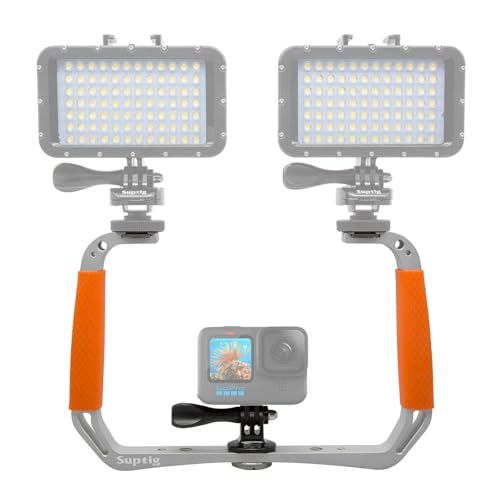
The Suptig Dive Rig is designed for action cameras and a range of other compact devices, including GoPro, Insta360, and Osmo cameras. It supports multiple mounting methods—cold shoe, 1/4″ and 3/8″ threaded mounts—allowing users to tailor the rig to their preferred configuration. The ergonomic, anti-slip handle with grooved textures improves grip in challenging environments, reducing fatigue during extended shoots. Broad compatibility makes it a practical option for divers, field reporters, and live-stream setups where quick adaptability is essential.
With versatility at the core, the Dive Rig is suited for underwater shoots, outdoor adventures, and live broadcasts. Its modular mounting options enable the attachment of lights, monitors, or additional arms as needed. This flexibility is valuable for creators who want a single rig capable of evolving with evolving shooting requirements while maintaining stability and control.
Zeadio Aluminum Camera Rig Cage

The Zeadio Camera Video Rig Cage is built from aluminum alloy for a balance of strength and lightness. It supports up to 44 lb (20 kg) of payload, making it suitable for a broad range of DSLR setups. The cage includes a top handle for low-angle shots and easy carry, plus built-in ARRI locating holes, and multiple 1/4″-20 and 3/8″-20 threaded holes for mounting articulating arms, microphones, field monitors, LEDs, and other accessories. This cage-style rig offers a versatile foundation for multi-attachment configurations while maintaining portability and ease of use.
Ideal for filmmakers and content creators who want a modular base that can expand with additional rails and accessories, the Zeadio cage emphasizes expandability and ergonomic handling. Its robust aluminum construction helps maintain stability during motion, while its array of mounting points supports a wide range of cameras, monitors, and lighting tools for diverse shooting scenarios.
Buying Guide
When selecting a 360-degree spinning camera rig, consider how the rig will integrate with your current gear, shooting environment, and typical workloads. The following factors help compare options and identify the best fit for your projects.
- Camera compatibility and payload: Check the rig’s maximum weight rating and whether it supports your camera body, lenses, and accessories. A higher payload reduces the risk of tipping and vibration on uneven terrain.
- Rotation, tilt, and height range: Evaluate whether you need full 360° rotation, 180° tilt, and adjustable height. Look for smooth motion, reliable locking, and tunable tension to maintain position during movement.
- Mounting options and compatibility: Ensure the rig provides versatile mounting points (1/4″-20 and 3/8″-20 threads, cold shoes, ARRI-compatible holes) to accommodate monitors, lights, and accessories.
- Build material and durability: Aluminum rigs offer a good balance of strength and weight, while carbon fiber may reduce weight further. Consider how the rig will be transported and used in rugged environments.
- Portability and setup time: For location shoots, lighter rigs with quick-release components speed up deployment. If you travel with gear, weight and compactness matter more than on-studio setups.
- Accessory ecosystem: A rig that integrates with existing mounts, rails, and arms reduces the need for extra adapters. Compatibility with popular brands can simplify future upgrades.
- Stability and vibration control: Look for solid bases, well-seated rotators, and dampening options that minimize shake during rotation, panning, or sliding actions.
- Budget considerations: Higher-end rigs offer greater payloads and modularity, but there are capable midrange options that satisfy most freelance and small-studio needs.
In practice, choose a rig that aligns with your typical shoots: a heavy-duty rotating system is ideal for long-form interviews and multi-camera setups; a compact mount with 360° swivels works well for on-the-go product demos and travel shoots. For beginners, starting with a modular cage or lightweight rig can provide room to grow as you gain experience and expand your accessory kit.