Best License Plate IP Cameras for ANPR and LPR Systems
If you’re shopping for a license plate recognition IP camera, you want devices that combine clear daytime and reliable night vision with accurate plate capture. This guide highlights five top options suited for businesses, security teams, and property managers who need robust LPR performance in outdoor or indoor settings. Each pick is evaluated for best use cases, potential limitations, and why it stands out.
Summary of chosen products
| Product | Key Strength | Best For | Limitations |
|---|---|---|---|
| 4MP License Plate Recognition IP Camera (318netech) | Embedded LPR with deep learning algorithms | High-traffic entrypoints and parking lots | Check checkpoint scenario limitations for motorcycles |
| EmpireTech 2MP Starlight IR Bullet | Low-light performance and long IR range | Dimly lit perimeter monitoring | Lower resolution than some peers |
| Amcrest LPR Camera | 8-32mm optical zoom, long-range plate capture | Vehicle type/color insights and detailed plate data | Requires browser setup for full features |
| ONWOTE LPR Network Camera | 4MP with motorized zoom | Businesses using compatible ONWOTE NVRs | Limited to specific NVR compatibility |
| GW Security 12MP AI Camera | High-resolution AI detection including license plates | Advanced analytics in a single camera | Higher data requirements and bandwidth |
4MP License Plate Recognition IP Camera by 318netech

This 4MP IP camera combines license plate recognition with IP-based surveillance. It uses a 1/1.8″ progressive sensor and supports a dual-range lens from 8mm to 32mm. The device delivers color and black-and-white modes with low-light sensitivity and IR illumination up to 328 feet. It is suited for entrances, gates, and parking zones where ALPR accuracy is critical in checkpoint-like scenarios.
Best for: High-traffic access points where accurate plate capture is needed regardless of lighting. Limitations: Motorcycle plate recognition is supported only in certain checkpoint scenarios, so verify your site needs before deployment.
EmpireTech Smart 2MP Starlight IP Bullet with POE

This 2MP camera emphasizes ultra-low-light performance with Starlight capability and a long IR distance, suitable for outdoor perimeters. The 5mm–60mm motorized lens offers flexibility for varying distances, and it supports PoE, simplifying installation. The unit also advertises long-range capability suitable for monitoring lanes, entrances, and parking zones after dark.
Best for: Low-light outdoor surveillance where you need clearer vehicle silhouettes at distance. Limitation: Lower resolution than 4MP or higher-end LPR cameras, which can affect fine plate readability in some scenarios.
Amcrest LPR Camera, 4MP with 8–32mm Zoom

Amcrest’s LPR camera features an 8–32mm optical zoom with a 4MP sensor and a dedicated license plate recognition distance of roughly 26–98 feet. It supports vehicle type, color, and plate details, plus IVS analytics like tripwire and loitering detection. Storage options include microSD or network-based methods, though browser compatibility considerations apply for query access.
Best for: Systems requiring actionable plate data and vehicle attributes in a compact, weatherproof form. Limitation: Optimal experience may depend on specific browser configurations and plugin behavior in Edge or other browsers.
ONWOTE License Plate Recognition IP Camera

ONWOTE offers a 4MP network PoE camera with a motorized 8–32mm lens and 120dB WDR for challenging lighting. It is promoted for business use and designed to work with ONWOTE TD Series NVRs. This camera focuses on reliable LPR performance within a fixed compatibility ecosystem, making it a practical choice for integrated systems.
Best for: Businesses already using ONWOTE NVRs or seeking a straightforward, compatible LPR setup. Limitation: Compatibility is emphasized with specific ONWOTE NVR models, so mixing with other vendors may require additional setup.
GW Security 12MP AI License Plate Detection Camera
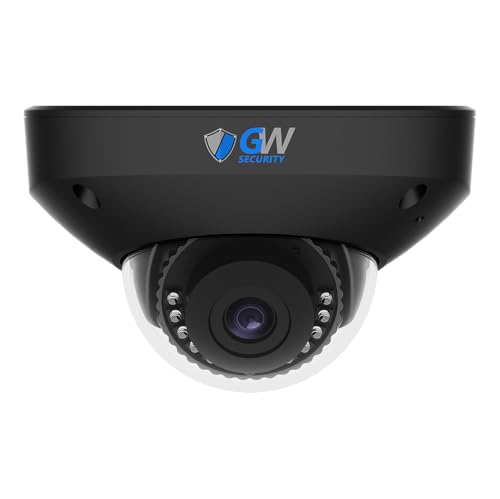
GW Security’s high-resolution camera combines 12MP imaging with AI-driven detection for license plates, as well as human and vehicle analytics. The built-in microphone and advanced AI processing enable richer context around plate events, making it suitable for high-security sites that require rapid identification and alerting.
Best for: Projects needing high-detail imaging and integrated AI detections in a single device. Limitation: Higher data and bandwidth demands may require robust network infrastructure.
GW Security 8 Channel NVR System with LPR Cameras

This GW Security system pairs 12MP AI-capable cameras with an 8-channel NVR, enabling license plate, face, and vehicle recognition across multiple channels. It is designed for larger installations requiring synchronized analytics across several camera feeds and centralized storage and monitoring.
Best for: Medium to large properties needing scalable, AI-powered surveillance with unified playback and alerts. Limitation: Requires appropriate network capacity and storage planning for 8-channel 12MP operation.
Buying Guide: Key Considerations for License Plate IP Cameras
- Resolution versus distance: Higher resolution improves plate readability at longer distances but requires more bandwidth and storage. Choose 4MP or higher for busy sites, or combine with a motorized zoom to adjust framing.
- Lens and field of view: 8–32mm motorized lenses provide flexibility for gates, lanes, and entrances. Consider site geometry and the needed viewing angle when selecting lens range.
- Night vision and lighting: Look for cameras with long IR reach and low-light performance (DarkFighter or starlight). Adequate illumination helps plate capture at night or in shadowed areas.
- AI and LPR accuracy: Embedded deep-learning LPR helps automate plate capture and recognition. Check whether the camera supports blocklists, allowlists, and motorcycle plate recognition if relevant to your site.
- NVR compatibility and storage: Some cameras are designed to work best with a specific NVR ecosystem. Ensure compatibility with your existing system and plan for microSD or network storage.
- Durability and weatherproofing: IP66/IP67 ratings and rugged housings are important for outdoor installations exposed to dust, rain, and temperature changes.
- Ease of installation: PoE simplifies wiring. Consider available mounting options, bracket compatibility, and whether drilling is required for mounting.
FAQ
- What is license plate recognition (LPR) used for in IP cameras?
LPR automates plate capture and recognition, enabling alerting, attendance, or security actions based on vehicle identifiers.
- Do LPR cameras require a specific NVR?
Some models are optimized for particular NVRs, while others support generic PC browsers or standard ONVIF setups. Check compatibility before purchase.
- How far can an LPR camera read a license plate at night?
Read distance at night depends on IR intensity and sensor quality; higher-end 4MP+ cameras with 328 ft IR or more perform better in low light.
- Is higher resolution always better for LPR?
Generally yes for long-range reads, but bandwidth and storage should also be considered. For tight budgets, 4MP with a motorized zoom can be effective.
- What is the advantage of motorized zoom for LPR cameras?
A motorized zoom lens lets you adjust the field of view to focus on plates as vehicles approach, improving capture consistency across distances.