Best Grey Card for White Balance: Accurate Color Calibration for Every Shoot
Choosing the right grey card is essential for calibrating white balance and ensuring consistent exposure across photos and videos. This guide highlights five top options, from compact pocket cards to larger setup panels, with key features that influence accuracy, durability, and portability. Whether you’re shooting portraits, landscapes, or video on location, these cards help you achieve reliable color reproduction in varied lighting conditions.
| Product | Size | Key Feature |
|---|---|---|
| Lightdow 12 x 12 Inch Grey Card | 12 x 12 inches | 18% gray reference; folded design with carry bag |
| Anwenk Grey Card 18% (DSLR/Film) | 3 1/3 x 2 1/8 inches | Pocketable; matte finish; scratch resistant |
| Anwenk 5.3 x 7.28 inch Grey Card | 5.3 x 7.28 inches | Large size; easy setup; 18% gray |
| Macolink 3.35 x 2.2 inch Grey Card | 3.35 x 2.2 inches | Durable; waterproof; matte finish |
| Anwenk 12 x 12 Inch Foldable Grey Card | 12 x 12 inches | Foldable; double-sided; carry pouch |
Below are five top options chosen for reliability, availability, and usefulness across a range of shooting styles. Each product section includes a brief overview, notable features, and practical use cases to help you decide which grey card best fits your setup.
Lightdow 12×12 Grey Card for White Balance

The Lightdow grey card provides a standard 18% gray reference with a reflectance of 17.8% and a density of 0.74. It is designed to keep exposure errors within about 1/8 of an F-stop, helping photographers establish accurate white balance quickly in mixed lighting. Its foldable format and included carry bag enhance portability for field use, making it suitable for on-location shoots, interviews, and studio work where quick calibration is essential.
Anwenk Grey Card 18% for DSLR and Film
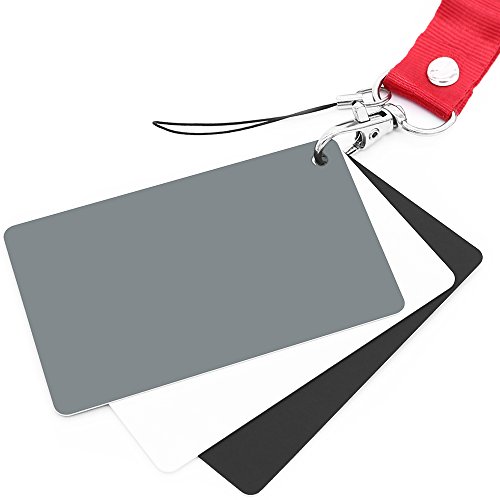
This compact Anwenk grey card offers a neutral 18% value with a matte, scratch-resistant finish. It is non-reflective and waterproof, ensuring consistent color balance under diverse conditions. The pocket-friendly size makes it ideal for photographers who need fast, repeatable calibration on the go, including DSLR, video, and film applications. It’s a solid choice for travelers or street shooters who require a lightweight, reliable gray reference.
Anwenk Large Grey Card 5.3″ x 7.28″
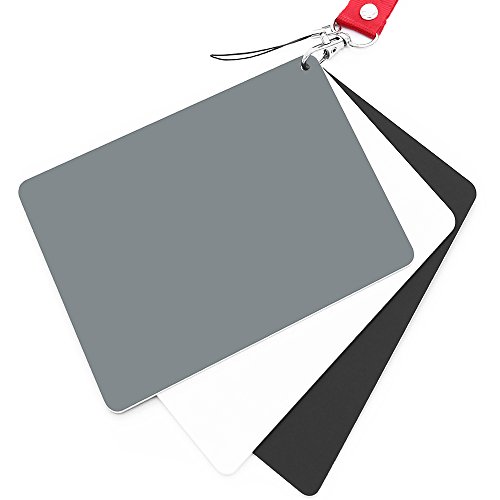
The large Anwenk card provides a generous 5.3 x 7.28 inch surface for easy calibration, especially useful when working with broader lighting setups or when camera screens are difficult to read. It preserves the 18% gray reference and pairs well with DSLR, video, and film workflows. Its bigger footprint helps when setting white balance from a distance or inside uneven lighting environments where precise exposure and color are critical.
Macolink 3.35 x 2.2 Grey Card

The Macolink grey card is a compact 3.35 x 2.2 inch reference that still delivers a true neutral 18% gray. It is described as durable and waterproof with a matte finish to reduce reflections, making it suitable for travel and on-location shoots where ruggedness and quick access are priorities. This option fits neatly into camera bags and pockets for everyday calibration needs.
Anwenk Foldable 12×12 Grey Card

This foldable grey card from Anwenk offers a sizable 12 x 12 inch surface with a dual-sided design: one side for gray balance and the reverse for white balance. It includes a carry pouch for transport, enhancing field usability. It helps remove color casts and ensures accurate exposure and color representation across different lighting scenarios, making it a solid choice for studio and field work alike.
Buying Guide: Key Considerations for Choosing a Grey Card
- Size and portability: Smaller cards fit pockets or keychains, while larger cards offer easier target acquisition and exposure accuracy on set.
- Color accuracy: Look for true 18% gray with a matte, non-reflective surface to minimize glare and deviations in lighting conditions.
- Durability: Water resistance and a tough finish help in harsh environments; foldable designs can save space while traveling.
- Surface finish: Matte finishes reduce reflections; avoid glossy surfaces that can introduce glare into shots.
- Dual-sided options: Some cards provide both gray balance and white balance on opposite sides for convenience.
- Software compatibility: While most work with any camera, some brands emphasize easy integration with Adobe Lightroom or Photoshop workflows.
When selecting a grey card, align the choice with your typical shooting conditions, whether you value compact travel-friendly cards or larger panels for studio work. Consider whether you need a single-purpose reference or a versatile card that covers white and gray balance in one tool. Remember that consistent lighting and repeatable calibration lead to more reliable color reproduction across projects.