Best Film Scanner to Digital: Top Picks for Preserving Old Memories
Looking for an easy way to convert film negatives and slides into digital files? The best film scanner to digital solutions below are tailored for different needs, from home memories to organized archives. If you want a quick, standalone device, these picks work without a computer. If you prefer more screen space and HDMI output, some models offer that as well. The following selections are chosen for reliability, ease of use, and clear output quality for American buyers.
| Product | Best For | Notes |
|---|---|---|
| KODAK Slide N SCAN Film & Slide Scanner | Everyday nostalgia projects | 5” LCD, formats 135/110/126, easy load |
| Magnasonic All-in-One 24MP Film Scanner | High-detail first-pass archiving | HDMI out for viewing on TV |
| KODAK Slide N Scan Max Digital Film Scanner | Large-screen previewing | 7” tiltable LCD, quick-feed tray |
| Portta Film Scanner with 5″ LCD | Flexible formats, standalone use | 22MP option, HDMI output |
| KODAK SCANZA Digital Film & Slide Scanner | Professional-looking scans | 3.5″ LCD, multiple adapters |
KODAK Slide N SCAN Film & Slide Scanner

The KODAK Slide N SCAN is best for casual preservers who want a straightforward, all-in-one experience. It supports 135, 110, and 126 film formats and slides, saving to an SD card (not included) for easy sharing. The built-in 5” LCD with a gallery mode helps preview and edit on the device, a plus for home offices or living rooms. Quick-Feed Tray technology supports continuous loading, reducing handling time.
Best for: families digitizing an old photo library and hobbyists who value a simple, self-contained workflow. Limitation: SD card storage is external, so plan for compatible cards and data transfer.
Magnasonic All-in-One 24MP Film Scanner

Magnasonic is an excellent pick for users seeking higher resolution prints and flexible viewing. This scanner converts 35mm, 110, 126, and Super 8 film and slides into 24MP JPEGs. It includes a built-in 128MB memory and supports an SD card up to 128GB, enabling a compact, all-in-one solution. The 5″ LCD screen enables direct viewing and editing, with HDMI output to a TV or monitor for a larger display.
Best for: archival enthusiasts who want a higher-resolution initial pass and easy TV viewing. Caution: external memory expansion depends on SD card availability; verify compatibility with your device ecosystem.
KODAK Slide N Scan Max Digital Film Scanner

Choose this if you want a larger viewing area and a seamless workflow. The 7-inch tiltable LCD provides a better preview, while the quick-feed tray speeds up processing of slides and negatives. It uses a 13MP sensor for digitization, and its gallery mode helps with quick organization. The device is designed for quick, repeated scans, making it suitable for large collections.
Best for: scrapbookers and archivists handling sizable slide collections who value a big screen and easy preview. Limitation: higher capacity screens may require longer setup times for first-use calibration.
Portta Film Scanner with 5″ LCD Screen

Portta offers a versatile, standalone option with 16MP or 22MP output depending on model. It supports 135, 126, 110, and Super 8 formats and includes HDMI output for external display. The 5″ LCD enables real-time preview and alignment, which can be essential for precise digitization without a computer. It’s a good choice for those who want a flexible, computer-free workflow at home.
Best for: users digitizing mixed-format slides and negatives who prefer a straightforward, all-in-one device with HDMI for larger viewing. Caution: verify whether the 22MP enhancement is supported on your chosen model and how it affects file sizes.
KODAK SCANZA Digital Film & Slide Scanner
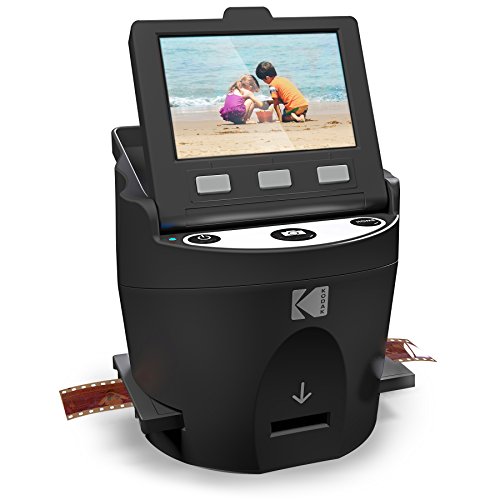
The Kodak Scanza is designed for enthusiasts who want a professional-grade output. It scans 35mm, 126, 110, Super 8, and 8mm negatives and slides to JPEG on a built-in 3.5″ TFT LCD. The device ships with multiple adapters and film inserts to accommodate varied media. One-touch scan and save functionality supports a straightforward workflow for quick digitization.
Best for: archivists and hobbyists seeking a compact, all-in-one scanner with broad format support and a dedicated display. Caution: the 3.5″ screen can limit real-time editing compared with larger displays on other models.
Buying Guide
What should I consider when choosing a film scanner?
- Format compatibility: Ensure the device supports the film formats you own (35mm, 126, 110, Super 8, slides, etc.).
- Display size and usability: A larger built-in LCD helps with framing and quick edits; consider tiltable screens if you view from different angles.
- Output resolution: Higher MP outputs yield crisper images, but check if the device supports your preferred saving format and SD card capacity.
- Computer dependency: Some models are standalone; others may require a PC or connect via HDMI for output to a TV or monitor.
- Workflow efficiency: Quick-feed trays and easy loading reduce handling time for large archives.
- Storage options: Look for SD card support, internal memory, and whether external storage is needed for high-volume digitization.
FAQ
- Do film scanners preserve color accuracy? Most scanners apply color correction in-device or during viewing; for best results, edit in your preferred software after transfer.
- Can I use these without a computer? Several models are standalone and store images on internal memory or an SD card.
- What formats do these scanners output? JPEG is common; some devices offer TIFF or PNG through export options or later editing steps.
- Is HDMI output important? HDMI helps you preview scans on a larger screen or monitor, which can aid in precise editing and evaluation.
- Will these work with old photo collections? Yes, most models support a wide range of film sizes and slide formats commonly found in family archives.