Best Ways to Convert Video Camera Tapes to Digital
If you’re looking to preserve cherished memories, converting video camera tapes to digital MP4 files is the clear answer. This guide highlights practical options for different tape formats and user needs. It helps buyers choose between professional transfer services and in-home capture devices. The top picks cover a range of formats like VHS, Hi8, MiniDV, and Digital8, and are suited for hobbyists, busy families, or record-keeping enthusiasts who want reliable, portable results. The table below compares the most relevant models and services to get you started.
| Product | Brand | Best For | Format Output |
|---|---|---|---|
| Video Tape Transfer Service (VHS, Hi8, Video 8, 8mm, VHS-C, MiniDV) to Digital MP4 | Time To Remember | Busy buyers who want ready-to-use MP4 files with cloud delivery | MP4 |
| Portta VHS to Digital Converter, Video to Digital Recorder | Portta | Users who want a plug-and-play in-device capture without a computer | MP4 |
| Oassuose VHS to Digital Converter, USB Capture Card | Oassuose | PC/Mac users seeking USB capture with simple setup | 1080P MP4/MP3 |
| ClearClick Video to Digital Converter 2.0 | ClearClick | Plug-and-record on USB drive without software | SD/HD MP4 |
| ClearClick Video to Digital Converter 3.0 | ClearClick | Broad compatibility with analog sources and cassette tapes | MP4/MP3/WAV |
Video Tape Transfer Service (VHS to MP4)

The Time To Remember service specializes in transferring a range of tape formats to MP4. It promises delivery within 10 business days after receipt, with one tape plus 30 days of cloud delivery via Google Drive. The package includes complimentary recycling of the original media. This option is best for buyers who want a hands-off experience and a ready-to-play digital file on mobile devices and computers. A potential limitation is that standard output is 640×480, which may be adequate for long-term archival but not for high-definition viewing.
Best for: Busy families and individuals who value convenience and cloud access over ultra-high resolution. Choose this if you want a straightforward, end-to-end service with digital delivery and archival options.
Considerations: Turnaround time is fixed at about 10 business days after receipt; any special requests may extend this period. The standard resolution reflects older tape formats, which may limit sharpness on modern displays.
Portta VHS To Digital Converter

The Portta device is a stand-alone converter/recorder that captures analog video into MP4 on a connected storage device. It supports AV/RCA, S-Video, and AUX inputs and records up to 1080P at 30Hz. It does not play tapes by itself; you need a VCR or camcorder to provide the input. A built-in 3.0-inch preview LCD helps verify capture progress, and the device accepts USB drives or TF cards without a specified limit (power supply may be required for high-capacity drives).
Best for: Users who want an all-in-one conversion box that records directly to USB or SD storage without needing a computer. It’s ideal for people who already have a playback device and prefer finished MP4s on portable storage.
Limitations: This is strictly a converter/recorder; it cannot operate as a standalone player for tapes, and proper power supplies are necessary for large storage devices.
Oassuose VHS to Digital Converter
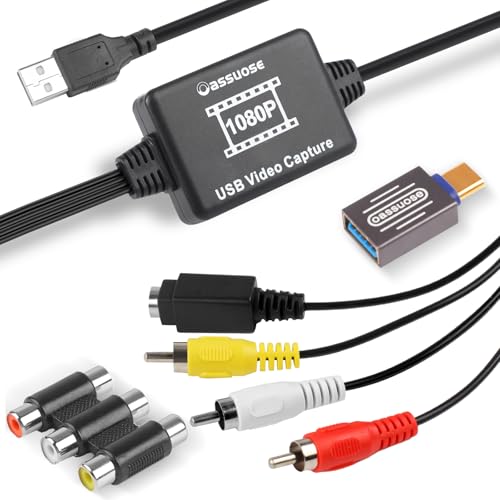
The Oassuose capture card transfers video and audio from analog sources to a PC or Mac, converting to 1080P/30fps MP4/MP3 with USB-A or USB-C output. It’s a plug-and-play solution that requires no driver software and works with RCA or S-Video inputs. The software is needed for acquisition, so users should ensure compatibility with their computer’s software setup.
Best for: Computer-based projects where a dedicated capture device is preferred and users want high-definition MP4 files on completion. It’s a solid middle-ground option for family archives stored on a computer or external drive.
Tip: Ensure the acquisition software is compatible with your operating system and that you have a suitable USB power source when using high-capacity drives.
ClearClick Video to Digital Converter 2.0
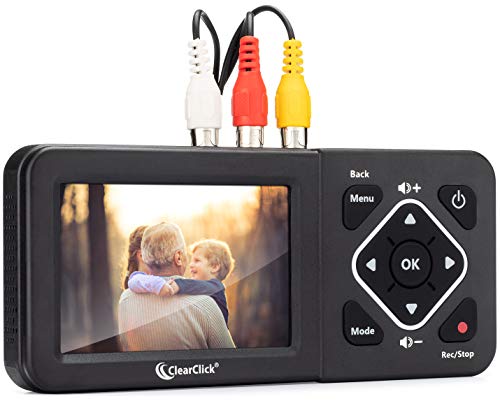
The ClearClick 2.0 converter is designed for direct recording to USB flash drives or SD cards, requiring only a working VCR or camcorder and tapes. It offers SD to HD capture at 640×480 or 720×480. It does not upscale to HD, and it does not support recording from modern HDMI sources. This device is particularly user-friendly for immediate digitization without a computer.
Best for: Users who want a simple, stand-alone capture workflow with minimal setup. It’s a good choice when you want to digitize tapes quickly and store them on USB or SD cards for quick sharing.
Limitation: A working VCR/camcorder and tapes are required; it does not load tapes itself or accept newer HDMI sources.
ClearClick Video to Digital Converter 3.0

The 3.0 generation broadens compatibility with multiple analog sources and cassette formats, including LPs and turntables, with MP4, WAV, or MP3 outputs. It records directly to USB flash drives or microSD cards and retains the requirement for a working VCR/camcorder. The bundle version notes an included 128 GB USB drive in some configurations.
Best for: People who want to convert not only tapes but also vinyl records and other analog media into a single digital library. It’s a flexible option when you’re digitizing mixed media collections.
ClearClick Video to Digital Converter 3.0 Bundle

This bundle extends the 3.0 generation with additional considerations for audio and video sources, including cassette tapes and vinyl records. Output options include MP4 for video and WAV/MP3 for audio. It requires a working VCR/camcorder and tapes, and it records directly to USB flash drives or microSD cards, with a 128 GB USB drive sometimes included. This option is ideal for multi-format digitization projects in one kit.
Videotape Transfer Service by Horizon Media Express

Horizon Media Express provides a long-standing transfer service for VHS, VHS-C, Digital 8, Hi-8, and MiniDV. It emphasizes a trusted history since 1991 and includes a plug-n-play USB for digitized MP4 files. The service model indicates a per-tape digitization fee with the option to add more tapes to the order. This option is best for customers who prefer sending tapes to professionals and receiving ready-to-use digital files without handling the transfer hardware themselves.
Buying Guide: Key Purchase Considerations
- Format coverage: Identify which tapes you have (VHS, Hi8, MiniDV, etc.) and confirm the device or service supports those formats.
- Output quality: Consider whether you need 1080p, 720×480, or cloud-delivered MP4 for easy playback on modern devices.
- Delivery method: Choose between in-home capture (USB/SD storage) or a professional service with mailed tapes and digital delivery.
- Hardware vs. software: Some devices are standalone recorders; others require a computer or acquisition software for capture.
- Storage planning: Know how you’ll store digitized clips—local drives, network storage, or cloud backups.
- Preservation goals: If archival fidelity matters, prioritize devices or services that minimize generation loss and offer lossless or uncompressed formats where available.
FAQ
- What is the easiest way to digitize old tapes?
A: For a simple, hands-off approach, use a professional transfer service that returns MP4 files and provides cloud delivery. - Do these devices require a computer?
A: Some options are standalone (no PC needed), while others require a computer or software for capture and editing. - Can I digitize cassette tapes and vinyl in the same setup?
A: Yes, some ClearClick 3.0 models support both video and audio sources, including cassette tapes and vinyl. - What resolution should I expect from standard tape transfers?
A: Basic transfers often render 640×480 or 720×480; higher resolutions depend on the device and source format. - Is cloud delivery secure for my videos?
A: Reputable services typically provide secure cloud delivery with link-based access for a defined period. - What formats are most compatible with modern devices?
A: MP4 is widely supported on phones, computers, and smart TVs, making it a common choice for digitized videos.