Best Camera Tapes to DVD Solutions for Preserving Old Footage
Preserving memories from camcorders, VHS and other tape formats is a common goal for many households. The right video capture device can convert analog tapes into digital files or directly to DVD, preserving quality for years. Below are five reliable options that cover USB capture, standalone adapters, and bundles that are designed to help you digitize camera tapes and camcorder footage with ease. Each option supports common formats such as VHS, Hi8, Mini DV, and other analog sources, and works with Windows and Mac systems where noted.
| Product | Brand | Key Benefit |
|---|---|---|
| ClearClick Video to Digital Converter 2.0 | ClearClick | Direct USB capture from VCRs/DVDs without a PC, SD/720×480 options. |
| Roxio Easy VHS to DVD 3 Plus | Corel | All-in-one VHS to DVD/digital with basic editing features. |
| VHS TO Digital Converter (VIXLW) | VIXLW | Analog-to-digital with MP4 output and driverless setup. |
| Oassuose VHS to Digital Converter | Oassuose | 1080P capture via USB-A/USB-C with plug-and-play setup. |
| VCR VHS Transfer Bundle (Tech Collector) | Tech Collector | Includes bundle accessories to transfer VHS to digital or HDMI |
ClearClick Video to Digital Converter 2.0
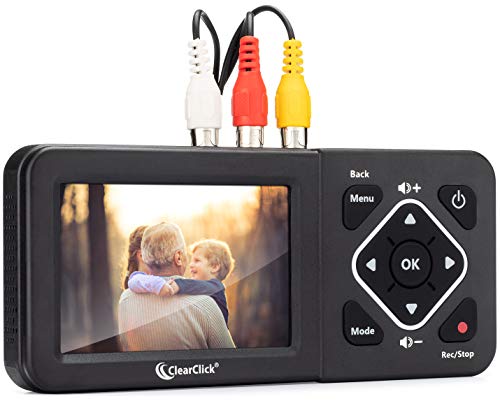
ClearClick offers a straightforward way to digitize older tapes. This device records directly when connected to a working VCR or camcorder, with recording options at SD resolutions (640×480 or 720×480). It does not require a computer or software, making it a simple standalone option for converting VHS, VCR, DVD players, and camcorders to a USB drive. A working VCR/camcorder and tapes are required for use. The unit supports easy transfer to digital formats and can be useful for quick archival tasks.
Roxio Easy VHS to DVD 3 Plus

Roxio Easy VHS to DVD 3 Plus is a comprehensive package designed to convert VHS and other analog tapes to DVD or digital formats. It allows direct capture from VCRs or camcorders and offers built-in editing features like trimming, color enhancement, and transitions. The software aims to streamline the process of preserving home movies and sharing them across devices. It’s compatible with Windows and supports transferring memories to DVDs or widely used digital formats for easy distribution.
VHS TO Digital Converter (VIXLW)

This VIXLW model focuses on analog-to-digital conversion for VHS, VCR, Hi8, and other analog sources. It supports MP4 output and offers automatic NTSC/PAL detection, which helps ensure compatibility with a variety of tapes. It is promoted as driverless for ease of setup, with recommended capture software such as OBS or QuickTime Player for Windows and Mac. It’s a practical option for users seeking a simple, versatile capture device that integrates with common editing workflows.
VCR VHS Transfer Bundle (Tech Collector)

The Tech Collector VHS transfer bundle is aimed at digitizing a collection of VHS tapes with a ready-to-use setup. It often includes a USB capture device and cables to facilitate the transfer to digital files or HDMI-enabled displays. The bundle approach can be convenient for users who want a complete kit without sourcing individual components. This option supports standard VHS-to-digital workflows and is suitable for households seeking a one-box solution to begin digitization immediately.
Buying Guide: Key Purchase Considerations
- Source compatibility: Confirm the device supports your tape formats (VHS, Hi8, V8, DV, VHS-C, etc.) and the connected camcorder or player.
- Output formats: Look for MP4, AVI, or MOV options, and whether the device can burn to DVD or save directly to USB drives or SD cards.
- Hardware vs. software: Some options are standalone capture devices; others rely on PC software. Decide if you want plug-and-play or more control over editing and encoding.
- Resolution and quality: Consider devices offering up to 1080p capture or standard SD capture. Higher resolutions provide more future-proof results but may require more storage.
- Ease of use: If you’re new to digitizing, choose devices with straightforward setup, guided instructions, and minimal driver requirements.
- Software ecosystem: Check compatibility with Windows and Mac, and whether popular editors (OBS, QuickTime, etc.) are recommended or required.
- Hardware requirements: Some devices require a computer with USB 2.0/3.0, adequate storage, and basic processing power for encoding.
- Reliability and support: Look for reputable brands, clear return policies, and accessible customer support for troubleshooting.
- Bundled accessories: Cables, adapters, or pre-installed software can affect value; bundles may save time but ensure all items meet your needs.
- Future-proofing: If you plan ongoing digitization, consider devices that offer updates, recognized file formats, and easy transfer to cloud or external drives.