Best Build a Camera Kit for Creative STEM Projects and Fun Learning
Whether you’re helping a curious teen explore robotics, photography, or DIY electronics, a well-chosen camera-enabled kit can spark hands-on learning. This guide highlights five hands-on builds that blend cameras, coding, and maker-grade components. Each product section includes real-world features, compatibility notes, and practical project ideas to help you pick the right kit for beginners, hobbyists, or students aiming to level up their electronics skills.
style=”display:none;”>Summary Table of Selected Products
- ACEBOTT Robotics Kit With 3MP Camera — Real-time video streaming and Scratch/Arduino compatibility.
- YYSOLDERIC DIY Drone Kit — High-power motors, optical flow positioning, dual cameras, beginner to advanced project.
- Jollylook Pinhole Square Instant Film Camera Kit — Wooden self-assembly retro camera for analog-style learning.
- ELEGOO UNO R3 Smart Robot Car Kit — Arduino-based robot car with sensors and control options.
- ACEBOTT Camera-Enabled Robotics Kit — ESP32-based robot with HD camera and FPV capabilities.
ACEBOTT Robotics Kit With 3MP Camera

The ACEBOTT robotics kit centers on a built-in 3-megapixel HD camera that streams real-time video to a smartphone. This feature enables kids and teens to see through the robot’s “eyes,” capture snapshots, and develop spatial awareness. It’s a practical entry point into image processing and computer vision concepts as part of a broader STEM curriculum.
Powered by an ESP32 controller and compatible with Arduino and Scratch, the kit includes 16 tutorials guiding beginners through assembly and coding. This makes it suitable for science fairs, classroom activities, or family STEM nights, helping learners master electronics, mechanics, and programming.
To grow with evolving skills, modular add-ons such as a robotic arm, tank tracks, or solar panels are supported (sold separately). The expandable design supports advanced exploration as skills progress, aligning with long-term learning goals.
YYSOLDERIC DIY Drone Kit With Brushless Motors

This DIY drone kit emphasizes real-world drone engineering. It combines optical flow positioning, a video module, and high-power brushless motors for a robust flight experience. Assembly takes about 1.5 hours, and the kit is recommended for users aged 14 and older. The project is rated as challenging (difficulty level 5/5), but it rewards with deep understanding of drone technology during build and testing.
Beyond construction, the kit offers hands-on opportunities to showcase flight principles and telemetry, making it ideal for aspiring drone engineers. Features include 360° flips, one-click takeoff/landing, headless mode, and real-time video transmission, suitable for both indoor and outdoor flights with appropriate safety measures.
Learners can document performance, compare flight characteristics, and refine control strategies as they gain proficiency, making it a strong choice for middle- to high-school students pursuing STEM excellence.
Jollylook DIY Pinhole Square Instant Film Camera Kit

The Jollylook pinhole square instant camera kit blends retro charm with hands-on learning. This wooden self-assembly camera uses a pinhole design and is compatible with Instax SQUARE film (film not included), enabling instant development of unique, artistic images. The kit is built from pre-cut wooden parts designed for straightforward assembly without glue, supporting a tactile, maker-friendly experience.
Economical and eco-conscious, the kit emphasizes sustainable craftsmanship. It offers an approachable way to explore photography fundamentals, basic optics, and creative expression while practicing assembly skills and appreciating vintage camera aesthetics.
For project-based learning, students can compare pinhole photography outcomes with modern digital cameras, discuss exposure concepts, and document how materials influence image quality and creative results.
ELEGOO UNO R3 Smart Robot Car Kit

The ELEGOO UNO R3 smart robot car kit targets beginners and intermediate learners seeking hands-on experience with Arduino-based robotics. It’s an integrated kit designed for education, combining programming, electronics assembly, and robotics fundamentals. The 24-module parts set includes obstacle avoidance sensors, line tracing capabilities, infrared remote control, and compatibility with Android and iOS devices for smartphone and tablet control.
The kit emphasizes ease of assembly through standardized interfaces (XH2.54 ports), reducing wiring errors and enabling learners to focus on logic, control flows, and sensor integration. This makes it suitable for classroom demonstrations, after-school clubs, or home projects that aim to build confidence in engineering principles while producing tangible robotic demonstrations.
As students gain familiarity, they can expand the build with additional sensors or accessories to experiment with autonomous navigation, teleoperation, and remote sensing applications, reinforcing a practical understanding of robotics systems.
ACEBOTT Camera-Enabled Robotics Kit (ESP32-Based)
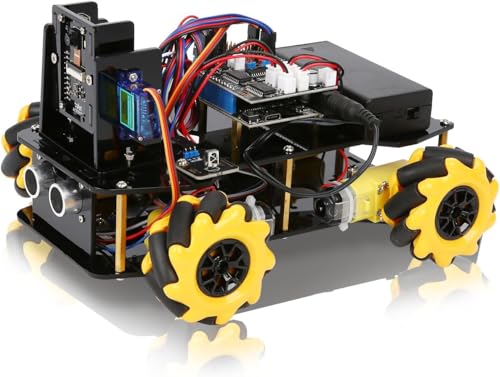
This ACEBOTT kit centers on ESP32-based robotics with a 6cm omnidirectional Mecanum wheel system, enabling easy 360° movement and versatile control. It features a high-quality HD camera for real-time video transmission over WiFi and supports FPV experiences via smartphone viewing. The design emphasizes all-around control, with multiple movement modes including forward, sideways, diagonal, and rotation, and it supports experimental projects and school training for older students and adults.
Key considerations include the need for batteries (not included), software compatibility with Arduino, and the potential to explore advanced topics like motion planning, computer vision, and wireless streaming. The kit provides a platform for hands-on experimentation with real-time video, making it appealing for robotics clubs, classrooms, and independent learners seeking deeper hardware-software integration.
Buying Guide: How To Choose A Camera Kit For Learning
- Skill level and safety: Match complexity to the learner’s age and experience. Start with kits that include clear tutorials and safety guidelines. For younger users, look for kits with modular, snap-together components and non-toxic materials.
- Camera capability and purpose: Decide whether you want real-time streaming, still photography, or both. If you’re exploring FPV or robotics vision, prioritize kits with reliable cameras and compatible software for video transmission or image processing.
- Programming and compatibility: Check language support (Scratch, Arduino, Python) and the ease of integrating with common microcontrollers (ESP32, Arduino UNO, etc.). A kit with plentiful tutorials and community support accelerates learning.
- Expansion and future proofing: Look for modular kits that allow add-ons (robotic arms, additional sensors, solar modules, or extra cameras). This enables gradual skill growth and longer-term engagement.
- Durability and repairability: Choose kits built with robust components and replaceable parts. A well-documented parts list and easy availability of spare components keep projects moving forward.
- Learning outcomes and project ideas: Consider whether the kit supports projects aligned to school curricula, science fairs, or DIY portfolios. Clear project paths help learners demonstrate progress and creativity.
- Value and total cost: While prices aren’t shown here, compare not just the base kit but also potential expansion costs, required accessories, batteries, and film or sensors needed for ongoing projects.
When selecting a camera kit, factor in the learner’s goals—whether they want to explore robotics, photography, or embedded systems. A kit that combines clear instruction, hands-on assembly, and expandable features provides a durable platform for ongoing experimentation, from basic coding to advanced FPV flights and image-based projects.