Best Barlow Lens T-Adapters for Telescopes and Astrophotography
Barlow lenses and T-adapters are essential tools for expanding telescope capabilities, enabling higher magnification and easier astrophotography. This guide highlights five reliable options designed to work with 1.25-inch eyepieces and various camera setups, so you can choose the right combination for lunar detail, planetary observing, or deep-sky imaging. Each entry includes key specifications and practical usage notes to help you compare performance and compatibility across popular brands.
| Product | Brand | Magnification | Interface | Notes |
|---|---|---|---|---|
| Celestron 93640 1.25 Inch Universal Barlow and T-Adaptor | Celestron | 5X (Barlow) | 1.25″ | T-Adaptor | Universal fit; solid build |
| Bindpo 5X Barlow Lens | Bindpo | 5X | 1.25″ | Fully multi-coated; compact |
| Bewinner 5X Barlow Lens | Bewinner | 5X | 1.25″ | M42 thread | Aluminum body; DSLR compatible |
| Celticbird 2X Barlow with T-Adapter Kit | CELTICBIRD | 2X | 1.25″ | M42 | Includes T-Adapter for camera |
| Astromania 2X Barlow Lens | Astromania | 2X | 1.25″ | Metal, fully multi-coated |
Celestron 93640 1.25 Inch Universal Barlow and T-Adaptor

The Celestron 93640 combines a 1.25-inch Barlow lens with an integrated T-adaptor for straightforward astrophotography and high-magnification viewing. Its universal design fits standard 1.25-inch focusers and accepts common T-rings for DSLR or mirrorless cameras with separate adapters. The compact, lightweight construction makes it a versatile choice for beginners and seasoned observers alike. While the product listing emphasizes compatibility, the exact magnification scaling depends on the eyepiece used, typical of 1.25-inch Barlow configurations. Ideal for lunar details and planetary scrutiny when aiming for comfortable eye relief and stable focus.
Bindpo 5X Barlow Lens For 1.25″ Telescopes

The Bindpo 5X Barlow Lens is designed to extend the reach of 1.25-inch eyepieces, delivering higher magnification for close-up lunar features and planetary detail. Its all-metal body suggests durability, and the 1.25-inch interface ensures compatibility with a wide range of focusers. The design emphasizes maintaining a comfortable field of view and exit pupil, which helps reduce eye strain during longer observing sessions. This option is well-suited for enthusiasts who want a robust, affordable upgrade to standard eyepieces without sacrificing image quality.
Bewinner 5X Barlow Lens With 1.25″ Interface
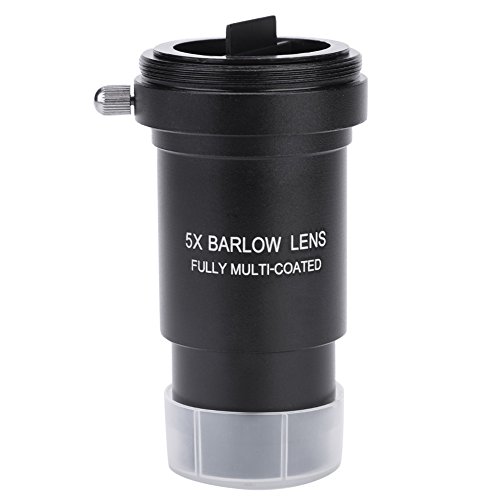
The Bewinner 5X Barlow Lens features a durable aluminum alloy body with a black anodized finish and M42 x 0.75mm threading for T-adapter compatibility, enabling easy attachment to DSLR or SLR cameras via a separate ring. The 5X magnification boosts viewing of the Moon, planets, and brighter deep-sky targets, while the O-ring seals and precise machining aim to preserve alignment and reduce light scatter. It emphasizes versatility for photographers seeking telescope-to-camera setups without a bulky converter.
CelticBird 2X Barlow Lens with T-Adapter Kit

The CelticBird 2X Barlow Lens kit includes a 2X magnification Barlow, a universal 1.25-inch T-adapter, and a camera-ready pathway for Nikon SLR compatibility. It supports common DSLR framing and aids in achieving doubled focal length for more dramatic planetary or lunar shots. The kit indicates it fits most telescope brands, though it does not support mirrorless bodies without a suitable adapter, making it a practical pick for traditional DSLR users who want a simple, integrated imaging setup.
Astromania 2X Barlow Lens, 1.25 Inch

The Astromania 2X Barlow Lens is a robust, fully multi-coated 1.25-inch accessory designed to double the magnification of any compatible eyepiece. Its metal construction and apochromatic-like optics focus on high light transmission and reduced chromatic aberration, delivering crisper planetary and lunar views. The device also features a thoughtful filter-thread interface, enabling use with 1.25-inch filters for photography enhancements. This option balances cost with performance, making it suitable for entry-level and intermediate observers seeking sharper, more detailed images.
Buying Guide
Key considerations help determine the best Barlow lens and T-adapter combination for your setup. Compatibility is fundamental; verify that the adapter threads match your focuser and camera (1.25-inch interfaces, M42 threads, or DSLR rings). Magnification choices vary by eyepiece and telescope focal length—2X and 5X are common, but very high magnification can reduce brightness and exit pupil. Coatings improve contrast by reducing internal reflections, so multi-coated optics are preferable for clearer views.
Camera compatibility matters for astrophotography. Some adapters include T-threads to connect to DSLR or mirrorless bodies, while others require separate rings or adapters. When planning photography, consider back focus and possible vignetting, particularly with fast telescopes or wide-field optics. Durability is another factor; aluminum bodies and precise machining reduce flex and maintain alignment during temperature changes and travel.
Mounting and stability are essential; a solid hold on the focuser prevents image shift and improves focus accuracy. Accessory sets that combine a Barlow with a T-adapter streamline the workflow for both observing and imaging, but independent components can offer greater flexibility when upgrading later. Finally, consider future expandability—whether you plan to add filters, a dedicated astro-camera, or larger focal-length accessories, and ensure your chosen option will scale with your ambitions.
In sum, the five products reviewed provide a range of magnification options and interface configurations to suit typical 1.25-inch telescope setups. Whether you prioritize rugged build, camera-ready T-threads, or a simple plug-and-play experience, there is a Barlow lens and T-adapter combination to enhance lunar and planetary observing as well as entry-level astrophotography.