Best XLR Adapters for Camcorders: 5 Top 3-Pin Converters
Answering the common question, these XLR adapters are designed to connect 3.5mm TRS mics and other sources to camcorders, recorders, or mixers with XLR inputs. The best options fit different setups: compact field kits, studio-style rigs, or budget-friendly on-the-go solutions. This guide highlights five reliable adapters, each chosen for compatibility, build quality, and practical use cases for American buyers.
| Product | Brand | Best For | Key Benefit |
|---|---|---|---|
| Movo FXLR-PRO 3.5mm to XLR | Movo | Camcorders needing phantom-to-plug power | Phantom power conversion to plug-in power |
| HUALEU 2 Pack 1/8 TRS to XLR | HUALEU | Balanced 48V mics with rugged build | Durable metal construction and dual pack |
| QIANRENON Balanced Headphone Adp | QIANRENON | Balanced XLR to Mini XLR connections | Three-pin Mini XLR compatibility and shielding |
| Jozzai 3.5mm to XLR Cable | Jozzai | Simple cable-based conversion | Gold-plated connectors and shielding |
| Togconn XLR to 1/8″ Adapter 2 Pack | Togconn | Budget two-pack for field use | Two-pack convenience |
Movo FXLR-PRO 3.5mm to XLR Adapter

The Movo FXLR-PRO connects a standard TRS 3.5mm microphone plug to a 3-pin XLR jack, making it suitable for camcorders, recorders, or mixers that require XLR inputs. It also converts phantom power (12-48V) to the lower 3.5mm plug-in power, which helps mics that rely on plug-in power operate from XLR phantom power. This product is best for shooters who use compact mics and need a simple power bridge between devices.
Best for: Videographers using compact handheld mics that require plug-in power, or setups where phantom power is the primary source and you need a compatible 3.5mm mic input. Caution: it relies on phantom power being available and may not suit mics that demand full 48V or non-standard 12V supplies.
HUALEU 2 Pack 1/8 TRS to XLR

This HUALEU kit provides two balanced adapters featuring a 1/8″ TRS female to 3-pin XLR male connection. It emphasizes rugged metal construction and compact design, making it ideal for field recording with camcorders or recorders. It’s best for users who need durable, portable adapters and frequently work with 3.5mm TRS mics that feed an XLR input on their gear. Limitations include compatibility notes: it is designed for standard 3.5mm TRS cables and may not work with other 3.5mm connector types or devices that require phantom power not delivered through the TRS path.
QIANRENON Balanced Headphone Adapter

The QIANRENON adapter converts XLR female to mini XLR male, supporting balanced signals and multiple device connections such as microphones, speakers, cameras, or camcorders. It highlights a metal shell and shielding to reduce interference, which helps preserve signal quality over longer runs or in noisy environments. Best for: users with mini XLR inputs on gear that requires robust, shielded connections. Caution: confirm that your mic and device support Mini XLR rather than standard XLR to avoid compatibility issues.
Jozzai 3.5mm to XLR Cable

The Jozzai adapter is a cable-based solution that converts 3.5mm TRS to 3-pin XLR, suitable for camcorders, recorders, and mixers. It features gold-plated connectors and strong shielding to minimize interference. It’s best for those who prefer a direct cable approach rather than a separate adapter unit. Note: not compatible with mics requiring phantom power or with 3.5mm TRRS connections.
Togconn XLR to 1/8″ Adapter

The Togconn two-pack provides 3-pin XLR male to 3.5mm (1/8 inch) female adapters, intended for camcorders, recorders, or mixers. The kit offers cost-effective flexibility for field audio setups and quick swaps between mics and devices. Best for: budget-conscious buyers needing multiple adapters for on-the-go shoots. Caution: verify that your mic does not require phantom power, as this adapter path typically does not supply it.
Ancable 3.5mm to XLR (4-Pack)

The Ancable four-pack delivers multiple 3.5mm TRS to 3-pin XLR adapters, designed for camcorders, recorders, and mixers. It emphasizes solid metal construction, compact form, and compatibility with standard TRS mics. This set is best for users who need several adapters and value durability, but note that it does not support microphones requiring phantom power via TRS.
Seefeful 3.5mm to XLR Cable
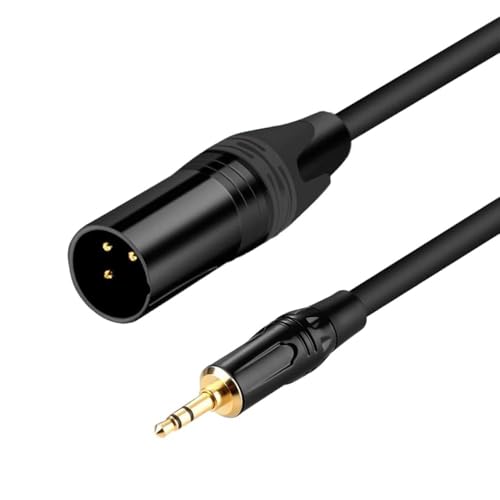
The Seefeful 3.5mm to XLR cable provides a balanced conversion path from a 3.5mm TRS mic to XLR for camcorders and recorders. It highlights a balanced signal transfer with 20 AWG 4N oxygen-free copper shielding to reduce interference and maintain signal integrity. Best for: camera operators who want a simple, dedicated cable solution for one-to-one connections. Caution: ensure the cable is compatible with your mic’s power needs and device input type.
Buying Guide
What to consider when choosing an XLR adapter for camcorders
- Power needs: Some adapters convert phantom power to plug-in power for mics. If your mic relies on phantom power, ensure the adapter supports this conversion.
- Connector compatibility: Verify whether your mic uses TRS (3-pole), TRRS, or other variants, and whether your camera or mixer accepts XLR or Mini XLR inputs.
- Build quality: Metal housings and shielding reduce interference, especially in outdoor shoots or crowded environments.
- Portability: Field kits benefit from compact devices or multi-packs for quick changes on set.
- Power delivery: If your mic requires external power, confirm the adapter provides stable power or does not impede mic performance.
- Compatibility notes: Some adapters do not support certain microphones or cables (for example, some 3.5mm TRRS or microphones needing phantom power). Check the product features carefully.
FAQ
- Can I use a 3.5mm TRS microphone with a camcorder that has an XLR input without an adapter?
No. An adapter is typically required to bridge the 3.5mm signal to the XLR input, ensuring compatibility and power handling. - Do these adapters provide phantom power to microphones?
Some do, via built-in phantom-to-plug power conversion; others do not. Check each product’s features to confirm power options. - Will these adapters work with TRRS mics?
Many listed adapters target TRS only. Some may not support TRRS; review the compatibility notes before purchasing. - Is shielding important for camcorder audio?
Yes. Shielding reduces interference and hum, especially in professional or noisy environments. - Should I buy a multi-pack adapter for field use?
A multi-pack offers flexibility and quick swaps, which is advantageous for on-location shoots.