Best Wireless Fiber Optic Cameras for Inspections
Looking for a wireless fiber optic camera to inspect tight spaces, pipes, engines, or walls? This guide highlights five top options and explains who each is best for. All picks connect wirelessly or via USB-C, minimize setup, and feature fiber-optic or high-quality LED illumination for clear results. Perfect for professionals and DIYers alike, these models target automotive, plumbing, HVAC, and electronics inspection needs.
| Product | Best For | Key Benefit |
|---|---|---|
| Teslong USB-C Endoscope Camera | Tech enthusiasts with USB-C devices | Wide compatibility and plug-and-play simplicity |
| Teslong 16.5FT Endoscope Borescope | Professional mechanics and electricians | Long semi-rigid cable, IP67 waterproof |
| NIDAGE Wireless Endoscope with Light (4.92FT) | Car and home repair hobbyists | Compact head, 1080P video, flexible cable |
| Cruiser Fiber Optic Inspection Microscope | Lab or field technicians needing 400x magnification | High magnification with laser protection |
| DXZtoz 10FT Articulating Borescope | Pipe and wall inspections | Two-way steering with compact camera head |
Teslong USB-C Endoscope Camera With Light

The Teslong USB-C Endoscope offers broad device compatibility, making it ideal for buyers with a modern USB-C phone, tablet, or laptop. It uses a plug-and-play approach—no WiFi setup required—so you can start inspecting quickly. Eight high-intensity LED lights illuminate dark spaces, and a built-in white balance adjustment helps produce clearer images without manual light tweaking. This model is best for buyers who want immediate results on iPhone, iPad, Android devices, or laptops using a USB-C connection.
Best for: Tech enthusiasts and field workers who want seamless USB-C compatibility and simple operation. Limitation: Some users may prefer a Bluetooth or wireless option for non-USB-C devices.
Teslong 16.5FT Endoscope Borescope

This Teslong model provides a longer, semi-rigid 16.5-foot cable and IP67 waterproofing, making it well-suited for automotive, HVAC, plumbing, and wall inspections. It features 8 LED lights for bright imaging, a 78-degree wide viewing angle, and a 180-degree rotating display with 1.5x zoom for detailed analysis. Photos and videos can be captured and stored on an SD card or transferred via the included charging cable.
Best for: Pros needing reach in larger spaces and reliable water/dust resistance. Limitation: Data storage requires an SD card (not included).
NIDAGE Wireless Endoscope with Light
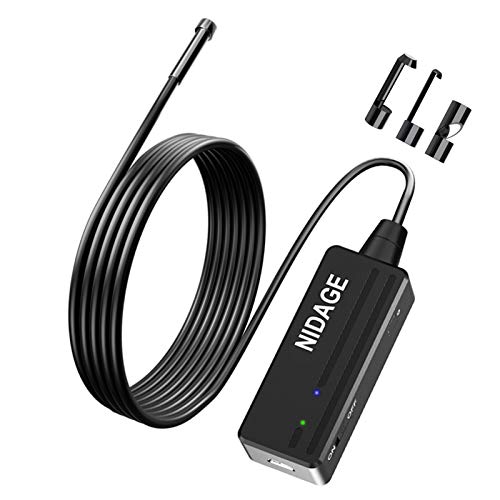
NIDAGE’s wireless endoscope emphasizes a compact 5.5mm camera head designed for tight spots like engine bays, pipes, and HVAC components. It supports Android and iOS devices and delivers 1080P video with a 4.92-foot semi-rigid cable for flexible navigation. This option is better for users who need a tiny camera head to access cramped spaces and quick wireless setup.
Best for: Automotive and home repair tasks in narrow areas. Limitation: Shorter cable length may limit reach in large projects.
Fiber Optic Inspection Microscope 400x

This Cruiser fiber optic microscope stands out for high magnification up to 400x and included laser protection to shield the eyes during close inspection. It uses universal adapters (2.5mm and 1.25mm) for compatibility with various fiber optic cables. Suitable for lab, electronics, and precision inspection tasks requiring detailed close-ups.
Best for: Technicians needing high-magnification viewing in a controlled setting. Limitation: Laser filter and adapters may add bulk for casual use.
DXZtoz 10FT Articulating Borescope
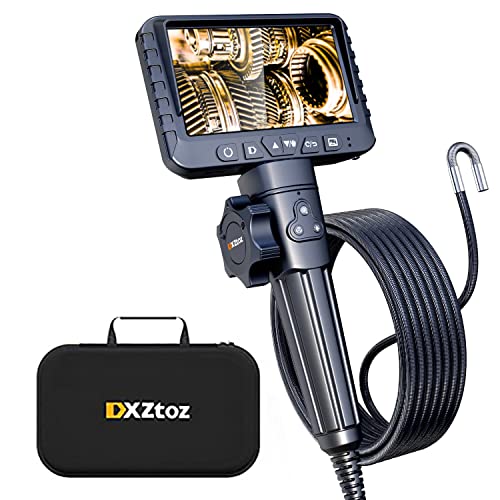
The DXZtoz articulating borescope offers two-way steering for improved navigation in tight spaces, making it ideal for pipe and wall inspections. It features a small 0.33-inch camera head and a handheld 4.3-inch monitor, allowing on-site control without external devices. The 10-foot cable length balances reach and manageability for various inspection tasks.
Best for: Inspectors who frequently change directions in pipes or walls. Caution: The modern wheel-controlled articulation may require practice to maximize precision.
NIDAGE Two-Way Articulating Endoscope
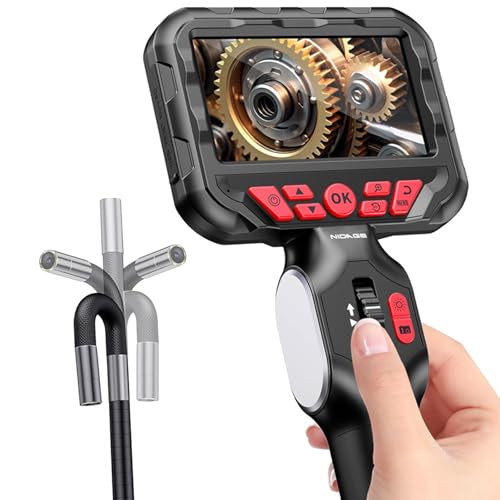
NIDAGE’s two-way articulating endoscope provides 210° maneuverability with a 4.3-inch IPS display for sharp visuals. The 6.2 mm camera head, 6 LED lights, and flexible fiber optic scope are well-suited for automotive engines, electrical work, and machinery inspections. It supports precise, all-round viewing without frequent cable twisting.
Best for: Detailed inspections where multi-angle viewing is essential. Limitation: The 6.2 mm head may still struggle in some extremely tight spaces compared with thinner alternatives.
Buying Guide: Key Considerations for a Wireless Fiber Optic Camera
- Cable length and flexibility: Longer cables reach deeper into ducts and engines, but may be harder to manage. Semi-rigid cables strike a balance between reach and form.
- Camera head size: Thinner heads access narrow slots; larger heads capture wider areas but may not fit tight openings.
- Illumination: LED brightness and color accuracy matter in dark spaces. Look for adjustable lighting and white balance features.
- Connectivity: USB-C devices offer plug-and-play simplicity. Wireless models provide mobility but may require app support and battery life considerations.
- Magnification and viewing angle: Higher magnification is helpful for details; a wide viewing angle improves situational awareness in cluttered spaces.
- Durability and waterproofing: IP ratings (like IP67) protect against water and dust in wet environments.
- Data capture: Ability to store photos/videos (SD cards or internal storage) can improve documentation of findings.
Frequently Asked Questions
- What is a fiber optic endoscope used for?
– It provides high-clarity imaging in tight or dark spaces such as engines, pipes, and HVAC ducts by delivering light and flexible viewing capabilities through a slender probe. - Are wireless endoscopes easy to use?
– Yes, many models offer plug-and-play setup or simple app-based connections, enabling quick field use with smartphones or tablets. - Which features should I prioritize for automotive inspections?
– Look for a small camera head, good LED illumination, at least 4–6 LED lights, a semi-rigid or flexible long cable, and moisture resistance (IP67 or similar). - What should I consider about safety and eye protection?
– Some models include laser or bright LEDs; ensure proper safety features and follow manufacturer guidelines to protect eyesight during use. - Is a longer cable always better?
– Longer cables help reach distant areas but can be harder to maneuver. Choose a length that matches typical job sites and your handling preferences. - Do these devices require a separate monitor?
– Some models have built-in displays; others rely on a connected smartphone, tablet, or dedicated monitor for viewing.