Best Wildlife Cameras With Wifi for 2026
The market for wildlife cameras with WiFi keeps advancing, offering longer battery life, faster triggers, and clearer night vision. This guide highlights five top options that balance image quality, connectivity, and rugged design for American outdoor use. Below, you’ll find quick overviews, practical insights, and a buyer’s guide to help you choose the right model for your wildlife monitoring needs.
| Product | Brand | Key Benefit | Power & Connectivity |
|---|---|---|---|
| Cokque Trail Camera – Solar 8K 60MP WiFi | Cokque | Exceptional night performance and ultra-high resolution | Solar powered with 7800mAh battery, 0.1s trigger, WiFi |
| MAXDONE Solar Trail Camera WiFi | MAXDONE | Long-range night vision and reliable app control | Solar + battery, WiFi6, Bluetooth |
| Zelvor Trail Camera Solar Powered 4K | Zelvor | 4K video and 46MP photos with quick trigger | Solar powered, 0.3s trigger, app control |
| GardePro E8 2.0 Pro WiFi Trail Camera | GardePro | Long WiFi range and 4K/64MP clarity | Dual antennas, App control, 165ft WiFi |
| VOOPEAK WiFi Trail Camera | VOOPEAK | Wide view and fast 0.1s trigger without monthly fees | Local WiFi hotspot, no home WiFi needed |
Product highlights and practical notes help you compare at a glance before diving into deeper details for each model.
Cokque Trail Camera: 8K Clarity With Solar WiFi
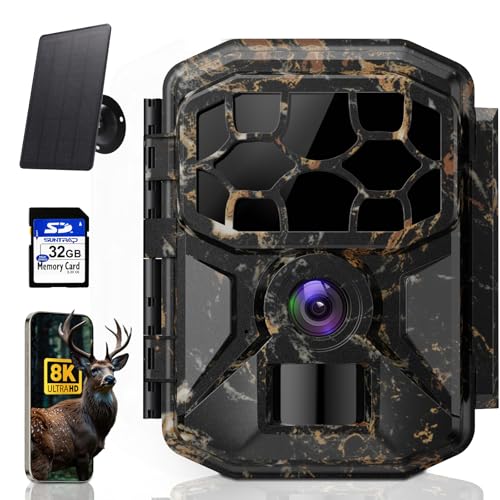
The Cokque model emphasizes high-end optics and long-range nighttime capability. It uses a premium lens and image sensor to produce 8K ultra HD videos and 60MP photos, paired with large 850nm low-glow LEDs for better night visibility. A 0.1-second motion-activated trigger helps capture fast wildlife movements, reducing missed shots. The camera supports solar power via an integrated 7800mAh battery, plus a battery management system designed to extend field time—reported to run up to eight months in some setups. While the setup favors remote, sun-rich locations, ensure adequate solar exposure for consistent operation. Weather sealing (IP66) provides outdoor reliability, but rapid deployment in shaded or dense habitats may require a plan for charging or backup power. This model suits users seeking exceptionally high image fidelity and long intervals between battery changes, especially in rugged habitats where frequent site visits aren’t feasible.
MAXDONE Solar Trail Camera With WiFi And Bluetooth
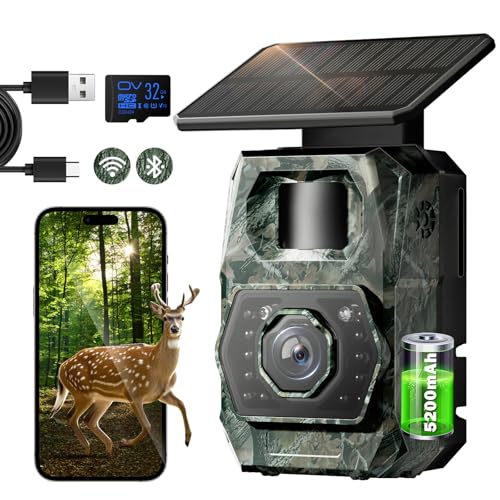
MAXDONE combines solar power with modern connectivity and a robust night-vision suite. A built-in 5200mAh battery, plus solar charging, supports extended use without frequent battery changes. The camera supports 65-foot nighttime visibility with clear images and video, and it uses WiFi6 alongside Bluetooth to establish a secure, local connection for setup and data transfer via a dedicated app. The solution prioritizes privacy by keeping data within the local device ecosystem (no external servers for the hotspot). Its 48MP stills and 1296P video quality strike a balance between detail and storage needs, while a 0.5–foot setup proximity requirement for initial connection is a practical note for newcomers. The model is well-suited for property surveillance, backyard monitoring, and wildlife observation in various terrains where a stable solar power source is available.
Zelvor Trail Camera: 4K Clarity With Solar Power

Zelvor delivers 4K Ultra HD video and 46MP photos with 850nm low-glow LEDs for discreet nighttime monitoring. Its solar-powered design aims for year-round operation, with a 4400mAh battery backup and a 0.3-second trigger to minimize missed moments. The device offers a convenient app-based workflow for previewing and downloading images and videos over the built-in hotspot. While WiFi range is best described as limited (typical 32.8 feet), it supports quick on-site checks and adjustments without removing the SD card. A 32.8-foot practical range makes it ideal for medium-sized properties and trails where frequent human access is reasonable but not ideal for constant camera visits.
GardePro E8 2.0 Pro: 4K Video And 64MP Imaging
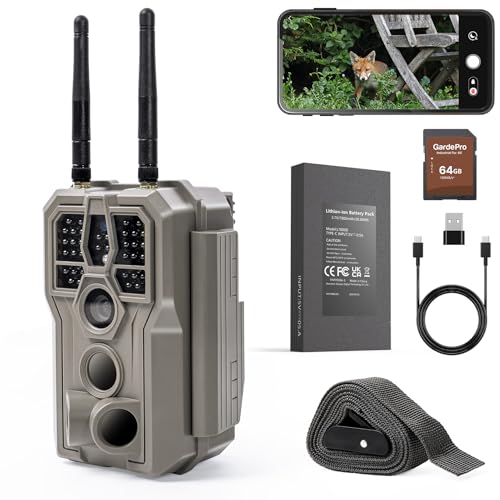
The GardePro E8 2.0 Pro is built for long-range reliability with dual antennas to extend the WiFi range up to about 165 feet in open areas. This model yields 4K Ultra HD videos and high-resolution 64MP stills, making it a strong choice for documenting detailed wildlife or property surveillance. App control is central to its workflow, allowing you to manage settings, view Live View, and download media directly to your phone without removing the SD card. Note that it does not connect to home WiFi, emphasizing a localized operating mode. The combination of extended range, high image quality, and convenient mobile management makes it a versatile option for remote trails or larger backyards where optimal signal reach matters.
VOOPEAK WiFi Trail Camera With 130° View

VOOPEAK emphasizes an expansive field of view and rapid detection with a 0.1-second trigger and 130-degree lens. It uses a local WiFi hotspot for smartphone-based monitoring and does not rely on home WiFi. This model fits scenarios where you want broad coverage without cellular connectivity, such as evaluating a large perimeter or a wildlife corridor near a property boundary. Its local app control enables real-time previews and settings adjustments, while H.264 compression helps manage storage efficiently. For users who prioritize immediate on-site access and a wide monitoring window, this option provides a practical, budget-conscious solution.
Buying Guide: Key Purchase Considerations and Comparisons
When selecting a WiFi-enabled wildlife camera, weigh how connectivity, power, and image quality align with your monitoring goals. Consider the following perspectives to make a well-rounded choice:
- Connectivity Model: Local hotspot WiFi (no home WiFi) simplifies on-site use and reduces privacy concerns, but range is typically limited to 30–65 feet. WiFi6 or app-based control can improve speed and reliability, while some models rely solely on solar or battery power with minimal maintenance.
- Power System: Solar + rechargeable batteries extend field time and reduce upkeep, especially in remote locations. Check panel efficiency, battery capacity, and built-in power management. In harsher climates, consider a backup battery option or multi-day charging plans.
- Trigger Speed and Sensitivity: A sub-0.3-second trigger is advantageous for fast wildlife. Models offering 0.1-second triggers or AI-assisted processing tend to capture more fleeting moments but may require more power or higher storage.
- Resolution and Night Vision: 4K/60MP provides crisp daytime and nighttime detail, which is valuable for identifying species and behaviors. Low-glow infrared helps minimize animal disturbance, an important consideration in wildlife ethics and behavior studies.
- Field of View and Range: A wide-angle lens (100–130 degrees) increases the chance of detecting activity. WiFi range can affect placement strategy; opt for cameras that match your property size, trail width, or habitat corridor.
- Storage and Data Management: Look for devices with loop recording and efficient video compression formats (H.264). Local storage with larger SD cards reduces risk of losing footage, while apps that preview and download directly improve fieldwork efficiency.
- Durability and Weather Resistance: IP ratings and rugged housings ensure operation in rain, dust, or cold. If cameras are mounted outdoors long-term, verify IP66 or higher and test seals for seasonal use.
- App Experience and Privacy: A straightforward app, real-time previews, and direct phone control streamline monitoring. Privacy-conscious users should prioritize devices that keep data local to the camera and phone rather than transmitting to external servers.
- Installation and Footprint: Consider mounting options, battery access, and cable-free setups. Solar-powered cameras require consistent sun exposure; position panels to avoid shading and ensure drainage in rain.
- Cost and Maintenance: More advanced models with 4K video, long WiFi range, or solar power may cost more upfront but lower ongoing maintenance. Evaluate total cost of ownership, including replacement batteries, SD cards, and solar panels.
In summary, the best wildlife camera with WiFi depends on your needs: ultra-high resolution and extreme night capability favor solar-powered, long-battery options for remote landscapes; broad field-of-view and quick triggers suit perimeter monitoring of active areas; and app-centric models prioritize on-site convenience for frequent checks. Balancing power, connectivity, and image quality will yield the most reliable wildlife monitoring setup for your property or research site.