Best Wide Angle Lens Cameras for Expanding Your View
Answering the search for wide angle capabilities, this guide compares five widely compatible options to broaden your field of view. It covers DSLR-ready attachments, RF-mount options, and practical add-ons for mobile and action cameras. Ideal buyers include hobbyists upgrading an entry-level DSLR, enthusiasts chasing expansive landscapes, and vloggers seeking dramatic wide frames. Below is a quick summary of the five selected products and who they’re best for.
| Product | Best For | Key Benefit |
|---|---|---|
| Altura Photo 58MM 0.43x HD Wide Angle Lens | DSLR owners with 58mm lenses | Detachable macro for close-ups |
| Canon RF16mm F2.8 STM Lens | Canon EOS R mirrorless users | Ultra wide, fixed prime with smooth AF |
| Lightdow 58MM 0.43x Wide Angle + Macro | Canon/Nikon/Sony users with 58mm thread | Versatile front-mount attachment |
| ULANZI WL-1 ZV1 Wide Angle/Macro for Sony ZV-1 | Sony ZV-1 vloggers | 2-in-1 with macro, designed for ZV-1 |
| Altura Photo 8mm f/3.0 Fisheye | Canon APS-C DSLR users | 360-degree-like wide fisheye perspective |
Altura Photo 58MM 0.43x HD Wide Angle Lens

This attachment screws onto the front of a 58mm lens, instantly widening the field of view for dramatic landscapes and architectural shots. It includes a detachable macro lens for high-resolution close-ups, useful when you want micro detail without swapping lenses. Best for photographers with Canon or Nikon equipment that uses a 58mm thread. The macro option lets you switch from expansive scenes to close subjects in a single setup, which is ideal for travel photographers capturing both vistas and tiny details. A practical limitation: you must own a compatible 58mm lens to use this attachment.
Who it’s best for: Entry-to-mid-level DSLR users who want an affordable, easy-to-use wide-angle option without investing in a new body or a dedicated wide-angle prime.
Why selected: It offers a simple, affordable path to wider scenes and close-ups in one accessory, with compatibility spanning several Canon and Nikon DSLR kits commonly found in beginner and enthusiast setups.
Limitation to note: It only works with lenses that have a 58mm filter thread; users with other thread sizes will need an adapter or a different model.
Canon RF16mm F2.8 STM Lens

Canon’s first ultra wide-angle fixed focal length RF lens offers bright performance with a constant f/2.8 maximum aperture and smooth autofocus during video thanks to a stepping motor. This lens is designed for the Canon EOS R series and provides a compact, lightweight option for creators who need a broader scene without exotic distortion. It’s best for video creators and landscape shooters who shoot with Canon’s mirrorless lineup. A potential limitation is its fixed focus; users seeking zoom flexibility should consider a zoom-wide option instead.
Who it’s best for: Canon EOS R series users needing a fast, compact ultra-wide prime for landscapes, vlogging, and architectural work.
Why selected: It combines bright optics, compact form, and smooth autofocus, making it a strong match for Canon’s RF ecosystem and creators prioritizing mobility and image quality in wide-angle frames.
Limitation to note: As a fixed focal length, it lacks zoom versatility; this is a trade-off for the bright, consistent performance at wide angles.
Lightdow 58MM 0.43x Wide Angle + Macro

This 58mm front-mount attachment expands the original lens’s field of view and includes a macro option for close-up shots. It’s compatible with a wide range of Canon and Nikon lenses, making it a flexible choice for photographers who want to convert existing kit into a broader, more versatile setup without buying new glass. The lens is best for those who value macro capability alongside wide-angle performance, though image quality can vary with different lens models and setups.
Who it’s best for: DSLR shooters who want a simple, versatile wide-to-macro solution with broad compatibility across common 58mm-thread lenses.
Why selected: Its broad compatibility and dual-use macro feature provide good value for budget-conscious shooters who want both wide landscapes and close-ups in one accessory.
Limitation to note: Performance and vignetting can vary depending on the host lens; test with your specific lens to confirm results.
ULANZI WL-1 ZV1 Wide Angle/Macro for Sony ZV-1
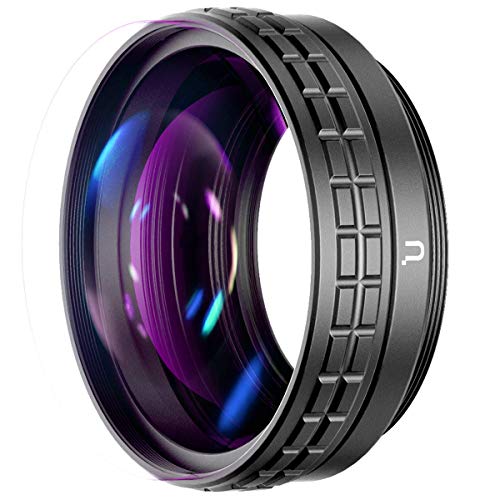
The WL-1 ZV-1 is designed specifically for the Sony ZV-1, converting the camera’s field of view from standard to wider 18mm-equivalent when paired with the macro lens. The macro lens offers up to 10x magnification for close-up subjects. It uses an aluminum frame and crafted optics to minimize distortion and color issues. This two-in-one attachment is ideal for vloggers who want a more expansive scene while still keeping macro detailing accessible during on-the-go production. A limitation: it requires the macro lens to function; the wide angle component alone is not useable.
Who it’s best for: Sony ZV-1 users who want a compact, integrated wide-angle and macro solution for travel vlogging or street photography.
Why selected: It provides a practical, space-saving approach for creators who need both wide scenery and macro detail without changing lenses or carrying extra gear.
Limitation to note: Only compatible with the Sony ZV-1; not a universal attachment for other cameras.
Altura Photo 8mm f/3.0 Fisheye
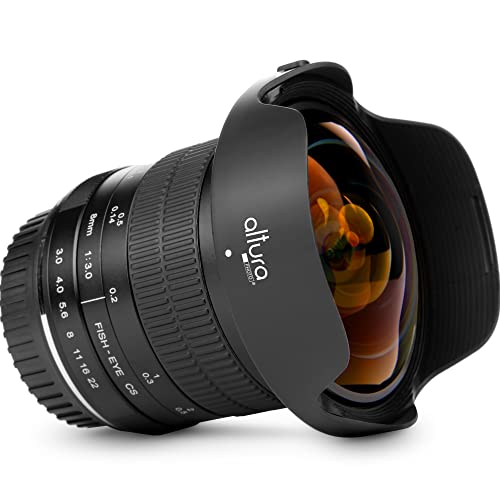
This 8mm fisheye lens is compatible with Canon DSLR bodies and delivers an ultra-wide, circular or full-frame image depending on the camera. It is manual focus and supports a dramatic, spherical perspective that appeals to creative shooters. If you want a truly immersive, curved field of view, this option is worth considering. Note that vignetting and extreme distortion can be intentional, which may not suit all subjects or styles.
Who it’s best for: Canon DSLR users seeking a creative, extreme wide-angle effect for landscapes, architecture, and experimental photography.
Why selected: It expands the creative palette with a distinct, circular-wide perspective that many landscape and architecture shooters find compelling.
Limitation to note: Distortion and circular image are characteristic; not ideal for standard architectural linearity or portraits.
Buying Guide: Key Considerations for Wide-Angle Attachments
What camera system do you own?
Attachment compatibility is the most important factor. Choose items matching your lens thread size (e.g., 58mm) or a camera mount (Canon RF, Sony E, etc.).
Do you need macro capabilities?
Many wide-angle attachments include a macro option. If macro is a priority, look for models that offer a detachable or integrated macro lens with solid close-up performance.
Will you shoot video or stills?
Some lenses offer smooth autofocus for video (notably the Canon RF option). If you primarily shoot video, prioritize models with strong AF and minimal distortion in wide-angle ranges.
How important is distortion control?
Cheaper wide-angle attachments can introduce vignetting or soft edges. Look for multi-element optics and coatings that reduce ghosting, flare, and color shifts for clearer wide frames.
Portability and setup time
Vlogging and travel photographers value quick setup. Two-in-one macro options or clip-on systems can save time, but ensure the attachment remains stable during movement.
Budget and value
DSLR attachments with macro ability often offer a good balance between price and capability, while dedicated lens upgrades (like RF or dedicated wide primes) provide higher optical quality at higher cost.
FAQ
- What is a wide-angle lens attachment? A small front-mount accessory that expands the field of view of your existing lens, sometimes including a macro option for close-ups.
- Will a wide-angle attachment affect image quality? It can, depending on the build quality and compatibility with your lens. High-quality optics and coatings mitigate issues like ghosting and vignetting.
- Can I use these on any camera? Not always. Check thread size or mount compatibility (58mm, RF, or camera-specific attachments) before purchasing.
- Is macro useful with wide-angle attachments? Yes, many models include macro elements, enabling close-up shots without swapping lenses, which is convenient for travel and macro enthusiasts.
- Are these good for video? Some attachments offer better AF performance and minimal distortion for video, but always verify compatibility with your camera’s autofocus system.
- Do I need a new lens if I buy a wide-angle attachment? No, these attach to your current lens via the filter thread or dedicated mount, expanding your wide-view options without a full lens upgrade.