Best Wide-Angle E-Mount Lenses for Sony: Expansive, Sharp Prime Options
For Sony shooters, wide-angle lenses unlock dramatic landscapes, architectural lines, and immersive interiors. The following picks cover full-frame and APS-C E-mount options, balancing sharpness, speed, and portability. Whether you shoot with an a7-series body or an APS-C camera, these lenses emphasize wide perspective without compromising autofocus, color, or edge-to-edge clarity. Each option is described with its strengths, best-use cases, and practical notes for travel, urban photography, and creative projects.
| Product | Brand | Focal Length | Mount | Highlights |
|---|---|---|---|---|
| Sony FE 24mm F1.4 GM | Sony | 24mm | Full-Frame E | G Master sharpness; bright f/1.4 |
| Tamron 20mm F2.8 Di III OSD M1:2 | Tamron | 20mm | Sony E-Mount | Compact; 1:2 macro close focus |
| Viltrox 20mm F2.8 FE | Viltrox | 20mm | Full-Frame E | AF; EXIF transmission; lightweight |
| Viltrox 23mm F1.4 AF | Viltrox | 23mm | APS-C E | Bright F1.4; AF with STM motor |
| TTArtisan 10mm F2.0 Ultra-Wide | TTArtisan | 10mm | APS-C E | Ultra-wide; 105°; manual or prime option |
Sony Fe 24mm F1.4 Gm Wide-Angle Prime
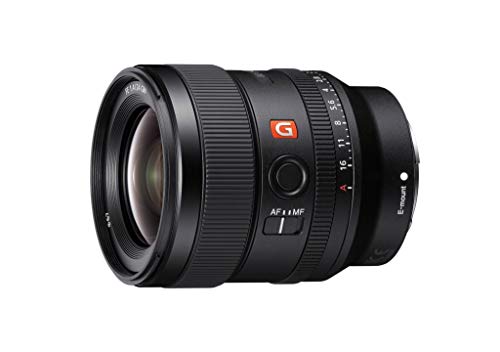
The Sony FE 24mm F1.4 GM is a premium wide-angle prime designed for full-frame E-mount. It delivers edge-to-edge sharpness with a bright f/1.4 aperture that enhances low-light performance and depth of field control. Built on Sony’s G Master platform, it minimizes distortion and delivers smooth, natural color and contrast across the frame. Autofocus remains fast and reliable on typical Sony bodies, supporting landscapes, architecture, and night photography where precise detail matters. The compact form and robust build make it a practical choice for travel and field work as well.
Tamron 20mm F2.8 Di III OSD for Sony

Tamron’s 20mm f/2.8 Di III OSD is a compact, lightweight option that suits both full-frame and APS-C Sony bodies. It delivers high MTF performance with strong contrast across the frame, aided by a short minimum focusing distance and a 1:2 macro close-focus capability. This makes it ideal for landscapes, interiors, and travel photography where weight matters. Autofocus is quiet and steady thanks to Tamron’s OSD system, while the overall design prioritizes portability without sacrificing image quality. Some users may value tighter manual focus control and close-range performance depending on subject matter and shooting style.
Viltrox 20mm F2.8 FE for Sony

The Viltrox 20mm F2.8 FE provides a compact option for full-frame Sony E-mount users. It offers fast autofocusing suitable for everyday use and moving subjects, along with EXIF information transmission and firmware upgrades via USB. Weighing around 157 grams, it stands out for portability, making it a favorable choice for street photography, landscapes, and quick city shoots. Its 20mm focal length yields expansive wide-angle coverage, enabling dramatic compositions without adding bulk to your bag. This lens strikes a balance between performance and travel-friendly design for Sony shooters.
Viltrox 23mm F1.4 AF For Sony

The Viltrox 23mm F1.4 AF for Sony E-mount is designed with APS-C bodies in mind, offering a bright F1.4 aperture that suits low-light scenarios and portraits with a natural field of view. An STM stepping motor enables quiet, precise autofocus, while full-time manual focus override allows hands-on control when composing tricky scenes. The 84.9° field of view makes it versatile for street photography, interiors, and environmental portraits. Though optimized for APS-C, it remains a practical travel lens thanks to its compact size and solid optical performance.
TTArtisan 10mm F2.0 Ultra-Wide for Sony

The TTArtisan 10mm F2.0 is an ultra-wide APS-C lens with manual focus, delivering a dramatic 105° angle of view. Its HD multilayer coating reduces flare and ghosting in bright scenes, while the optical design uses two high-refractive-index elements and two aspherical elements to minimize aberrations. A close focusing distance around 0.25 meters makes it well suited to architectural details, interiors, and expansive landscapes that benefit from exaggerated perspective. The manual focus approach invites deliberate framing and creative control, appealing to photographers seeking a distinct wide-angle look.
Buying Guide
Choosing a wide-angle lens for Sony depends on sensor size, desired field of view, and how you intend to shoot. Below are key considerations and practical comparisons to help align gear with your projects.
- Lens type and sensor format: Full-frame (FE) lenses like the Sony 24mm GM pair with full-frame bodies for maximum image quality, while APS-C options (23mm, 10mm, 25mm) are lighter and offer more compact builds with crop factors that shape field of view.
- Focal length and field of view: 20–24mm ranges cover broad landscapes and architecture; 10mm delivers dramatic ultra-wide perspective; 23mm on APS-C gives a standard-wide look. Choose based on space, subject distance, and composition goals.
- Aperture and low-light performance: F1.4 and F2.0 lenses gather more light and create subject separation at closer distances, but can require careful focus in dim scenes. Consider whether shallow depth of field is a goal in wide-angle work.
- Autofocus performance: Fast, quiet AF is beneficial for landscapes with moving elements, urban shooting, and video. STM motors and OSD systems enhance focusing behavior and user experience.
- Image quality and optics: Look for sharpness, color fidelity, flare control, and distortion management. Macro-capable designs (like 1:2 on Tamron) add versatility for close-up scenes, while coatings reduce ghosting in bright sun.
- Portability and build: Weight, size, and build quality matter for travel and daily wear. Lenses with compact form factors ease handling on longer shoots, while weather sealing benefits outdoor work.
- Value and compatibility: Budget-friendly options (like TTArtisan or Tamron) may sacrifice some autofocus speed or build feel, while premium options (Sony GM) prioritize optical excellence and resilience. Ensure compatibility with your camera body and potential firmware updates.
- Use-case scenarios: Landscapes and cityscapes benefit from sharp corners and good contrast; interiors require good edge-to-edge performance; astro work demands high-contrast optics and minimal coma; video shooters value silent, accurate AF and lightweight rigs.