Best White Balance Reference Cards for Accurate Color Calibration
Photographers rely on white balance reference cards to ensure consistent color in-studio and on location. This guide reviews five highly regarded options that help set precise color balance and exposure. Each card provides a reference gray or gray-and-white surface, compatible with popular editing software and cameras. Below you’ll find a quick product summary, followed by detailed sections and a buying guide to help you choose.
Summary Of Selected Products
| Product | Brand | Primary Benefit | Size |
|---|---|---|---|
| Genuine Whibal G7 Certified Neutral White Balance Pocket Card | Michael Tapes Design | Highest neutral accuracy; strong Photoshop/Lightroom compatibility | 2.1″ x 3.35″ |
| Lightdow 12 x 12 Inch Gray Reference Reflector Card | lightdow | Large 18% gray reference with foldable design and carry bag | 12″ x 12″ |
| Anwenk Grey White Balance Card 18% | Anwenk | Scratch-resistant, water-resistant, pocket-friendly | 3.35″ x 2.2″ |
| DGK Color Tools 5″ x 7″ White Balance Cards (2-Pack) | DGK Color Tools | Two-card calibration with a colorbar and grayscale | 5″ x 7″ |
| Reflex Camera 20cm Double-Sided Grey Card | Reflex Camera | Compact, portable gray reference for consistent color | 8″ x 8″ (approx. 20 cm) |
Genuine Whibal G7 Certified Neutral White Balance Pocket Card

The Whibal G7 pocket card is designed for reliable neutral references in photography workflows. It emphasizes a near-neutral gray surface with precision calibration suitable for Adobe Photoshop and Lightroom. The compact 2.1″ x 3.35″ format makes it easy to carry on-location. This card targets photographers who require a consistent skin tone and color balance across lighting conditions, with a focus on minimizing color casts in post-production.
Key features include high-precision neutrality (a* and b* values close to zero) and strong compatibility with popular editing software. This card is appropriate for studio shoots, portraits, and any workflow that benefits from a repeatable color reference alongside a broader color calibration kit.
Lightdow 12 x 12 Inch White Balance 18% Gray Reference Card

The Lightdow card offers a full 18% gray reference on a large, portable surface. The 12″ x 12″ size provides a generous target area for more complex lighting setups and on-location shoots. The gray side is specified with a 17.8% reflectance and a density near 0.74, delivering a predictable exposure reference and a manageable basis for white balance decisions. It is well-suited for photographers who want a single, versatile tool for both lighting checks and color calibration.
Anwenk Grey White Balance Card 18% Exposure Photography Card
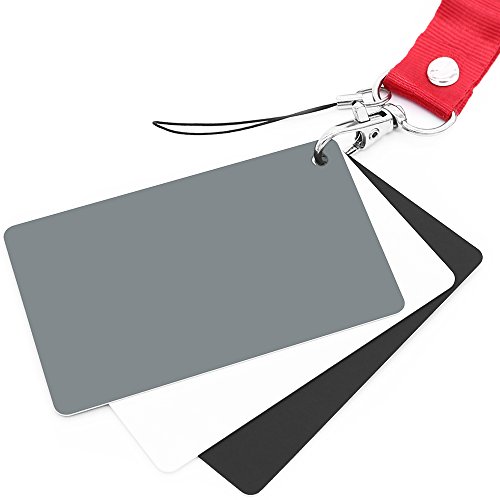
Anwenk’s 18% gray card is designed for easy color calibration across DSLR, video, and film workflows. It features a matte, scratch-resistant finish and a non-reflective surface to minimize glare. The card’s compact size makes it ideal for pocket storage or attachment to a keychain. The product emphasizes universal compatibility with any digital camera, making it a practical choice for fieldwork, interviews, and on-the-go shoots.
DGK Color Tools 5″ x 7″ White Balance Charts (2-Pack)

The DGK Color Tools set provides two 5×7″ charts with a grayscale and color reference. The charts incorporate a built-in colorbar to support precise color calibration and exposure control for video projects. The compact size and included frame stand simplify in-studio use, enabling quick setup and reliable color consistency across shoots, especially in professional video and hybrid imaging workflows.
REFLEX CAMERA 20cm White Balance Card

The Reflex Camera gray card focuses on portability with a compact 8″ x 8″ footprint. The 20 cm size makes it a versatile on-location reference that fits easily in camera bags. It delivers the standard 18% gray reference to help photographers standardize exposure and color casts in varying lighting conditions, supporting dependable color rendition in post-processing and color correction tasks.
Buying Guide: Key Purchase Considerations
When selecting white balance reference cards, consider how you work, your typical shooting environments, and your preferred post-processing workflow. The following factors help compare options and match your needs:
- Size and portability: Smaller cards fit easily in pockets or camera bags, while larger cards offer a bigger reference surface for complex lighting. Choose a size that aligns with your on-location workflow.
- Surface finish: Matte, non-reflective finishes minimize glare and ensure stable color readings in bright environments. Scratched or reflective surfaces can introduce measurement error.
- Gray level accuracy: Most reference cards use 18% gray as a standard. Some premium options emphasize near-neutral neutrality (a* and b* near zero) for higher precision in color-critical work.
- Durability: Waterproof and scratch-resistant surfaces extend visibility and reliability in varied conditions. Look for materials that resist wear during field use.
- Software compatibility: Cards that align with common editing tools (Photoshop, Lightroom) streamline the workflow from capture to correction.
- Two-sided or multi-reference capabilities: Some products include multiple gray tones or color bars, offering broader calibration for video and mixed lighting scenarios.
- Portability accessories: A carrying bag or included stand can simplify setup during on-location shoots and studio work alike.
Practical guidance for choosing between options includes evaluating whether you primarily shoot portraits, landscapes, or video. For studio work, a larger reference card with a stable gray surface is beneficial, while on-location work may favor compact, pocket-friendly cards. If you require a robust post-processing workflow, prioritize cards with strong software compatibility and clear, repeatable results in editing software.
Additional Considerations
Color accuracy can be influenced by lighting conditions, camera white balance presets, and post-processing workflows. A single, reliable reference card can reduce guesswork, but some professionals maintain multiple references to cover different lighting setups. When evaluating products, consider how easy it is to keep the card clean, how well it resists glare, and whether the card supports quick placement in front of the scene for on-the-fly checks. Consistency across shoots improves overall color fidelity in your images.