Best Waterproof Pouches for Camera Gear on the Water
Water-sensitive cameras and accessories demand reliable protection when on boats, at the beach, or during outdoor shoots. A trusted waterproof pouch keeps rain, splashes, sand, and humidity away while preserving full access to controls through a clear window. This guide features five top-rated pouches that balance protection, usability, and value for photography on or near water. Use the quick-reference table below to compare size, sealing, and floating capabilities, then read detailed notes for each option and a buyer’s guide to choose wisely for your next watery shoot.
| Product | Brand | Use Case | Notable Feature |
|---|---|---|---|
| HEETA Clear Waterproof Dry Bags | HEETA | Camera gear, maps, phones | Three sizes; robust seals |
| YUMQUA Clear Waterproof Bags | YUMQUA | Camera, phone, documents | Floating capability; fold-down closure |
| K&F Concept Lens Pouch Case | K&F Concept | Camera lenses | Shockproof padding; waterproof zipper |
| Pelican Marine IP68 Floating Pouch | Pelican | Phone protection on water | Floating; IP68; detachable lanyard |
| ProCase Floatable Pouch Pack | ProCase | Phones and small devices | Two-pack; IPX8; floats |
HEETA Clear Waterproof Dry Bags For Camera Gear

HEETA’s 5-pack provides versatile protection for camera gear, smartphones, and maps on the water. The set includes Large (15.9″ x 10.6″), Medium (12.4″ x 7.1″), and Small (9″ x 5.1″) options, enabling you to tailor protection to each item. The bags use PVC material with a matte, transparent surface that allows operation of devices without opening the seal, which is critical when capturing action. Sealing strips, fold-down protection, and a rugged closure system create multiple barriers against water, humidity, dust, sand, and snow. They’re well-suited to kayaking, boating, and beach photography, offering reliable protection without bulk.
From a usability standpoint, the triple-seal closure system enhances reliability in wet environments, while the clear window helps you frame shots or check a map without exposing valuables to the elements. The matte finish also minimizes glare, aiding screen visibility in bright sunlight. This set is especially advantageous for travelers who need a compact, affordable, multi-item solution that covers a range of sizes and uses.
YUMQUA Clear Waterproof Bags For Camera And Phone
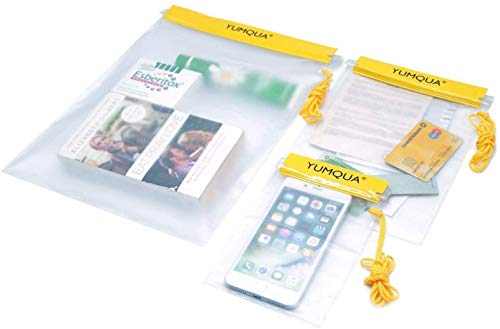
YUMQUA’s clear waterproof bags are designed with three sizes to accommodate different gear: Small (4.92″ x 7.28″), Medium (7.08″ x 9.65″), and Large (10.04″ x 13.78″). Constructed from frosted PVC, these bags allow you to use your device without opening the pouch, a practical feature for quick photo checks or GPS use on the move. Floating capability is achieved when enough air is present, helping to prevent loss in waves or currents. The closure system combines an extra zipper with triple-fold-down magic tape, delivering a watertight seal with reduced risk of puncture or tear. They’re ideal for boating, kayaking, and military or outdoor adventures where visibility and access matter.
While offering broad protection, these pouches are best for users who prioritize easy access and visible contents over deep submersion. The frosted PVC provides privacy for sensitive items, while still allowing you to quickly verify contents. They work well for photographers who want a lightweight, cost-effective solution to protect gear during shoreline shoots or river trips.
K&F Concept Lens Pouch Case

K&F Concept offers a dedicated lens pouch designed for DSLR and mirrorless lenses up to 3.3″ diameter by 5.7″ height. The pouch features 10 mm of all-around padding to cushion lenses from shocks during transport, combined with a waterproof double zipper to guard against rain and moisture. The sturdy exterior provides reliable protection in travel between shoots, while the internal padding helps to prevent impact damage to fragile optics. It is a practical add-on for photographers who need a compact, purpose-built the lens bag to complement larger camera bodies and backpacks.
Note that while the pouch provides strong protection against moisture and minor impacts, it is not intended for prolonged immersion. Proper use involves keeping the pouch sealed during transport and using the padding to shield delicate glass. This makes it a strong, affordable option for lens storage in rain, boating, or hiking environments where space is limited and quick access to lenses is beneficial.
Pelican Marine IP68 Floating Pouch

The Pelican Marine IP68 Floating Pouch is designed to protect smartphones up to 6.7 inches, featuring a floating design that helps prevent loss in water. The IP68 rating indicates excellent protection against water ingress in submersion conditions, while the detachable lanyard allows hands-free carrying during activities like snorkeling, kayaking, or cruising. The pouch’s front window supports touch interaction and quick viewing of videos or emails, while the side button access is optimized for easy control when sealed. The secure locking mechanism ensures a tight seal for underwater use.
Pelican emphasizes accessibility alongside protection, making this pouch a strong option for water enthusiasts who want reliable protection with minimal bulk. It’s particularly suitable for travelers who may encounter mixed environments—pools, oceans, rivers—and want consistent performance across devices. Its bright color option improves visibility, which can be advantageous on busy decks or beaches.
ProCase Floatable Waterproof Pouch Pack

ProCase offers a two-pack of floatable waterproof pouches designed for devices up to 7 inches. It carries an IPX8 rating for underwater protection up to 100 feet and includes air padding that helps devices float, reducing the chances of loss during water activities. The pouches are suitable for iPhones, Galaxy devices, and other similar-sized devices, and they preserve full touchscreen usability when sealed. They’re an economical choice for travelers and outdoors enthusiasts who want extra protection on boats, beaches, or while snorkeling.
While very affordable and convenient for travel, the ProCase pouches are best used for short to moderate water exposure rather than heavy immersion. Pairing them with a lanyard or strap enhances portability, especially when you’re moving between boats or cameras in action-heavy environments. They offer a pragmatic balance of protection and ease of use for everyday water-based photography.
Buying Guide
Choosing the right waterproof pouch for camera gear involves balancing protection, usability, and cost. Consider these factors to tailor a solution to your activities and gear:
- Waterproof rating and immersion depth: IPX8 and IP68 provide strong protection, but understand the depth and duration allowed by each rating. If you expect submersion, prioritize higher ratings and floating capabilities.
- Size and capacity: Match the pouch to your gear—lenses, small camera bodies, or phones. A multi-size set, like HEETA, offers flexible packing for different items, while a single-purpose pouch may save weight.
- Closure system: Look for secure seals, whether triple-fold-down, locking clips, or waterproof zippers. A robust closure reduces risk of leakage during movement and impacts.
- Transparency and touch usability: A clear window enables shooting, screen viewing, or GPS use without removing items. TPU or PVC transparency can affect screen sensitivity and color clarity.
- Floatation: If your gear is valuable in open water, floating pouches help keep items afloat and visible, reducing loss risk in waves or currents.
- Durability and materials: PVC and TPU blends vary in flexibility and long-term wear. Consider UV resistance if you’ll leave pouches in sunny environments.
- Carrying options: Detachable lanyards, straps, and belt clips improve accessibility on boats or rivers. Ensure the carry method does not interfere with paddling or movement.
- Compatibility with gear: Lens pouches should fit common lens diameters; phone pouches should accommodate your device plus a case if needed. For lens protection, padding thickness matters for shock absorption.
- Maintenance: Clean the seals and windows after exposure to saltwater or sand. Let the pouch dry fully before storage to extend seal life.
- Value and multi-pack advantages: Bundles often offer better per-item pricing and multiple use cases, from travel to daily commutes on the water.
From a practical perspective, photographers pursuing water-based shoots may prioritize a mix of lens protection (K&F Concept), camera/phone integration (HEETA or YUMQUA), and floating protection for critical devices (Pelican or ProCase). For travelers who expect mixed environments, a cost-effective, multi-size dry bag combination can cover a wide range of scenarios. Evaluate your typical activities—kayaking, beach sessions, or snorkeling—and choose a blend of protection, accessibility, and portability that minimizes gear risk while maximizing shooting opportunities.