Best Varifocal IR Bullet Cameras for Surveillance
Answering the search for reliable varifocal IR bullet cameras, these five models offer motorized or adjustable lenses, infrared night vision, and weatherproof housing for outdoor or covered installations. Best for small-to-mid-size properties, commercial storefronts, and property owners who want flexible viewing without frequent lens changes. The top picks include networked options with motorized or adjustable lenses, enabling precise framing and focus. The following table summarizes the key choices to compare at a glance.
| Product | Brand | Lens | Resolution | Weather/Durability |
|---|---|---|---|---|
| HANWHA QNO-8080R 5 MP Network IR Bullet Camera | HANWHA | 3.2–10 mm motorized | 5 MP | IP66 |
| Seco-Larm EV-Y1501-AMWWQ Enforcer HD 5MP Bullet | Seco-Larm | 2.8–12 mm varifocal | 5 MP | WDR, 3DNR, IR up to 115 ft |
| Lorex Nocturnal 4K Nocturnal Motorized Varifocal | Lorex | Motorized varifocal | 8 MP (4K) | IP67 |
| Vanxse CCTV Mini HD Varifocal Bullet | Vanxse | 2.8–12 mm | 960H / 960p style | Outdoor/Indoor, weather-resist |
| Synology BC800Z 4K IP Outdoor Varifocal | Synology | 4.38–9.33 mm | 8 MP (4K) | IP66/67 |
HANWHA QNO-8080R 5 MP Network IR Bullet Camera

- Features: 5 MP network camera, motorized varifocal lens 3.2–10 mm, IP66 weatherproof, RJ45 connectivity, suitable for surveillance needs.
Best for: property owners needing a high-resolution outdoor camera with a motorized zoom and rugged enclosure. The motorized lens helps tailor viewing area without manual lens swaps. Selection rationale: high resolution combined with weather resistance and remote lens adjustment makes it versatile for entrances and perimeters.
Limitations: Data notes only basic connectivity details; ensure compatible NVR/DVR and network setup for full benefits.
Seco-Larm EV-Y1501-AMWWQ Enforcer HD 5MP Bullet

- Features: 1/2.8″ 5MP CMOS, 2.8–12 mm varifocal, WDR, 3DNR, IR up to 115 ft, 12VDC power.
Best for: users needing strong low-light performance and flexible focal length for mid-range surveillance. Rationale: the wide focal range supports both wide-area coverage and focused detail, with notable IR reach for nighttime monitoring.
Limitations: Requires appropriate power supply and integration with existing video systems.
Lorex 4K Nocturnal Motorized Varifocal Bullet
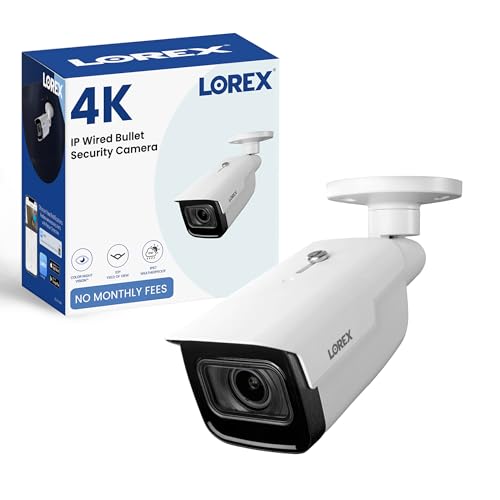
- Features: 4K (8MP) resolution, motorized varifocal lens with remote zoom, smart motion detection, color night vision up to 150 ft with IR reach to 46 m, IP67 rated, -40F to 140F operating range.
Best for: larger properties or those requiring very high resolution and smart alerts. Rationale: ultra-high resolution combined with advanced motion sensing improves detail and alert accuracy.
Limitations: Higher bandwidth and storage needs due to 4K footage; ensure network and recording capacity are sufficient.
Vanxse CCTV Mini HD Varifocal Bullet

- Features: 1/3″ CCD, 960H resolution, 2.8–12 mm varifocal with auto IRIS, outdoor/indoor use, NTSC format; OSD menu for adjustments.
Best for: budget-conscious setups requiring flexible viewing angles and simple installation. Rationale: compact form with versatile lens and basic DVR compatibility makes it suitable for smaller properties or renovations.
Limitations: Image quality and resolution are lower than modern high-definition cameras; verify DVR compatibility with older systems.
Synology BC800Z 4K IP Outdoor Security Bullet

- Features: 8MP 4K varifocal lens 4.38–9.33 mm, Starlight sensor, hybrid light night vision up to 31 m, IP66/67 weather resistance, NDAA & TAA compliant.
Best for: users needing robust outdoor performance with high-resolution color night vision and compliance considerations. Rationale: strong low-light capability and weather protection suit commercial or campus-style deployments.
Limitations: Advanced features may require compatible Synology software or specific network configurations for optimal use.
Buying Guide
What to look for when choosing a varifocal IR bullet camera:
- Lens range: A wider zoom range (e.g., 2.8–12 mm or 3.2–10 mm) provides flexibility from wide-angle coverage to detailed close-ups. Consider installation distance and field of view needed.
- Night vision and lighting: Infrared distance and color night vision capabilities determine performance after dark. Look for models with longer IR reach and, if available, color night vision options.
- Resolution and image quality: Higher resolution yields clearer details at a distance. Balance bandwidth, storage, and camera placement.
- Weather resistance: IP66/IP67 ratings indicate suitability for outdoor use. Consider exposure to dust, rain, and temperature ranges in your area.
- Power and connectivity: Check power requirements (DC, PoE) and network compatibility with your NVR/DVR or cloud setup.
- Edge features: Some cameras offer motion detection, smart alerts, or edge-based encoding. Evaluate what reduces false alarms for your site.
- Compatibility and ecosystem: Some models work best within specific ecosystems or with particular NVRs. Plan how the camera will integrate with existing surveillance systems.
How to choose between motorized vs. manual varifocal
Motorized varifocal lenses allow remote adjustment of zoom and focus, enabling quick framing changes from a central viewer or NVR. Manual varifocal lenses require physical adjustment on installation. For versatile installations and easy re-framing, motorized lenses are generally preferable.
Installation considerations
Place cameras to minimize glare from nearby light sources, position at appropriate mounting heights to reduce tampering, and ensure cables are concealed or protected. Verify DVR/NVR compatibility and firmware availability for ongoing security updates.
FAQ
- What is a varifocal camera? A camera with a zoom lens whose focal length can be adjusted to change the viewing angle and magnification.
- Are motorized varifocal cameras better for outdoor use? They offer easier remote framing adjustments, which is advantageous for outdoor surveillance where camera angles may need frequent changes.
- Do these cameras require a separate DVR/NVR? Most listed are IP cameras that can be used with an NVR or cloud-based systems; confirm compatibility with your setup.
- Is IP66/67 weather rating important? Yes, for outdoor installations exposed to rain, dust, and temperature variations; it helps ensure durability.
- What resolution should I prioritize? For detailed identification at a distance, higher resolutions (4K/8MP) are preferred, understanding they require more storage and bandwidth.
- What is IR distance and do I need it? IR distance indicates how far night-vision LEDs can illuminate; choose based on your property size and camera placement.