Best Tripod Gimbal Heads for Precision Wildlife and Sports Photography
Finding the right gimbal head can dramatically improve how you track fast-moving subjects and manage heavy telephoto lenses. The following picks are among the best tripod-mounted gimbal heads available on Amazon, highlighting strong load ratings, smooth pivoting, and reliable quick-release systems. Each option balances stability with fluid motion, helping you capture sharp wildlife, birding, and action shots with confidence.
Overview of chosen products:
| Product | Brand | Max Load | Key Feature |
|---|---|---|---|
| NEEWER GM101 Gimbal Tripod Head | NEEWER | 30 lb / 13.6 kg | 360° panning, smooth bearing-based movement |
| SIRUI PH-Series PH-20 | Sirui | 20 kg / 44 lbs | Lightweight carbon fiber with strong load, 360° rotation |
| WEYLLAN PH8 Gimbal Head | WEYLLAN | 33 lb / 15 kg | Carbon fiber construction with precise 360° pan |
| Wimberley WH-200 Gimbal Head II | WIMBERLEY | Large-capacity, tested for heavy lenses | Center-of-gravity rotation design, Arca-Swiss clamp |
| Movo GH800 MKII | Movo | 30 lb / 13.6 kg | Arca-Swiss compatible, smooth fluid motion |
NEEWER GM101 Gimbal Tripod Head
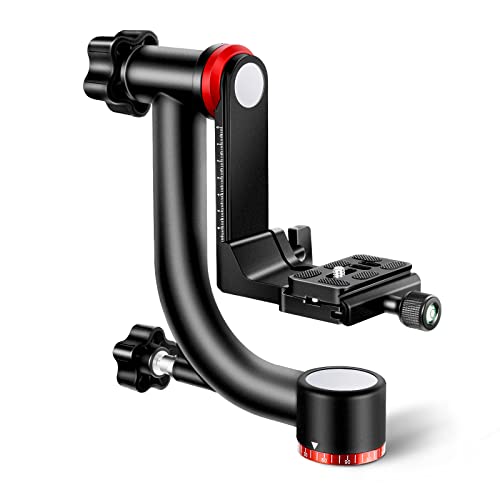
The NEEWER GM101 combines a robust aluminum alloy frame with a dedicated load-bearing structure to support DSLR cameras and telephoto lenses up to 30 lb (13.6 kg). Its gimbal mechanism emphasizes smooth movement along both vertical and horizontal axes, with a 360° panning base for precise panoramic shots. Built-in bearing suspension enhances stability during quick adjustments, making it suitable for birding and wildlife work where subjects move rapidly. The bottom features 1/4″ and 3/8″ sockets to fit most tripods, plus a locking knob for the panning base to secure angles during long exposure or tracking sequences. A notable caution is to loosen the main grip while mounting to prevent accidental drops.
Key points: sturdy construction, smooth pan, 360° rotation, and universal tripod compatibility. The GM101 is a strong option for professionals who need dependable performance with heavier gear.
K&F CONCEPT Aluminum 360° Panoramic Gimbal

The K&F CONCEPT head is built from 6061 aluminum alloy and supports up to 44 lbs (20 kg). It emphasizes smooth horizontal and vertical movements with a sturdy, rugged structure. The design aims to reduce creeping under load and deliver stable panning for wildlife and sports photography, aided by a precise quick-release plate. It is noted for reliable sealing within its bearing system and a durable overall construction that can stand up to outdoor conditions.
SIRUI PH-Series PH-20 Gimbal Head

The SIRUI PH-20 is crafted from carbon fiber and aluminum, delivering a strong yet lightweight solution. It supports up to 20 kg (44 lbs) and features a 360° panorama rotation with a wide tilt range for flexible framing. Its multi-material arm and L-platform balance heavy telephotos while keeping overall weight manageable, ideal for outdoor shooters requiring mobility without sacrificing stability. The quick-release plate includes secure locking and compatibility with common Arca-Swiss systems.
WEYLLAN PH8 Gimbal Head

The WEYLLAN PH8 is built with carbon fiber construction to offer high strength while remaining light for field use. It supports up to 33 lbs (15 kg) and features precise 360° panoramic movement via a bearing-based system. The dual 1/4″ and 3/8″ quick-release plates provide mounting flexibility, making it practical for photographers using a range of cameras and lenses. The PH8 is designed to give steady tracking with smooth transitions between angles, which is critical for fast action and wildlife subjects.
Movo GH800 MKII Carbon Fiber Gimbal Head

The Movo GH800 MKII blends carbon fiber construction with a robust gimbal head design, supporting up to 30 lb (13.6 kg). The head features weight-balanced, smooth panning and tilting to manage long telephotos and heavy cameras, with an Arca-Swiss compatible quick-release system for fast transitions between tripod setups. The design focuses on achieving a fluid tracking motion while resisting lateral drift that can occur with heavier rigs in demanding outdoor conditions.
Wimberley WH-200 Gimbal Head II

The Wimberley WH-200 is a flagship gimbal head designed for heavy, professional lenses. Its gimbal-type design rotates cameras around the lens’ center of gravity, enabling smooth panning and tilt movements with large telephotos. The build is rugged and stiff, ensuring long-term reliability in field conditions. The Arca-Swiss style clamp adds compatibility with a wide range of Arca plates, balancing precision, ease of use, and durability for demanding wildlife and sports work.
Buying Guide
When choosing a tripod gimbal head, consider these essential factors to align with your typical shooting scenarios and gear:
- Load capacity: Match the head to your heaviest lens and camera combo. Overestimating by a safe margin helps prevent tipping and wobble during tracking.
- Rotation freedom: A full 360° pan is valuable for panoramic framing and continuous subject tracking. Tilt range should cover +90° to -75° or more for varied landscapes and angles.
- Weight and portability: Carbon fiber heads offer high strength-to-weight ratios, improving field usability. Heavier heads may be more stable but harder to maneuver.
- Quick-release system: An Arca-Swiss compatible system is widely supported, enabling fast transitions between vehicle, tripod, and gimbal modes.
- Bearings and damping: Smooth bearings reduce micro-movements when panning, while dampers can minimize shock during rapid tilts or external vibrations.
- Compatibility: Check bottom mounting threads (1/4″ or 3/8″) and the tripod crown interface. Some heads fit most standard tripods; others require adapters.
- Security features: Locks and security pins prevent accidental plate release during active shooting, especially with heavy rigs.
- Price-to-performance: While premium models (like Wimberley) offer top-tier stability, well-built mid-range options (e.g., NEEWER, SIRUI, WEYLLAN) provide excellent value for many wildlife setups.
Practical guidance for use:
- Balance before locking: Loosen mounting knobs and balance horizontally and vertically prior to locking the pan and tilt. Proper balance reduces strain on the head’s bearings and delivers smoother motion.
- Use a stable tripod: A solid, well-constructed tripod with a sturdy center column helps maximize the gimbal head’s performance, especially in windy environments or with long lenses.
- Protect from elements: If you shoot in dusty or wet environments, keep locking knobs clean and consider protective covers or a detour to shield sensitive joints.
- Test with your typical rig: Before critical shoots, test with your heaviest setup to verify balance, range of motion, and locking reliability under real-world conditions.
- Future upgrades: If you anticipate heavier wildlife lenses or advancing to higher-framed camera bodies, consider a head with higher load capacity or better damping for long-term usability.