Best Tripods for Outdoor Photography: Stabilize Your Shots on Any Terrain
Outdoor photography demands a stable platform, quick setup, and reliable portability. This guide highlights five top tripod options designed for landscapes, wildlife, travel, and night photography. Each pick balances height, stability, and ease of use to help you capture sharper images in changing conditions. Read on to compare capabilities and find the best fit for your outdoor shooting kit.
Summary of Selected Products
| Product | Brand | Maximum Height | Key Benefit | Load Capacity |
|---|---|---|---|---|
| K&F Concept 90”/230cm Ultra High Camera Tripod | K&F CONCEPT | 90 inches / 2.3 m | Overhead and panoramic shooting with a heavy-duty build | Up to 10 kg |
| Amazon Basics 50-inch Lightweight Tripod | Amazon Basics | 50 inches | Ultra-light, portable travel companion | Lightweight design for travel gear |
| K&F Concept 76 inch Tripod | K&F CONCEPT | 76 inches | Versatile center-column with 360° pan | Up to 8 kg |
| Kate Heavy Duty Light Stand | Kate | Up to 15.7 ft | Extreme height for overhead lighting and large rigs | 9.46 lb load |
| FreeSea Aluminum Light Stand 260 cm | freesea | 102 inches (260 cm) | Sturdy studio and outdoor lighting support | Supports up to 5 kg |
K&F CONCEPT 90”/230cm Ultra High Tripod With Overhead Capabilities

The T254A7+BH-28L model from K&F CONCEPT elevates outdoor shooting with a maximum height of 90 inches (2.3 m), allowing photographers to shoot above crowds or capture dramatic horizon lines. The four-section legs compress for portability, and the collapsed length is 21 inches (54 cm) for easy transport in a backpack or car trunk. A 28 mm center column diameter enhances rigidity when the camera is positioned horizontally or pan-tilt is needed, helping minimize vibrations in breezy outdoor environments.
Highlights include a patent gimbal providing 0–120° tilt and a full 360° panoramic rotation. This combination expands shooting angles—from high overhead setups to sweeping landscape panoramas. The detachable monopod adds versatility for traveling light when a full tripod isn’t ideal. With a load capacity around 10 kg, this tripod supports a wide range of mid- to pro-level DSLRs and mirrorless bodies with typical zoom lenses.
Amazon Basics 50-Inch Lightweight Tripod

This compact option is ideal for travel and on-the-go outdoor shoots. The 50-inch adjustable height is achieved with a 3-section lever-lock design, combining stability with ease of use. It folds quickly for backpack carrying and weighs just over a pound, making it a favorite for hikers who need a stable platform without adding bulk to the kit. The aluminum construction contributes to a light feel while maintaining sufficient rigidity for many conventional outdoor setups.
For photographers prioritizing portability, this baseline tripod serves well with standard camera bodies and compact lenses. While it may not boast the extreme heights or heavy-duty support of larger models, it excels in quick deployment and reliable performance in sunny field conditions, park shoot days, or travel photography where weight is a priority.
K&F Concept 76-Inch Camera Tripod

The 76-inch K&F Concept model focuses on a balanced combination of height, stability, and maneuverability. Its rotatable multi-angle center column supports 0–180 degrees of extension and a 360° pan, enabling precise panorama shots and dynamic landscape compositions. The 28 mm diameter center column adds rigidity, which helps minimize camera shake when shooting near the horizon or across windy environments. A 360-degree ball head refines control for precise framing while panning across wide scenes.
With a foldable design that keeps the tripod compact (around 39 cm when closed) and a total weight near 1.65 kg, it’s well-suited for travel photographers who need reliable performance without carrying excessive bulk. The 8 kg load capacity covers most common DSLR and mirrorless configurations with standard lenses, making it a versatile choice for outdoor enthusiasts seeking flexibility in angles and height.
Kate Heavy Duty Light Stand With Overhead Reach
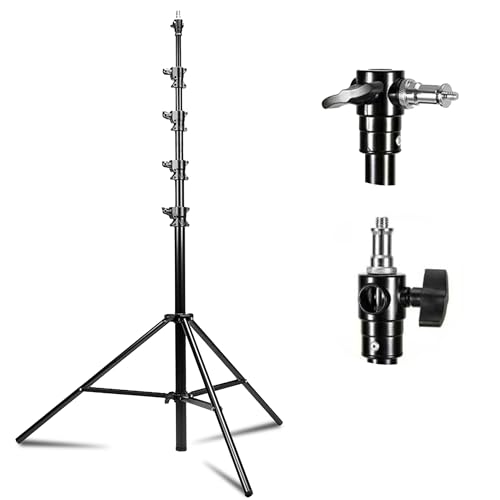
Although marketed as a lighting stand, the Kate X201471 offers substantial height for overhead lighting and rig setups used in outdoor shoots or studio-style field environments. Its air-cushioned design helps prevent sudden drops, protecting equipment mounted overhead during long exposure or timed shots. The stand’s 25 mm steel tripod base plus multi-layer aluminum tubing provide robust support for heavy light fixtures, reflectors, or camera rigs in variable outdoor conditions.
Included are two weighted sandbags and a solid base that minimizes wobble on uneven ground. The adjustable height and stability features make it suitable for overhead lighting rigs, overhead camera positions, or multi-device rigs when shooting fashion, product lookbooks outdoors, or expansive landscape setups that benefit from strong, elevated lighting angles.
FreeSea Aluminum Light Stand 260 cm

The FreeSea aluminum light stand focuses on heavy-duty support with a tall maximum height of about 102 inches (260 cm). It features an adjustable 4-section design and a 1/4-inch screw system, making it compatible with most camera rigs and light attachments. The stand’s robust construction promotes stability in outdoor wind and uneven surfaces, aiding in overhead lighting trials, large softbox setups, or strobe configurations for nature photography, wedding shoots, or location lighting on breezy days.
Additional Product Insights
Across outdoor photography scenarios, tripod and stand choices hinge on height needs, stability against wind, compatibility with gear, and portability. When evaluating options, consider the following factors to ensure the right balance for your workload:
- Maximum height versus collapsed size: Taller models enable elevated vantage points but can be bulky for travel. Look for models that fold compactly for ease of transport.
- Center column design: A larger diameter central column can improve stability, though some shooters prefer center-column-free designs for low-angle shots.
- Head type and rotation: A 360° pan head plus a tilt range expands composition options, especially for panoramic landscapes or overhead footage.
- Load capacity: Ensure the tripod or stand can support your heaviest kit combinations, including camera bodies, lenses, and any mounted accessories.
- Material and build quality: Aluminum stands are common for travel and field use; carbon fiber options offer lighter weight with higher stiffness but at a higher price.
Buying Guide: Key Purchase Considerations
Outdoor photographers should weigh several practical considerations before choosing a tripod or stand. This guide outlines essential criteria and how they influence performance in field conditions.
- Intended use: Landscape work often benefits from taller, more stable setups and fluid panorama capabilities. Wildlife and travel photography may prioritize quick setup and compact storage.
- Height versus weight: Heavier, taller tripods reduce wind-induced shake but add bulk. For hiking or backpacking, seek lighter models with solid stability.
- Stability mechanisms: Look for sturdy leg locks (lever or twist), non-slip feet, and a well-engineered center column to minimize vibrations in uneven ground or windy environments.
- Head compatibility and movement: A reliable ball head or fluid head with smooth panning and tilt controls enhances framing precision, especially for panoramic shots.
- Portability features: Quick-release plates, carry bags, and compact folded lengths improve transportability between shooting sites.
- Accessories and add-ons: Monopod compatibility, overhead rigs, sandbags, and anti-slip feet can significantly improve stability in outdoor settings.
- Price versus durability: Budget-conscious buyers may opt for mid-range models that balance cost with durability and service life. For frequent outdoor use, investing in sturdier builds can pay off over time.