Best Tripod and Monopod Combo for Camera, Phone, and Video
For photographers and content creators, a reliable tripod-monopod combo can streamline setups, improve stability, and enable quick position changes. The following selections are designed for versatility, supporting cameras, smartphones, and accessories while offering easy transition between tripod and monopod modes. Each option emphasizes sturdy build, smooth panning, and practical features suited for travel, vlogging, and studio use.
| Product | Brand | Max Load (approx.) | Notes |
|---|---|---|---|
| NEEWER Basics 72″ / 182 cm Travel Tripod Monopod | NEEWER Store | 13.2 lb | Arca-type ball head, phone holder, folds to 17″, converts to monopod |
| K&F Concept 80″ Video Tripod | K&F CONCEPT | 17.6 lb | Fluid head, quick release plate, heavy-duty aluminum |
| CAMBOFOTO 73″ Camera Tripod and Monopod | CAMBOFOTO Store | 11 lb | Monopod convertible center column, travel bag |
| SmallRig Camera Tripod, 71″ | SMALLRIG Store | Up to 33 lb | 71″ foldable, 360° ball head, dual-mode design |
| K&F Concept 62″ Carbon Fiber Tripod | K&F Concept | 33 lb | Detachable monopod, lightweight carbon fiber |
Choosing the right combo depends on how you shoot: field vlogs, studio work, travel, or a mix. The products below were selected for their balance of stability, adaptability, and portability. Each section highlights the core strengths and typical use cases to help you compare at a glance.
NEEWER Basics 72″ Travel Tripod Monopod

The NEEWER Basics line focuses on essential functions with a compact design. This model weighs around 2.9 pounds in phone-camera configuration, yet extends up to 72 inches when fully deployed. It folds down to 17 inches for easy packing, and the center column can invert for macro shots. A built-in weight hook and non-slip feet contribute to stability on varied surfaces, while a versatile 2-section center column supports flexible height adjustment. The included phone holder makes it convenient for content creators who film with smartphones as well as cameras. This setup is ideal for travelers who need a lightweight yet capable tripod-monopod solution.
Key features to consider include: quick height adjustments from 22.8″ to 52″ with a tall column, potential monopod conversion, and the Arca-type compatibility of the head. Overall, it targets budget-conscious users who still require reliable stability and simple switching between tripod and monopod modes. The compact form is especially appealing for on-the-go shooting, quick interviews, or casual video work.
K&F Concept 80 Inch Video Tripod

Designed for heavier setups, this 80″ tripod offers a robust aluminum build and a smooth-acting fluid head suitable for DSLR and mirrorless rigs, as well as camcorders. The unit supports up to 17.6 pounds, which accommodates larger cameras plus accessories. Quick-release plates facilitate fast setup and breakdown, making it a strong option for professionals who need precise control over pans and tilts. While heavier than basic travel tripods, it excels in studio environments, event shooting, and locations where stability and fluid motion are critical.
Considerations include weight capacity, the durability of the head mechanism, and how easy it is to transition into monopod mode if needed. If you frequently shoot dynamic video or require smooth tracking shots, this model provides a solid balance of stability and motion control, with a clear emphasis on longevity and professional performance.
CAMBOFOTO 73″ Camera Tripod And Monopod

The CAMBOFOTO setup emphasizes quick adaptability with a removable center column that converts to a monopod. Weighing around 3.3 pounds, the tripod stands up to about 73 inches tall and collapses to roughly 21 inches for transport. It supports a maximum load near 11 pounds, making it a practical choice for entry-to-mid-level DSLR or mirrorless systems, action cameras, and smartphones. The included travel bag helps protect the rig during travel and field shoots. The product highlights include three major advantages: increased stability, swift image capture with a convertible monopod, and durable coating that resists minor scratches.
Potential limitations to note include the overall weight and the stated load limit, which may not be ideal for heavier telephoto lenses. As with any convertible tripod-monopod system, users should ensure all locking pins and joints are tightened to prevent head movement during shooting. This model suits photographers who value rapid changes in shooting posture without sacrificing overall sturdiness.
SmallRig Camera Tripod, 71″ Foldable
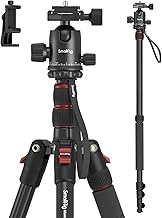
The 71″ SmallRig tripod combines a foldable aluminum frame with a 360° ball head and a detachable monopod option. It supports up to 33 pounds, which accommodates a wide range of camera bodies plus lenses and accessories. The twin-mode design allows quick switches between tripod and monopod configurations, making it versatile for hiking, travel, events, and livestream setups. The 36mm metal ball head delivers smooth panning with a full range of motion, while the inverted center pole enables low-angle or macro shots when needed.
Benefits include strong load capacity for its class, broad compatibility with standard 1/4″-20 and 3/8″-16 threaded devices, and the convenience of converting to a monopod without adding separate gear. Users should consider overall weight, portability, and whether the included head type aligns with their preferred shooting style. This model is a solid choice for vloggers and photographers seeking reliable performance without adding excessive bulk.
K&F Concept 62″ Carbon Fiber Tripod

The 62″ carbon fiber model emphasizes lightness and stiffness, with a detachable monopod for quick changes in perspective. It supports up to 33 pounds, enabling mid-range DSLR or mirrorless rigs with modest lenses. Carbon fiber construction helps reduce weight while maintaining rigidity, which is beneficial for longer shoots or when traveling with limited carry capacity. A quick-release plate simplifies setup, and the detachable monopod provides added flexibility for on-the-go shooting, crowd scenes, or nature photography. This option blends portability with the ability to handle heavier accessories when needed.
Buying Guide: Key Purchase Considerations And Comparisons
When selecting a tripod-monopod combo, consider these factors to ensure the choice fits your work style and gear kit:
- Load Capacity: Match the maximum supported weight to your camera body, lenses, and accessories. Underestimating can lead to stability issues or equipment stress.
- Material And Weight: Aluminum tripods offer strength at a lower cost, while carbon fiber provides lighter weight and vibration damping at a premium. Weight matters for travel and field work.
- Height Range and Center Column: Ensure practical minimum and maximum heights, plus the ability to invert the column for macro or low-angle shots. A center-column that detaches into a monopod adds versatility.
- Head Type And Motion: Fluid heads are preferred for video work; ball heads work well for photography and general use. Quick-release plates speed up transitions between setups.
- Portability: Look for compact folds, included carry bags, and overall length when collapsed. Travel-friendly options often trade some payload for lighter weight.
- Stability Features: Rubber feet, a weight hook, and a wide stance improve stability on varied terrains. Consider spiked feet for outdoor use if available.
- Accessory Compatibility: Check if the head is Arca-swiss compatible or if adapters are needed for your existing gear. Ensure the mounting screw standards align with your equipment.
- Price To Performance: Budget models excel for casual use, while pro-grade options deliver more precise motion control and durability. Balance your needs with long-term value.
- Setup And Maintenance: Locking knobs should be easy to reach and tighten. Regularly inspect joints to prevent loosening during shoots.
In sum, the best tripod-monopod combo aligns with your typical shooting scenarios—whether you frequently shoot video, travel light, or need the ability to switch quickly between a grounded tripod and a mobile monopod. The options above cover a spectrum from budget-friendly to more robust, with varying weights, heights, and load capacities to accommodate different camera configurations and filming styles.