Best Trail Camera Stake Mounts for Secure Outdoor Setup
Choosing the right trail camera stake mount can dramatically improve footage and field coverage, especially on open terrain or along dense trails. The five mounts below represent popular options that balance ease of use, durability, and compatibility with standard camera threads. They span ground stands, T-post holders, and adjustable posts to fit various landscapes and camera models. Use the quick-reference table to compare core benefits at a glance, then dive into detailed sections for each product.
| Product | Brand | Key Benefit |
|---|---|---|
| HME T-Post Trail Camera Holder | HME | Quick, secure T-post mounting |
| MUDDY Dual Camera Ground Mount | MUDDY | Supports two cameras on a sturdy stake |
| HME Trail Camera Ground Mount | HME | 360° rotation for flexible positioning |
| Moultrie Edge Series Camera Stake | Moultrie | Telescoping height and dual-mount options |
| Aifiuroo 3 Pack Stand Mount | Aifiuroo | 360° rotation, sturdy stainless steel |
HME T-Post Trail Camera Holder

The HME T-Post Trail Camera Holder is designed for secure mounting on tubular T-posts commonly used along fence lines and managed trails. The holder is compact yet sturdy, with a design that simplifies camera positioning to capture optimal shots on open corridors or narrow game trails. Installation is straightforward: loosen the threaded knob enough to slide the holder around the post, then tighten to lock. After mounting, attach the camera to the threaded end of the adjustable holder and secure it using the included wing nuts. The system accommodates mounting on either side of the post, providing flexibility to avoid shadows and glare that can affect images.
Durability is a focus, with robust hardware intended to withstand outdoor conditions. The design supports easy vertical and angular adjustments, enabling rapid re-angle of the camera as lighting and animal activity shift throughout the day. This mount is well-suited for single-camera setups where a quick, reliable attachment to a T-post is a priority. It works with most cameras that use standard 1/4″-20 threads, making it a versatile option for many trail monitoring scenarios.
MUDDY Dual Camera Ground Mount

The Muddy Dual Camera Ground Mount is designed to secure up to two trail cameras with a robust, ground-based stake system. It uses a standard 1/4-inch-20 threaded receiver, enabling reliable attachment for most trail cameras and solar packs. The sturdy steel construction provides long-term durability in varied weather, making it suitable for remote locations and campaigns requiring multi-camera coverage. The dual-camera configuration helps capture different angles or monitor adjacent trails without repositioning the entire mount.
Setups using the Muddy mount benefit from a stable base that resists tipping in uneven ground and light winds. The ground stake design enables deep, secure insertion into soil, reducing movement caused by animals or wind. The dual-camera capability is particularly valuable for monitoring a junction, crossing, or two nearby game trails. While bulkier than single-mount options, the ability to serve two cameras can improve footage density and event capture over extended monitoring sessions.
HME Ground Mount With 360-Degree Head

The HME Ground Mount is a ground-based solution featuring a 360-degree rotational camera head for full motion, enabling precise framing across a wide field of view. The spade-style design allows easy insertion into soil, placing the camera along frequently traveled routes or scrapes when trees are sparse. With a standard 1/4″-20 threaded insert on the bottom, it supports a broad range of trail cameras and accessories. Weather-resistant construction helps it endure outdoor conditions, making it suitable for woods, near water sources, or other challenging locations.
The design emphasizes versatility: the mount provides a dependable platform for single-camera setups while offering robust adaptability for various terrains. The 360-degree rotation and tilting capability allow operators to track game movement and sun angles throughout the day. Its compact profile helps minimize obstruction in the field of view, making it a practical option for treeless or open-area monitoring where placement flexibility is essential.
Moultrie Edge Series Camera Stake

The Moultrie Edge Series Camera Stake is built for Edge cameras and solar packs, offering a universal 1/4″-20 threaded mount that also accommodates other brands with the same thread standard. It features fully customizable height adjustment and a full range of motion to position cameras and solar packs precisely where they’re needed. The stake supports multiple configurations, including mounting two cameras or combining a camera with a solar kit, which is valuable for extended field operations in remote locations.
The telescoping height and flexible mounting options help users optimize field of view and ensure optimal exposure to sunlight for solar-powered setups. The material quality and engineering are aimed at outdoor reliability, with stability in varied ground conditions. This stake is ideal for backcountry monitoring or edge-of-trail setups where multiple devices require reliable placement without tree support.
HME Trail Camera Holder Posts (4-Pack) Bundle
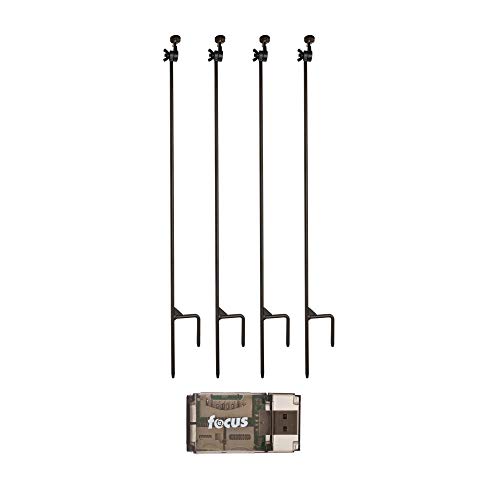
The HME four-pack of Trail Camera Holder Posts is designed to simplify field setups by providing multiple easy-insertion posts for trail cameras. The design features a dual-prong entry that reduces twisting during placement and keeps cameras steady in windy conditions. Each post includes a 1/4″-20 threaded receiver to accommodate a wide range of cameras, enabling quick repositioning across different locations without carrying extra mounts. This bundle is especially useful for multi-site surveillance along large properties or farms where several cameras are deployed.
Durability and ease of use are emphasized here. The posts enable straightforward step-in installation with reliable fit and stable operation. The lightweight yet sturdy construction makes them practical for seasonal monitoring or scenarios in which crews need to relocate cameras frequently. The bundle format can reduce the need for separate purchases when setting up multiple vantage points.
Aifiuroo 3 Pack Trail Camera Stand Mount

The Aifiuroo three-pack Trail Camera Stand Mount offers robust stainless steel construction and a 1/4″-20 thread connection, supporting standard camera mounts. With a total length ranging from about 1.31 to 2.59 feet, these stands provide a wide height range for flexible placement along trails, ridges, or open clearings. Each unit features 360-degree rotation and adjustable tilt, enabling precise positioning to capture game movement, solar exposure, or wildlife activity from multiple angles. The set is designed to withstand strong weather and winds, ensuring stable operation in challenging outdoor environments.
These stands are particularly useful for treeless terrain or ground-based setups where attaching to trees is not feasible. The three-pack option offers a cost-effective way to outfit several vantage points on a single property. The combination of stainless steel construction, full rotational capability, and adjustable tilt makes this set a versatile choice for remote fieldwork and continuous monitoring campaigns.
Buying Guide
Selecting the right trail camera stake mount involves balancing terrain, camera compatibility, and monitoring goals. Below are key purchase considerations and practical comparisons to help you choose the best option for your setup.
- Mount Type and Terrain: Decide between ground-mounted posts and post-mounted holders. T-post adapters work well along fence lines and access corridors, while ground stakes excel in treeless, open areas. Consider whether you need a single-camera solution or a dual-camera setup to cover more angles.
- Camera Compatibility: Verify that the mount uses a standard 1/4″-20 thread, which fits most trail cameras and solar kits. If your gear uses non-standard threads, you may need an adapter. Ensure the mount can support your camera’s weight and dimensions.
- Adjustability and Angling: Look for rotatable heads, tilt capability, and height adjustability. Rotational ability (360 degrees) is advantageous for tracking animal movement and sun angle changes. Height adjustability helps optimize field of view and scent or heat dispersal.
- Durability and Weather Resistance: Outdoor mounts should resist corrosion, impact, and moisture. Stainless steel and weather-sealed components are ideal for long-term use in rain, humidity, and seasonal temperature shifts.
- Stability and Vibration: Consider the stake depth and base design. Deep, sturdy stakes reduce movement caused by wind, passing animals, or uneven ground. Dual-camera mounts can increase stability by sharing load across two attachment points.
- Ease of Installation: Quick-setup features, simple tightening mechanisms, and minimal tools save time in the field. Look for knobs, wing nuts, and easy slide-over installation options.
- Dual-Camera vs. Single-Camera Needs: If you frequently monitor junctions or broad trails, a dual-camera mount can improve coverage without repositioning equipment. For limited budgets or compact sites, a single-camera mount may suffice.
- Portability and Storage: If you move locations often, compact designs and bundled sets offer portability. Lightweight components reduce fatigue during seasonal property rotations.
- Solar and Power Considerations: For off-grid use, ensure compatibility with solar packs and consider positions that maximize sun exposure. A dual-mount system can help optimize solar panel placement as well as camera angles.
Overall, the best trail camera stake mount blends reliable construction, adaptable positioning, and compatibility with your existing camera gear. Evaluate your terrain, the number of cameras you need to monitor, and how often you expect to relocate equipment. This will guide you toward a mount that offers durable performance, straightforward installation, and flexible positioning across varied landscapes.