Best Tracking Mounts for Astrophotography: Top Picks for Precision Night Sky Captures
Photographers venturing into astrophotography need reliable tracking mounts that deliver smooth motion, accurate alignment, and easy control. The following selections focus on motorized or GoTo tracking mounts ideal for wide-field nightscapes, time-lapse, and panoramic sky photography. Each option offers portability, strong performance, and compatibility with DSLR and mirrorless cameras. The picks cover adaptable modular systems, built-in Wi‑Fi control, and precise tracking for Milky Way, eclipses, and star trails on clear, dark skies.
The table below summarizes five top tracking mounts, highlighting their strengths, brand, and standout features to help you compare at a glance.
| Product | Brand | Key Features |
|---|---|---|
| Sky-Watcher Star Adventurer 2i Pro Pack | Sky-Watcher | Motorized DSLR night sky tracking, Wi-Fi app control, portable and modular |
| Star Adventurer GTi Mount Kit | Sky-Watcher | GoTo full tracking with built-in polar scope, pier extension option |
| Star Adventurer Photo Kit | Sky-Watcher | Portable nightscape tracking, Wi‑Fi control, ready for photography with ball-head adapter |
| AZ-GTi Alt-Az GoTo Mount | Sky-Watcher | Compact, Wi‑Fi enabled, time-lapse and panorama capable |
| iEXOS-100-2 PMC-Eight System | Explore Scientific | Eight independent CPUs for fast, precise tracking and goto navigation |
Sky-Watcher Star Adventurer 2i Pro Pack
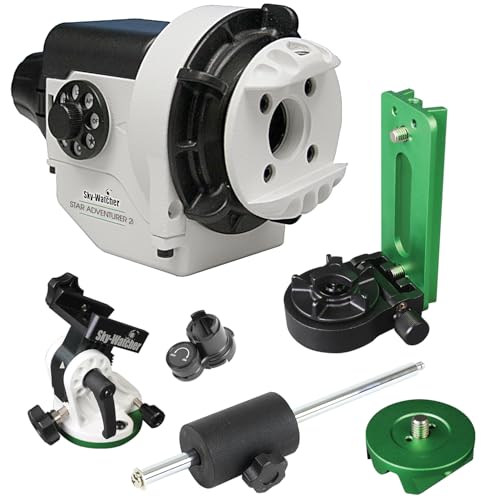
The Star Adventurer 2i Pro Pack provides a motorized, portable tracking platform designed for wide-field nightscapes and time-lapse projects. Its modular design supports integration with standard photographic tripods and enable long exposure captures of the Milky Way, eclipses, and other celestial events. The updated 2i model adds Wi‑Fi connectivity, facilitating smartphone control via Sky-Watcher’s SAM Console app for convenient, cable-free operation in field conditions. A compact solution for travelers and enthusiasts targeting precise sidereal tracking on a small footprint.
Star Adventurer GTI Mount Kit

The GTi Mount Kit delivers a full GoTo tracking solution with a built-in polar scope and illuminator for accurate alignment. Included counterweight and pier extension options enhance stability for longer exposures. This configuration is suited for travel-friendly GoTo astronomy where quick alignment and automated object slewing reduce setup time, enabling efficient capture sequences for astrophotography and time-lapse sequences in the field.
Star Adventurer Photo Kit
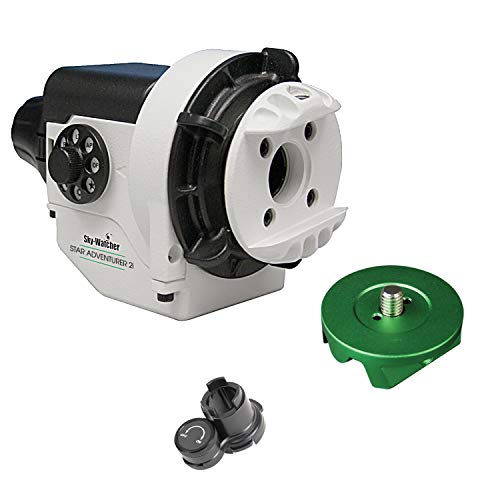
The Photo Kit emphasizes portability for nightscapes, with upgrades including Wi‑Fi-enabled 2i features and a ball-head adapter for quick camera mounting. It supports time-lapse, panoramas, and star trail photography while maintaining a compact footprint for travel. The emphasis is on ease of use in field conditions, allowing photographers to set up and shoot with minimal hardware accessories beyond the included components.
Sky-Watcher AZ-GTi Alt-Az GoTo Mount

This portable, Wi‑Fi enabled, computerized Alt‑Az mount is designed for on-the-go astronomy. It supports a reasonable payload for most DSLR cameras and small telescopes. The AZ-GTi is ideal for photographers who prioritize mobility, everyday usability, and fast targeting across the sky, with the convenience of app control and a compact form factor for travel-focused astrophotography workflows.
iOptron SkyTracker Pro

The SkyTracker Pro is an ultra-compact single-axis EQ mount with a lightweight build and a die-cast aluminum body. It provides a straightforward solution for star tracking with basic RA control, suitable for entry-level astrophotography and basic time-lapse applications where minimal hardware complexity is preferred. While not a high-end GoTo system, it offers dependable performance for simple tracking tasks and portable field work.
Buying Guide: Key Purchase Considerations
Choosing the right tracking mount depends on your goals, gear, and travel needs. Consider the following factors to guide your decision:
- Tracking accuracy and stability: For long exposures, look for mounts with smooth motion, low periodic error, and strong vibration damping. GoTo capability helps locate objects quickly, reducing drift.
- Payload compatibility: Match the mount’s payload rating to your camera body, lenses, and any attached small telescopes or adapters. Overloading can reduce tracking accuracy and balance.
- Portability and setup time: Travel-friendly options with quick-align features and compact form factors are ideal for field work and night-sky photography on the go.
- Control method: Wi‑Fi or app-based control enables remote operation in dark skies. Wired control may suit stationary observatories or more complex setups.
- Modularity and expansion: Some kits offer additional counterweights, pier extensions, or ball-head adapters to accommodate evolving gear and photography styles (wide-field, macro, or telescopic use).
- Mount type: Equatorial mounts excel for long exposure celestial tracking, while Alt-Az mounts offer simplicity and robust go-to performance for general sky photography and panoramas.
- Software ecosystem: Apps for alignment, guiding, and object database navigation can significantly simplify setup and operation in the field.
- Cost vs. benefit: Prices vary widely. Determine whether you prioritize portability, automation, Wi‑Fi control, or telescope integration to optimize value.
Comparison at a Glance
For travelers and serious hobbyists, the Star Adventurer lineup provides compact, modular GoTo capabilities with Wi‑Fi control, making them a leading choice for wide-field astrophotography. The AZ-GTi adds portable versatility with Alt-Az GoTo and a compact build. The iEXOS-100-2 PMC-Eight system is intended for users seeking high responsiveness and multi-CPU precision for faster, more complex tracking and object navigation. Evaluate your typical shooting conditions, desired automation level, and how much gear you plan to carry to determine the best fit for your astrophotography workflow.