Best Time-of-Flight Cameras for Precise Distance Sensing in Projects
Time-of-Flight (ToF) cameras measure distance by calculating the photon round-trip time. They work across varying targets and lighting, making them ideal for robotics, drones, smart home sensors, and industrial imaging. This guide highlights five ToF-based products best for hobbyists and professionals seeking reliable depth data, robust interfaces, and easy integration with single-board computers.
Buyer profiles: hobbyists building mobile robots or UAVs can benefit from compact, easy-to-wire sensors. Engineers seeking inline depth for automation or logistics will prefer sensors with rugged encasings or versatile power options. The following products are chosen for their clear applications, supported interfaces, and straightforward deployment.
Selected Products Overview
| Product | Brand | Best For | Key Feature |
|---|---|---|---|
| CQRobot VL53L1X Time-of-Flight Sensor | CQRobot | Mobile robots, UAVs, smart homes | 4 m range, high immunity to surface reflectivity |
| VKLSVAN VL53L0X Ranging Sensor (2-Pack) | VKLSVAN | Compact depth sensing in small devices | I2C interface, dual sensors, tiny form factor |
| Sipeed MaixSense A010 RGBD TOF Module | WayPonDEV | Real-time depth maps with display | Built-in LCD preview, BL702 processor integration |
| PAMEENCOS 4pcs GY-530 VL53L0X Module Set | PAMEENCOS | Multi-sensor ranging for projects and prototyping | IIC interface, 940 nm VCSEL, compact breakout |
| GZCBDSM CS30 RGBD Depth Camera | GZCBDSM | Depth camera with ToF technology and wide field of view | Big field of view, depth sensing |
Below are deeper product-by-product details to help you choose the right ToF camera for your project needs. Each section notes who the product is best for, why it was selected, and a practical limitation when relevant.
CQRobot VL53L1X ToF Long Distance Sensor

The CQRobot VL53L1X module uses ST’s ToF technology to deliver up to 4 meters of distance measurement with stable performance regardless of target color or surface texture. It is designed for compatibility with Raspberry Pi, Arduino, and STM32 via I2C. Best for robotics developers needing reliable proximity sensing in mobile platforms or sensor-driven automation. A potential limitation is that long-range accuracy can depend on environmental light and surface reflectivity under certain conditions.
Bwine F7GIM Drone With TOF Safety Support

While primarily a camera drone, this model features TOF-based safety systems and high-resolution imaging. Best for outdoor enthusiasts and beginners who want an all-in-one drone with intelligent flight modes and long flight time. Choose this if you need integrated TOF safety alongside aerial photography. Limitation: the product is a drone, so ToF capabilities serve as part of a broader system rather than a standalone depth sensor module.
Vzense DS 87/86 ToF Depth Camera

The DS86/DS87 family provides depth sensing with IP ratings suitable for industrial environments. Best for logistics, palletizing, and smart automation where robust enclosure protection is needed. The DS87 supports PoE powering for flexible deployments. Limitation: DS86 models are DC-powered only and may require additional infrastructure for high-availability deployments.
Ruko F11PRO 2 Drone With 6K Camera

This drone features a 3-axis gimbal and 6K photo capability, along with beginner-friendly flight modes. Best for users who want cinematic aerial footage and straightforward operation. Limitations include not being a dedicated depth sensor, so depth data is a byproduct of the drone’s sensing system rather than a standalone ToF module.
VKLSVAN 2-Pack VL53L0X ToF Sensor

Two VL53L0X sensors in one package offer compact depth sensing for space-constrained projects. Best for small robots or multi-point ranging where multiple sensors are needed. Limitation: VL53L0X has a shorter range compared to VL53L1X—suitable for close-range sensing rather than long-distance ranging.
Sipeed MaixSense A010 RGBD TOF Module
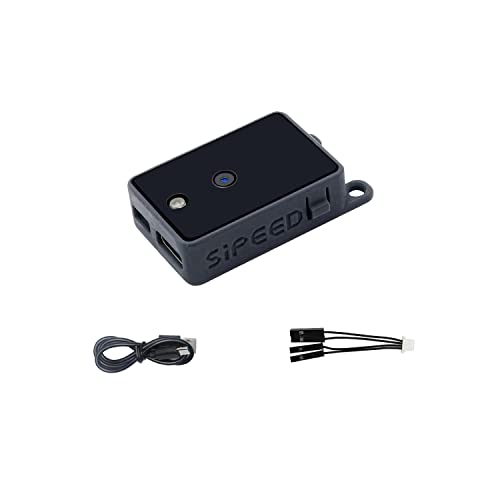
This module combines a TOF sensor with a BL702 processor and an LCD preview, enabling real-time depth visualization. Best for developers seeking an integrated system with on-device processing and immediate depth map viewing. Limitation: may require more setup and software integration compared to plug-and-play single-sensor modules.
PAMEENCOS GY-530 VL53L0X Module Set

GY-53VL53L0X modules provide a compact, easy-to-wire ToF sensing solution for Arduinos and other microcontrollers. Best for prototyping multi-sensor projects or adding depth sensing to small devices. Limitation: VL53L0X range is generally shorter than VL53L1X in some scenarios, and multiple modules can require careful I2C address management.
GZCBDSM CS30 RGBD Depth Camera

The CS30 depth camera integrates ToF-based RGBD sensing with a wide field of view. Best for environments that require a broad depth view for object recognition or navigation. Limitation: product text emphasizes the depth camera feature but may require additional integration for specific robotics platforms or software stacks.
Buying Guide: Key ToF Purchase Considerations
What measurement range do you need? ToF sensors vary from near-field to several meters. For close-range robotics, VL53L0X or VL53L1X variants are common choices, while longer-range sensing benefits from newer models and robust enclosures.
Which interface is available? Most modules use I2C, with some supporting PoE or serial interfaces. Ensure your microcontroller or SBC has compatible pins and voltage levels (3.3V vs 5V logic).
Do you need built-in processing or a display? Modules like MaixSense integrate processing and a display, ideal for on-device depth visualization. Standalone sensors rely on your host MCU/processor for depth calculation and data handling.
What environment will you operate in? IP ratings and enclosure types impact durability in dust, moisture, and outdoor use. Check whether your deployment requires rugged housing or weather resistance.
What is your target application? For drones, weight and power consumption matter, along with flight-safety integration. For smart homes or factory automation, robustness and multi-sensor coordination may be priorities.
Frequently Asked Questions
- What is a ToF camera used for in robotics? ToF cameras provide depth data to help robots detect obstacles, map environments, and gauge distances for navigation and manipulation.
- Are ToF sensors color- and surface-independent? Yes, ToF distance measurement relies on photon travel time rather than surface color, reducing errors caused by reflective or dark surfaces.
- Which ToF sensor is best for long-range sensing? VL53L1X-based modules typically offer longer range and higher accuracy at distance compared to some VL53L0X variants, depending on the model and conditions.
- Do I need a special developer kit to use these sensors? Most modules are compatible with common microcontrollers and single-board computers via I2C; basic wiring and a simple library are usually sufficient to get started.
- Can I run multiple ToF sensors on the same I2C bus? Yes, but you may need to manage unique I2C addresses or use repeaters/bus multipliers depending on the module.
- Is a ToF sensor suitable for outdoor use? Many ToF modules can operate outdoors, but you should consider weather sealing, light interference, and ambient infrared noise in your design.