Best Tilt Heads for Monopods: Smooth Panoramas and Easy Adjustments
When using a monopod, a reliable tilt head helps you capture precise angles, quick panoramas, and stable shots with telephoto lenses. The following selections focus on tilt heads designed for monopods, offering a mix of ARCA compatibility, smooth damping, quick-release plates, and strong load capacities. This guide highlights five strong options, with practical notes on what each brings to bird watching, wildlife, sports, or travel photography.
| Product | Brand | Key Feature |
|---|---|---|
| Andoer M-12 Monopod Tilt Head | Andoer | ±90° tilt, quick release plate, 38mm bottom, 3/8″ thread |
| Manfrotto 234RC Monopod Tilt Head | Manfrotto | User-friendly, versatile vertical/horizontal formats, standard thread |
| Desmond DMH-2 & 50mm DAC-X1 | Desmond Photographic | Arca compatible dovetails, oversized knob, robust build |
| K&F CONCEPT FH-03 | K&F CONCEPT | Lightweight fluid head, ±90° tilt, 360° pan, 11 lb load |
| WEYLLAN PH3 MonoGimbal Head | WEYLLAN | Arca Swiss, CNC aluminum, high load, split-gimbal efficiency |
The selections below are organized to help you compare core capabilities, including tilt range, mounting compatibility, and how they perform for wildlife and action shooting. Each section offers a concise look at how the product functions in real-world monopod setups, focusing on stability, ease of use, and adaptability to different lenses and subjects.
Andoer M-12 Monopod Tilt Head Review

The Andoer M-12 is designed specifically for monopod setups with a tilt capability of up to ±90°. It includes a quick-release plate with a standard 1/4″ screw, making it straightforward to attach cameras and small lenses. The 38mm bottom diameter and 3/8″ threaded holster contribute to solid compatibility with a range of monopods and tripods. This head emphasizes compact, functional control that benefits field use, such as bird watching or wildlife capture, where quick angle changes are essential. The built-in tilt mechanism supports smooth adjustments, and the compact profile helps keep the setup lightweight for extended scouting sessions.
Strengths include a simple interface, reliable tilt action, and straightforward setup. Consider this option if you prioritize a compact, affordable tilt head that integrates easily with existing monopod systems. Potential trade-offs involve the absence of advanced damping or micro-adjustments found on higher-end models, making it a practical entry point for hobbyists and travelers.
Key features to note: ±90° tilt, quick-release plate with a 1/4″ screw, compatible with 3/8″ threads, and a modest bottom diameter for stable mounting on standard monopods.
In field use, pairing the Andoer M-12 with a lightweight telephoto lens can deliver reliable panoramas and vertical/horizontal framing without excessive weight. It’s a solid option for photographers who want a budget-friendly tilt head that still delivers dependable performance.
Manfrotto 234RC Monopod Tilt Head

The Manfrotto 234RC is a user-friendly tilt head tailored for monopods, with a design that prioritizes ease of use and quick adjustments. Its versatility supports both vertical and horizontal formats, which is advantageous for general photography and wildlife framing. The standard threading ensures broad compatibility with common monopod setups, and the head’s ergonomic contours aid rapid repositioning during fast-moving subjects. This model is typically favored by shooters who want a dependable, straightforward tilt head that works confidently across a range of shooting scenarios.
Practical considerations include its balanced weight, predictable handling, and a simple quick-release system. It may not offer the most advanced damping or micro-adjustments, but it provides reliable tilt and pan control for everyday use. For users who prioritize quick setup and a low-profile footprint, the 234RC stands out as a robust choice.
Key features: monopod-focused tilt head, easy vertical/horizontal switching, standard mounting thread, and a compact footprint for portable field work.
Desmond DMH-2 & 50mm DAC-X1 Clamp Tilt Head
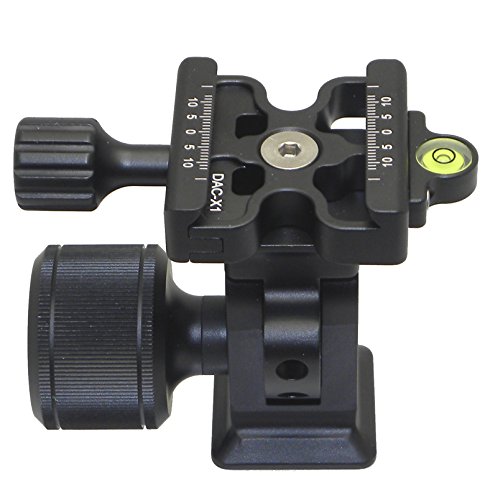
The Desmond DMH-2 offers a modular, ARCA-compatible approach with both top and bottom dovetails, providing versatile mounting options for monopods and tripods. This tilt head emphasizes robustness with oversized metal knobs and a design that avoids plastic components. The dual ARCA compatibility supports stable, precise adjustments and quick reconfiguration in the field. It’s suited for photographers who work with larger telephotos or require a dependable platform that can handle heavier lenses.
Practical strengths include excellent build quality, smooth operation with metal components, and secure locking. The caveat might be the heavier weight and potentially higher price relative to basic models, but the investment pays off in durability and modularity for serious users. It’s well-suited for wildlife and sports photographers who rely on dependable, long-term performance.
Key features: ARCA-compatible dovetails, dual-axis compatibility, oversized metal knob, strong build quality.
K&F CONCEPT FH-03 Fluid Head

The K&F CONCEPT FH-03 is a compact fluid head designed for smooth, dampened panning and tilting. It supports 360° panorama shots and ±90° tilt, enabling versatile composition for landscapes, wildlife, and travel photography. Weighing just over a pound, it balances portability with performance, making it a practical upgrade for shooters who want seamless motion control without adding bulk. The base provides 3/8″ and 1/4″ threading, increasing compatibility with various monopods and tripods. The hydraulic dampening helps achieve stable, fluid adjustments in outdoor conditions where wind or movement might otherwise disrupt framing.
Key considerations include the balance of weight versus load capacity (11 lb/5 kg safe working load), and the need for compatible clamps or plates for quick changes. The FH-03 suits those who want smoother micro-movements and a lighter build for travel or field work while still delivering solid stability for medium-range lenses.
WEYLLAN PH3 MonoGimbal Head

The WEYLLAN PH3 MonoGimbal Head is a CNC-machined aluminum head designed for monopods and tripods, offering Arca Swiss compatibility and a high load rating of up to 22 lbs (10 kg). Its gimbal-style design enables smooth control of large telephoto lenses by balancing the lens around its center of gravity, reducing strain on the monopod. The integrated Arca-swiss dovetail and the 3/8″ threaded hole provide versatile mounting options for complex rigs. This model is especially suitable for wildlife and action photography where large, heavy lenses require precise, steady movement.
Considerations include the weight of the head itself, the complexity of setup for beginners, and the need for compatible clamps. The MonoGimbal head excels in stability and control for long lenses, though it may demand a bit more familiarity with gimbal operation. It’s a strong pick for photographers who routinely handle heavy gear or require smooth, controlled motion for fast-moving subjects.
Buying Guide: Tilt Heads For Monopods
- Load capacity: Match the head’s rated load to your largest lens and any accessories. Overloading can reduce stability and tilt smoothness.
- Tilting range: Look for ±90° tilt if you shoot birds in flight or need low-angle options. Some models offer full 360° panning for panoramas.
- Mount compatibility: Ensure the base and threads align with your monopod (most use 1/4″ or 3/8″ threads; ARCA Swiss compatibility is common for quick releases).
- Quick-release system: A reliable quick-release plate saves time in the field. Verify that plates are easy to operate with gloves on in cold conditions.
- Damping and adjustment: Fluid heads or dampened systems provide smoother motion, reducing jitters on longer lenses. Consider how precise you need micro-adjustments.
- Portability: If you travel light, prioritize lighter weights and compact designs without sacrificing stability.
- Build quality: All-metal constructions tend to offer greater durability, especially in challenging outdoor environments.
- Budget vs. features: Entry-level heads cover basics well; advanced models add damping, ARCA compatibility, and modular dovetails for more complex rigs.
- Field ergonomics: Knob placement and grip quality impact how quickly you can adjust framing while tracking subjects.
- Future-proofing: If you anticipate upgrading lenses or rigs, choose a head that can scale with your gear (e.g., ARCA compatibility, higher load ratings).
In sum, the right tilt head for a monopod depends on your typical subject, lens weight, and how quickly you need to respond to changing scenes. For casual or travel use, lighter, simple tilt heads offer quick setup and reliable performance. For wildlife, sports, or birding with longer lenses, a more robust head with smooth damping and higher load capacity provides greater stability and precision. The five options above cover a spectrum from budget-friendly to high-end, helping you balance portability, control, and durability.