Finding the right thermal camera for drone use means balancing resolution, weight, and real-time performance. This guide highlights top handheld and drone-friendly thermal imagers that can assist in aerial inspections, search and rescue, and industrial diagnostics. Below, you’ll find concise product notes, key specs, and buying considerations to help you compare options quickly.
| Product | Brand | Key Features |
|---|---|---|
| TOPDON TC004 Mini Handheld Thermal Imaging Camera | TOPDON | 128×128 to 240×240 TISR, -4°F to 842°F, long battery life, smart alerts |
| Flagfront Thermal Camera, 240×240 TISR | Flagfront | High-contrast 240×240, temperature alarm, wide range |
| TOPDON TC002C Duo Thermal Camera | TOPDON | USB-C universal compatibility, 256×192 to 512×384 via TISR, broad temp range |
| Thermal Master Handheld Thermal Camera | Thermal Master | 60 Hz, 640×480 IPS display, 512×384 IR, flexible data capture |
| HF96V Thermal Camera with Visual Camera | HSFTOOLS | Dual camera, 240×240 SR, intelligent scene detection, IP54 |
TOPDON TC004 Mini Thermal Imaging Camera

The TOPDON TC004 Mini combines a compact handheld form with robust thermal imaging performance. It starts at 128×128 resolution and can enhance to 240×240 using TISR technology, delivering clearer details across a 40°x30° field of view with a 25Hz refresh rate. This balance helps observers capture precise thermal readings during drone inspections of roofs, electrical panels, or machinery from a distance where precision matters.
Smart alerts support quick diagnostics. When temperatures exceed preset thresholds, the on-screen warning appears and a photo is automatically captured to document the finding. Manual photo capture is also supported to build a visual audit trail. With built-in 512MB storage, the camera can store thousands of images for later review.
Temperature measurement ranges from -4°F to 842°F (-20°C to 450°C). Five color palettes—White Hot, Black Hot, Iron, Rainbow, and Red Hot—let technicians tailor visuals to the task. This device weighs less than many full-size thermal cameras, making it easier to transport on a drone or use in tight spaces during field inspections.
Flagfront YXI96 Thermal Camera

The Flagfront YXI96 emphasizes high-resolution imagery with 240×240 super-resolution imaging. A 25Hz frame rate provides smooth visual feedback during inspections, while a built-in temperature alarm helps locate abnormal heat sources quickly. It displays highest, lowest, and center temperatures in real-time to guide diagnostic decisions, which is valuable during on-site drone assessments where immediacy matters.
Operating over a broad temperature range from -4°F to 1022°F, the device supports emissivity adjustments for more accurate readings on diverse materials. This makes it suitable for applications like water leakage checks, electrical inspections, and automotive diagnostics, whether used by hand or integrated into a drone workflow for aerial sweeps.
TOPDON TC002C Duo Thermal Camera

The TOPDON TC002C Duo expands device compatibility via USB-C, working with iPhone, iPad, Android, and most USB-C devices. It uses 256×192 IR resolution and upscales to 512×384 with TISR, delivering sharp imagery with a 25Hz refresh rate and a high sensitivity of 40mK. The temperature range runs from -4°F to 1022°F, with a stated accuracy around ±2°C or 2%, enabling reliable readings across diverse environments.
Real-time temperature variation and customizable emissivity support make it adaptable for a variety of inspection scenarios, including home HVAC checks, electrical inspections, and building diagnostics. The camera also supports photo and video recording to capture evidentiary footage during drone-enabled or handheld use.
Thermal Master Handheld Thermal Camera

Thermal Master’s device brings a 640×480 IPS display and a 512×384 upgrade path via X³ IR technology, enabling clearer thermal imagery at 60Hz. It integrates a 2MP visual camera for context alongside thermal data, which enhances drone or handheld inspections of roofs, engines, or electrical systems. The system emphasizes a wide measurement range from -4°F to 1022°F with an accuracy of ±3.6°F, alongside adjustable emissivity for material-specific readings.
Onboard capabilities include wireless image transmission to a PC, Wi-Fi for mobile devices, and robust storage for video and photo capture. The ergonomic design supports field work, with notes and data organization features that streamline reporting after an on-site inspection.
HF96V Thermal Camera With Visual Camera
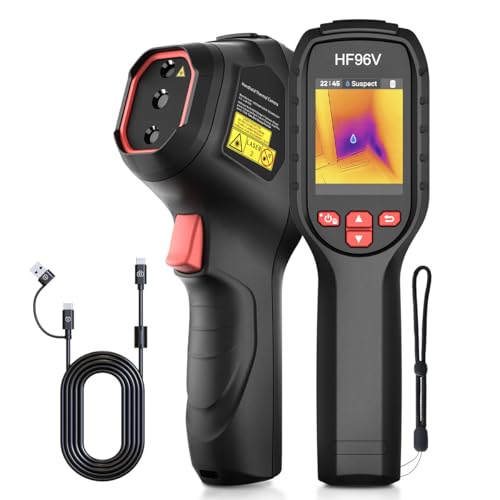
The HF96V combines a 96×96 IR sensor with a 640×480 visible camera, delivering multiple image modes (Fusion, Thermal, Visual) for richer context. Intelligent scene recognition — powered by deep learning — detects issues like water leaks and insulation gaps, which can speed up drone-assisted or handheld inspections. A laser pointer and user-friendly controls add practical on-site utility, while firmware updates ensure continued performance and feature enhancements.
With a 25Hz refresh rate and IP54-rated protection, the HF96V supports versatile field workflows, from home inspection to commercial facility audits. The device’s 50° field of view helps cover larger areas during quick sweeps, and the 3-in-1 tool design supports efficient data capture for reporting and analysis.
FLIR One Gen 3 Thermal Imaging Camera (iOS USB-C)

FLIR One Gen 3 is designed for direct smartphone use, connecting via USB-C on newer iPhones. It provides imagery through a compact, pocketable module that turns a mobile device into a thermal inspection tool. The device offers high-resolution thermal captures paired with a 1440×1080 visual image, plus 80×60 thermal resolution for detailed diagnostics on roofs, HVAC lines, and machinery from a drone or handheld vantage point.
FLIR’s app-guided inspection flow helps standardize checks for air leaks, moisture, and other common faults. This makes it a practical option for users who want an integrated mobile workflow, especially when a drone-based thermal survey feeds into cloud-based or on-site reporting pipelines.
Buying Guide: Key Purchase Considerations
- Resolution and pixel density: Higher native IR resolution improves detail in drone-performed scans. Consider devices offering SR or TISR upscaling for enhanced clarity at distance.
- Frame rate and refresh: A 25–60 Hz rate minimizes motion blur when drones or handhelds move quickly. Ensure the device supports real-time monitoring when paired with a drone feed.
- Temperature range and accuracy: Look for broad ranges suitable for building diagnostics and industrial environments, with clearly stated accuracy and emissivity options for different materials.
- Connectivity and compatibility: USB-C compatibility with mobile devices expands use cases, including drone telemetry integration. Some models offer Wi-Fi, PC software, and companion apps for reporting.
- Ease of use and portability: Lightweight handheld units or drone-integrated formats reduce operator fatigue during extended inspections.
- Storage and data management: Onboard storage and easy transfer options help in documenting findings and generating professional reports from field work.
- Special features: Temperature alarms, color palettes, and intelligent scene detection can streamline inspections by highlighting anomalies and providing guided workflows.
- Durability and protection: IP ratings and rugged designs matter for outdoor drone work and field environments where exposure to dust or moisture is possible.
Which features matter most for drone use?
- Weight and balance: Lighter cameras minimize the impact on drone endurance and maneuverability.
- Resolution vs. range: If you inspect large structures, prioritize higher IR resolution and reliable SR upscaling for faster sweeps.
- Real-time data: A fast refresh rate and live image transmission help operators make immediate decisions during flight paths.
- Integration options: Wireless transfer, app support, and PC software enable streamlined post-flight analysis and reporting.