Best Telescope Digital Eyepiece Camera for Astronomy and Bird Watching
The following article reviews the top five digital eyepiece cameras that attach to telescopes and microscopes, highlighting what they offer for astronomy, wildlife viewing, and educational exploration. Each option supports real-time viewing, image capture, and convenient WiFi or USB connectivity. Use this guide to compare compatibility, video resolution, and ease of use for beginners and seasoned observers alike.
| Product | Key Benefit | Connectivity |
|---|---|---|
| Unalace 64GB Telescope Camera | 2K video and 16MP stills with app control | Built-in WiFi, smartphone app |
| SVBONY SV105 | Beginner-friendly planetary and lunar imaging | USB 2.0, plug-and-play |
| Denash Telescope Camera | Real-time viewing on PC, versatile for planets and terrestrial targets | USB 2.0 |
| Telonixium WiFi Eyepiece | 1080P imaging with a 1.5″ screen and remote viewing | WiFi, 28mm-50mm compatibility |
| SVBONY SC002 Wireless Eyepiece | Full HD 1080P with 3x zoom and multi-OS app support | WiFi, Android/iOS |
Unalace 64GB Digital Eyepiece

The Unalace digital eyepiece fits 25–50mm eyepieces on most telescopes and microscopes, enabling quick, tool-free installation with a simple twist to lock. It features built-in WiFi for direct smartphone connection, allowing live HD video streaming and remote setting adjustments via a dedicated app, without requiring internet access. The device records in 2K Ultra HD video and captures 16MP stills with a 4MP sensor. Time-lapse and scheduled recording modes support hands-free observation of planets, nebulae, or wildlife in the field.
SVBONY SV105 Telescope Camera
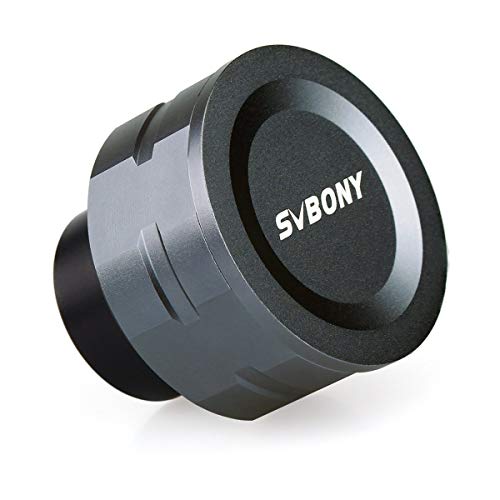
The SV105 is designed as a beginner-friendly electronic eyepiece for lunar and planetary imaging. It supports real-time viewing that can be recorded as video or captured as stills, with a simple plug-and-play setup and no driver required for Windows. The package enables quick transfer of the telescope view to a laptop or PC, suitable for learners exploring astrophotography and basic digiscoping. Compatibility includes Windows with Sharpcap Capture, Linux with AstroDMx Capture, and Android with USB Camera apps.
Denash Telescope Camera

The Denash USB eyepiece camera transmits real-time telescope views to a laptop or PC for digital recording. It supports sharing planetary and lunar imagery with friends and family and is described as ideal for lunar and planetary shots. While it excels at terrestrial targets, it is not intended for deep-space imaging. The device focuses on straightforward, port-friendly operation to promote social observation and quick capture of notable celestial events.
Telonixium WiFi Eyepiece with 1.5” Screen

The Telonixium eyepiece integrates a 1.5″ IPS screen for direct viewing and remote operation via WiFi within a 49-foot range. It fits 28mm–50mm scopes, enabling use with binoculars, monoculars, and traditional telescopes. It records in 1080P HD with a 1920×1080 video resolution and 2MP photos, and includes dark-light compensation for clearer images in low-light environments. This option supports versatile observation scenarios from astronomy to wildlife watching.
SVBONY SC002 Wireless Eyepiece

The SC002 digital eyepiece offers 1080P HD recording with a 3x digital zoom and 25–30fps for smooth playback. It supports universal eyepiece compatibility in the 37–56mm range and pairs with Android, iOS, and HarmonyOS via the SvbonyCam app. The device enables real-time observation and can stream to multiple devices, making it suitable for bird watching, spotting scopes, and general digiscoping in field settings.
Buying Guide
Key purchase considerations help ensure you pick a digital eyepiece that matches your equipment and goals. Consider the following perspectives and trade-offs:
- Compatibility and fit: Check telescope eyepiece diameter (25–50mm, 28–50mm, 37–56mm) and mounting compatibility. Some devices include adapters, while others rely on universal sizing. If you use microscopes or binoculars, look for versatile mounting grooves.
- Resolution and image quality: A balance between 1080P video and 2K/16MP stills yields richer captures. For beginners, 1080P with easy sharing may be sufficient, while advanced users may value 2K video and high-still resolution for astrophotography projects.
- Connectivity and control: WiFi-based models enable smartphone control and offline operation, ideal for field use. USB 2.0 cameras offer straightforward plug-and-play with laptops, which can be more reliable in certain setups.
- Screen and viewing experience: Built-in screens (1.5″ or 1.5″+) provide direct viewing without an external device, but may add weight. For stable sessions, ensure the total system balance accommodates the camera’s weight.
- Power and runtime: Some eyepieces include built-in batteries, while others rely on USB power or external power sources. Consider expected session duration and whether you need battery-powered operation for remote observing.
- Applications and audience: If your priority is bird watching or terrestrial targets, a dynamic frame rate and live streaming can be more important than planetary imaging. For astronomy-focused use, features like time-lapse, scheduled recording, and software compatibility matter more.
- Portability and durability: Lightweight units with pocketable form factors are advantageous for hiking or field trips. Assess build quality and durability if you plan to travel to dark-sky locations.
- Software ecosystem: Some models pair with apps on iOS/Android and third-party software like Sharpcap or AstroDMx Capture. Compatibility can influence the ease of data processing and sharing across devices.
Across these options, buyers should align features with their observing goals, telescope size, and preferred workflow—whether that means quick captures for social sharing or more detailed sessions for rigorous astrophotography and digiscoping.