Best Telephoto Lenses for Wildlife Photography
Wildlife photography demands reach, optical clarity, and manageable weight. The telephoto lens category delivers critical reach while keeping subjects within the frame, whether you shoot birds in flight, distant mammals, or action-packed scenes at the edge of a meadow. This guide highlights five top telephoto options across Canon, Sony, Nikon, and third-party brands, spanning native mounts and versatile zoom ranges. Each lens balances portability with performance to help you capture natural moments without intrusive gear. The selections below consider field conditions, camera ecosystems, and reliability for American wildlife photographers.
To help you compare at a glance, the table below summarizes the chosen models with their brands and a key feature. Each entry points to an Amazon listing for easy review and purchase, while the detailed sections below provide objective specs and use-case context.
| Product | Brand | Notable Feature |
|---|---|---|
| Canon RF 100-400mm F5.6-8 IS USM | Canon | Lightweight zoom with IS and 100-400mm reach |
| Sony Alpha 70-350mm F4.5-6.3 G OSS | Sony | Compact G-class optics with OSS |
| Nikon AF-S DX 55-300mm f/4.5-5.6G ED VR | Nikon | VR and Auto Focus for DX bodies |
| Big Mike’s 500–1000mm Telephoto | Big Mike’s | 500mm base with 2x teleconverter to 1000mm |
| JINTU 420-800mm MF Telephoto | JINTU | Long reach in a full-metal body for Canon EF |
Canon RF 100-400mm Review

Canon’s RF 100-400mm F5.6-8 IS USM is a lightweight telephoto zoom designed for Canon R-system cameras. It combines a useful 100-400mm focal range with optical image stabilization to help you capture distant wildlife in natural light. The focusing action benefits from Canon’s Nano USM, delivering quick, quiet AF suitable for birds in flight and distant mammals. While the variable aperture means less light at 400mm, the lens remains portable enough for all-day field use, making reach available without carrying heavy gear. Its balance of reach, weight, and autofocus performance makes it a practical option for mobile wildlife shooters.
Sony Alpha 70-350mm Telephoto Review
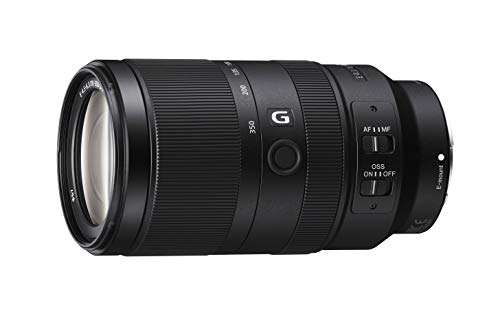
Sony’s Alpha 70-350mm F4.5-6.3 G OSS provides a versatile reach for Sony APS-C bodies and a compact, balanced design. The G-class optics deliver sharp results across the frame, with Optical SteadyShot helping to stabilize images at slower shutter speeds, a critical advantage when wildlife sits still or moves slowly. The 70-350mm range translates to roughly 105-525mm full-frame equivalent, offering flexible framing for perched birds, distant mammals, and action sequences. With a light footprint of about 22 ounces, photographers can carry it longer without sacrificing performance or balance during long field sessions.
Nikon 55-300mm DX VR Review

The Nikon AF-S DX NIKKOR 55-300mm f/4.5-5.6G ED VR is a versatile telephoto option for Nikon DX cameras. This lens blends a 5.5x zoom range with image stabilization to help you frame distant wildlife in natural light. The built-in Silent Wave Motor provides quiet, precise AF, while the 58 mm filter thread covers common lens accessories. The listed features describe a refurbished product, which typically includes original accessories and a 90-day warranty, offering a reliable entry point for wildlife shooters who want extended reach without a high initial investment.
Big Mike’s 500–1000mm Telephoto Review

Big Mike’s 500mm/1000mm f/8 manual telephoto lens is designed for Canon DSLR cameras with EF-mount. The base 500mm reach can be extended to 1000mm with the included 2X teleconverter, enabling dramatic magnification for distant wildlife, birds, and small mammals. The lens uses high-index, low-dispersion glass with multi-coating to minimize aberrations and preserve sharpness across the frame. Being manual focus, it requires careful composition and pre-planning in fast-changing wildlife scenarios, but it presents a budget-conscious path to extreme reach for dedicated field photographers.
JINTU 420-800mm Telephoto Review
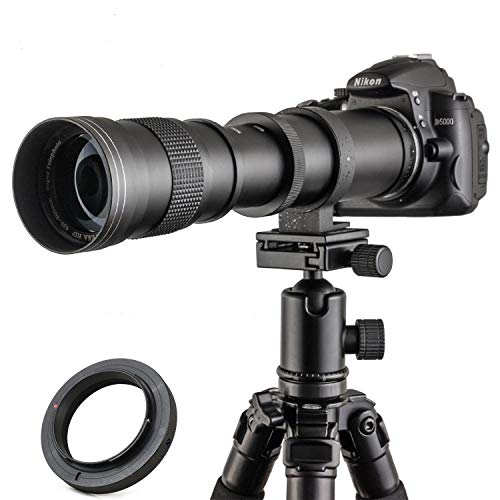
JINTU’s 420-800mm MF telephoto lens offers extended reach in a compact, full-metal body. With a constant manual focus, it covers a broad range from mid to long tele, making it suitable for wildlife in open habitats as well as moon and field study. The lens is compatible with Canon EOS cameras via EF-mount and includes a free Canon adapter, facilitating mounting on a broad range of bodies. Weighing roughly 700 grams, it remains portable for hikers, while multi-coated, low-dispersion glass helps deliver crisp images across the zoom range.
Buying Guide
What to consider before buying
- Camera system compatibility: Ensure the lens mount matches your body (Canon RF, Sony E, Nikon F/DX, or EF for third-party options).
- Focal length and reach: Determine whether you need 400mm, 500mm, or beyond. Crop-sensor bodies effectively extend reach, but you may need more light for faster shutter speeds.
- Aperture and light: Faster apertures (e.g., f/4.0 or f/5.6) brighten subjects at a distance; slower apertures require steadier technique or higher ISO in low light.
- Autofocus performance: Look for fast, reliable AF for birds in flight and moving mammals. USM, SWM, and OSS/VR can improve tracking and stability.
- Image stabilization: Evaluate the lens’ stabilization claims and how they translate to real-world performance during handheld shooting or panning.
- Weight and portability: Longer reach often adds weight; balance with a sturdy tripod or monopod for stability in the field.
- Construction and durability: Weather sealing and build quality matter when shooting outdoors in variable conditions.
- Budget and value: Consider whether new or refurbished options offer the best value for your shooting style and long-term needs.
- Accessory compatibility: Teleconverters, filters, and tripod collars can extend usefulness but may limit autofocus speed on some bodies.
How to choose by use case
- Birds in flight: Prioritize longer reach (400–600mm on full-frame), fast AF, and reliable stabilization to freeze motion.
- Wildlife in open terrain: A balanced focal length (300–600mm) with solid stabilization helps maintain framing in unpredictable light.
- Birds and mammals at distance: Extreme reach (500–1000mm) is beneficial, but ensure you can track subjects and manage weight in the field.
- Moon or celestial subjects: High magnification and precise manual focus can be advantageous; consider a robust tripod and focusing aids.