Best T Ring Adapters for Cameras: Top Astrophotography Picks
For photographers who want to bridge telescopes and cameras, T ring adapters are essential. This article highlights five reliable T-ring adapters and related camera setups that help you capture the night sky with clarity and ease. Each option is compatible with popular brands and focuses on secure connections, durable construction, and straightforward installation. Explore how these accessories can expand your astrophotography toolkit and enable precise framing, reliable focus, and better image quality in low-light conditions.
| Product | Brand | Key Benefit | Compatibility |
|---|---|---|---|
| Celestron T-Ring Adapter for Nikon Digital Cameras | Celestron | Secure Nikon contact with bayonet lock | Nikon SLR/DSLR |
| Astromania T2 Ring Adapter | Astromania | Machined 42mm thread; reliable grip | Nikon F-bayonet SLR/DSLR |
| Alstar T2 Ring for Pentax | A ALSTAR | Durable metal construction; broad Pentax compatibility | Pentax SLR/DSLR |
| Alstar Pentax-k SLR/DSLR Camera Adapter | A ALSTAR | Rotatable 1.25″ eyepiece compatibility | Pentax SLR/DSLR |
| Astromania T-Ring Set for Nikon with 2X Barlow | Astromania | Boosted magnification for close focusing | Nikon SLR/DSLR |
The following sections present five selected products with practical notes on setup, durability, and how they fit into an astro-imaging workflow. Each entry includes a concise overview of what to expect in real-world use, including installation tips and compatibility considerations for common camera bodies and telescope interfaces.
Celestron T-Ring Adapter for Nikon Cameras

Designed to simplify attaching a Nikon DSLR or SLR to a telescope, this Celestron T-Ring uses a sturdy bayonet flange that locks in place, ensuring secure contact during long exposures. The adapter threads into standard T-threads, making it compatible with a broad range of camera accessories and T-apapters. For users who shoot with Nikon bodies, this is an entry-level solution that minimizes flange distance issues and helps maintain consistent framing. Durability and a straightforward install process are its key attractions, especially for beginners expanding into astrophotography. Proper alignment and tightening are essential to avoid vignetting and ensure precise focus on your subject.
Installation tips: Mount to the camera’s lens mount, then thread onto the telescope’s T-thread adapter. Use a gentle, snug twist rather than forcing the connection, and confirm the bayonet click before imaging. If you plan to stack frames, consider a lightweight field tripod and an inline remote trigger to reduce vibrations during exposures.
Astromania T2 Ring for Nikon F-Bayonet
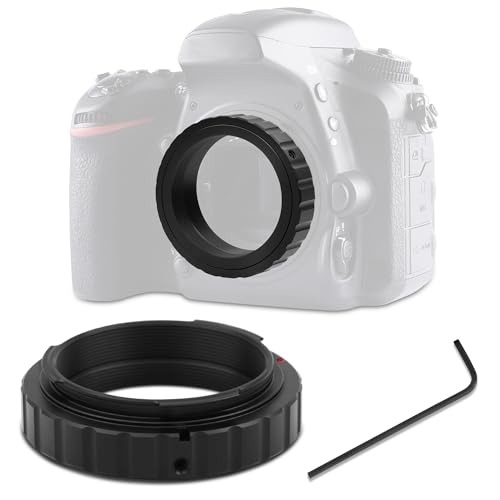
This Astromania T2 Ring is built to fit Nikon F-bayonet cameras, providing a precise M42x0.75 threading interface that connects with telescope adapters. The package often includes a hex wrench for easy angle adjustments, and the knurled grip surfaces improve handling in cold or gloved conditions. It’s designed to be robust in the field, with machined surfaces that resist wear and maintain consistent alignment across sessions. It supports a quick and reliable installation process, essential for capturing fleeting moments and ensuring your camera consistently mates with the telescope’s focus plane.
Usage considerations: Verify compatibility with your Nikon model before purchase, since newer or older bodies may have different flange distances. Ensure you pair this ring with an appropriate T-adapter for your telescope to achieve proper back focus and avoid coma or misfocus at the edges of your frame.
Alstar T2 Ring for Pentax SLR/DSLR

The Alstar T2 Ring is made of high-precision metal with an anodized aluminum surface to ensure long-term durability. It connects Pentax K-mount cameras to telescope adapters through standard M42 threads, allowing you to adapt to 1.25-inch or 2-inch focusers with an appropriate T-Adapter. The inner threads are machined to minimize light scatter, helping preserve contrast in dim deep-sky shots. This ring is especially popular with Pentax users who want a reliable, repeatable method to attach their camera to a telescope while reducing setup time during observing sessions.
Practical guidelines: Match this ring with a Pentax-compatible T-adapter for your telescope. If you intend to image with a seasoned focal length, keep an eye on back focus requirements and plan to fine-tune your focus using live view or an external monitor to avoid trailing during long exposures.
Alstar Pentax-k SLR/DSLR Camera Adapter

This Pentax-focused adapter from Alstar includes a rotatable inner ring allowing orientation control to align your camera with a telescope’s field of view. It uses a standard 1.25-inch eyepiece port and supports a 1.25-inch to M42 T Mount connection, making it flexible for a variety of telescope configurations. The durable metal construction and anodized finish contribute to longevity in the field, especially when conditions are not ideal. Users can experience straightforward threading and reliable locking, which helps when performing multi-shot mosaics or stacking later in post-processing.
Key considerations: Ensure your Pentax body is compatible with the K-mount, and verify the focus accuracy with a test frame. Rotating the ring can help optimize camera orientation for best edge sharpness, particularly when using wide-field astrographs or refractor telescopes with large fields of view.
Astromania T-Ring Set for Nikon with 2X Barlow

This bundle combines a T-ring with a 1.25″ connection and a 2X Barlow lens to extend focal length for higher magnification imaging. The included Barlow offers the convenience of boosting the effective focal length with additional filter threads compatible with 1.25″ accessories. It supports a range of telescope brands like Celestron, Orion, Sky-Watcher, and Meade, making it a versatile solution for enthusiasts who want more reach when photographing planets or brighter deep-sky targets. The design emphasizes robust aluminum construction and smooth threading to ensure reliable engagement even with cold hands.
Operational guidance: Use the Barlow cautiously to avoid excessive magnification that reduces image brightness or depth of field. Calibrate exposure times to balance signal capture with noise, and employ stacking to improve signal-to-noise ratio for faint objects. Always verify the focus after adding the Barlow to prevent inconsistent framing across sessions.
Sony RX1R III Bundle for Full-Frame Imaging
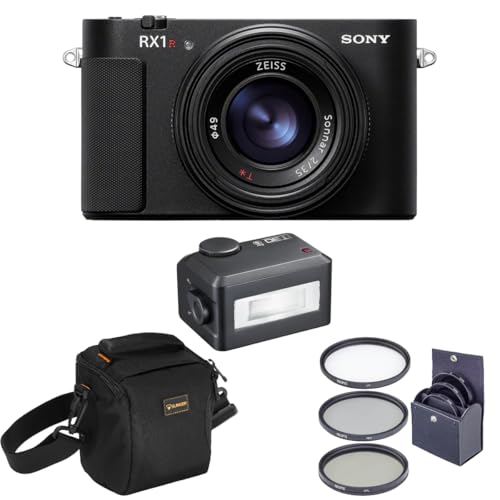
The Sony RX1R III package combines a full-frame, high-resolution sensor with a compact form factor and a robust processing pipeline. The 61 MP Exmor R CMOS sensor provides detailed image rendering that is well-suited for astro-imaging when paired with appropriate exposure control and noise reduction. The included accessories—such as a compatible battery and protective components—support field workflows, while features like enhanced zoom and AI-based subject recognition can facilitate daytime framing or hybrid shooting sessions. When used in low-light scenarios, the sensor’s dynamic range helps preserve faint star details while minimizing noise in the shadows.
Considerations for astrophotographers: In a telescope-based workflow, this camera requires careful back-to-back focus calibration and potentially a dedicated adapter to connect to a telescope via T-ring systems. For night-sky imaging, you’ll typically employ longer exposure sequences and stacking to amplify detail without overtaxing the sensor. Pair with a stable tripod or mount to minimize vibrations during long exposures and ensure consistent framing across frames.
Buying Guide: Key Purchase Considerations for T Ring Adapters
When selecting a T ring adapter, consider the following factors to optimize your astrophotography setup and maximize compatibility with your existing gear.
Mount compatibility: Confirm your camera brand and model compatibility—Nikon, Pentax, or other brands—before purchasing. Some adapters are designed for specific bayonets (Nikon F, Pentax K) and others offer more universal M42 threads. The correct match ensures secure attachment and proper back focus alignment.
Thread standards and back focus: Understanding the thread pitch (commonly M42x0.75) and back focus requirements is essential. Improper back focus can lead to out-of-focus stars at the edges of frames or overall blur. If your telescope requires a longer optical path, you may need a separate T-adapter or spacers to achieve correct focus.
Build quality and durability: Durable metal construction with precise threads reduces wear and tear from repeated mounting. A knurled grip or hex wrench included in the package can simplify installation in cold or wet environments, which are common in astronomy sessions.
Ease of use and alignment: Look for rings or adapters that offer straightforward installation and repeatable alignment. A rotatable inner ring, for example, helps you quickly orient the camera to the telescope’s field of view, saving time during observing sessions.
Flexible accessory ecosystem: Some kits include a Barlow lens or rotation features. While adding magnification can be beneficial, it also reduces light throughput. Weigh the benefits of higher magnification against potential brightness loss and increased exposure requirements when planning imaging sessions.
Cost vs. value: Budget-conscious buyers should consider bundles that pair a T ring with a basic adapter and possibly a Barlow lens. However, investing in a high-quality, compatible T-ring with reliable threading and a secure lock often yields longer-term reliability and better image quality across multiple setups.
In summary, choosing the right T ring adapter depends on your camera system, telescope configuration, and imaging goals. Whether you are capturing wide-field nebulae or close-up planetary details, a solid T ring with proper back focus and secure attachment will help you achieve sharper frames and a smoother workflow. This guide highlights practical options with durable construction and clear compatibility to assist readers in selecting adapters that fit their astrophotography ambitions.