Best Spotting Scopes for Birding: Top Picks for 2026
Spotting scopes make birding easier by delivering bright, close-up views of distant subjects. This guide highlights five reliable options that balance zoom range, light transmission, and rugged builds. Best for beginners and intermediate birders, these models offer solid performance across varied light and weather conditions. The table below helps compare key strengths at a glance.
| Product | Best For | Key Benefit | Light Conditions |
|---|---|---|---|
| SVBONY SV28 70mm | Casual to semi-serious birders | Large 70mm lens, extendable sunshade | Bright; all weather |
| Gosky Flagship 25-75×80 | Birdwatchers on trails | High zoom range, waterproof | Versatile in variable light |
| Vortex Diamondback HD 20-60×85 | Serious hobbyists | HD optics, integrated sunshade | Sharp in low light |
| Gosky DiamondEdge 20-60×80 | Outdoor enthusiasts | Reliable flagship features, BAK4 | Bright, clear images |
| LULOLO 30-90×92 UHD | Long-range observers | Wide zoom, rugged build | Good in variable conditions |
SVBONY SV28 Spotting Scope With Tripod
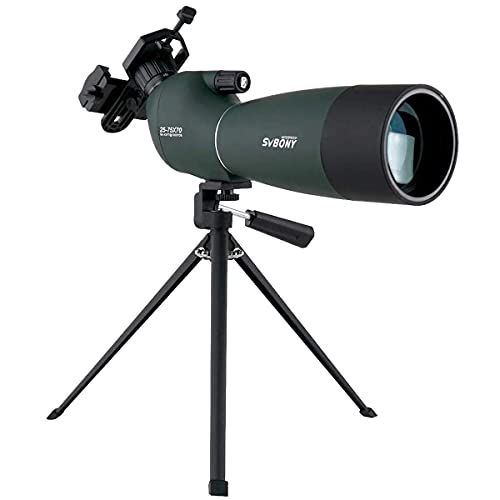
The SVBONY SV28 features a 25-75x70mm zoom with a 70mm objective lens. It is designed for easy focusing and setup, making it a practical choice for beginners who want reliable performance without a steep learning curve. Its waterproof, fogproof construction helps maintain image clarity in changing outdoor conditions. A non-slip finish aids handling when wet, and the extendable sunshade reduces glare for daytime use.
Best for: Entry-level to casual birders who want a simple, all-weather scope for field use and casual target viewing.
Why selected: Combines a versatile zoom with a robust, weather-resistant build and a practical sunshade, delivering dependable views in typical birding scenarios.
Caution: The 70mm objective is solid, but in very low light you may appreciate models with larger apertures for extra brightness.
Gosky Flagship DiamondEdge 20-60×80

The Gosky Flagship DiamondEdge offers 20-60x magnification with an 80mm objective lens. It uses BAK4 prisms and FMC coatings to improve light transmission, delivering brighter, crisper images. The scope is nitrogen-filled and O-ring sealed for waterproof and fog-proof performance, and its rubber-armored body provides a secure grip in wet or rugged environments. An integrated eyepiece shield protects the lens from rain and snow.
Best for: Birders who hike or travel in variable weather and need dependable clarity across a wide zoom range.
Why selected: This model emphasizes stability and light control, making it a reliable all-around performer for field observations and distant birding.
Caution: Heavier build may be less convenient for very long treks when carrying light gear is a priority.
Vortex Optics Diamondback HD Spotting Scope 20-60×85

The Diamondback HD delivers an HD optical system with enhanced edge-to-edge sharpness and reduced chromatic aberration. Anti-reflective coatings improve light transmission for brighter images, even when observing in shadowy environments. It includes a built-in sunshade to minimize glare, and adjustable eyecups accommodate eyeglass wearers. The scope’s streamlined exterior reduces bulk while maintaining performance in diverse outdoor settings.
Best for: Hunters, birders, or nature observers who prioritize image clarity and color fidelity in varying light.
Why selected: Its emphasis on image quality and practical features (sunshade, adjustable eyecups) makes it a strong choice for serious field observations.
Caution: Low-light performance is strong, but users seeking extreme maximum magnification at twilight should compare with higher-aperture options.
LULOLO 30-90×92 UHD Spotting Scope

The LULOLO 30-90×92 UHD spotter scope combines a broad 30-90x zoom with a sizable 92mm objective. Premium BAK4 prisms and reliable waterproof construction support clear, bright images in challenging light. The included tripod and upgraded phone adapter facilitate easy sharing and documentation of sightings. Its rugged design targets long-range viewing and wildlife observation in diverse outdoor scenarios.
Best for: Long-range observers who need flexibility in magnification and solid light gathering in outdoor environments.
Why selected: Its large optics and strong zoom range are well-suited for distant birds and landscapes, providing versatility in field conditions.
Caution: The higher magnification is useful, but requires careful setup on steadier surfaces to prevent image shake at higher zoom levels.
Buying Guide: How To Choose A Spotting Scope For Birding
Key considerations help identify which spotting scope best fits your birding style and environment. Use these practical questions to compare models:
- What magnification range do you need? If you frequently observe distant birds, a wider zoom like 25-75x or 30-90x may be advantageous; for closer, frequent tree-edge viewing, 20-60x often suffices.
- How important is light transmission? Models with larger objective lenses (70–92mm) typically deliver brighter images, especially in dawn or dusk.
- What weather conditions will you face? Waterproof and fog-proof designs prevent dew and rain from compromising optics.
- Is portability a priority? Lighter designs are easier to carry, but may offer smaller apertures or fewer protective features.
- What accessories matter? A stable tripod, lens hood, and a practical phone adapter for sharing sightings can add significant value.
- How critical is image sharpness at the edge? Scopes with high-quality prisms and coatings reduce chromatic aberration and improve color fidelity.
FAQ
- What is the best spotting scope for beginner birdwatchers? A model with a flexible zoom (around 20-60x), a sturdy tripod, and waterproof construction balances ease of use with reliability.
- Do spotting scopes require special tripods? Yes. A stable tripod minimizes image shake, especially at higher magnifications.
- Should I choose a larger objective lens? Larger lenses gather more light, improving brightness, particularly in low-light conditions, but they can add weight.
- Are FMC and BAK4 coatings important? Yes. Fully multi-coated optics with BAK4 prisms maximize light transmission and reduce glare for crisper images.
- What maintenance is needed for spotting scopes? Keep lenses clean, protect with lens covers, and store in a dry place to avoid mold or fogging.
- Is a built-in sunshade necessary? It helps reduce glare in bright daylight and improves contrast during daytime observations.