Best Small Rig Side Handles for Stable Handheld Shooting
Choosing the right side handle can dramatically improve stability, comfort, and flexibility when shooting with camera cages. This guide highlights five top SmallRig side handles designed to fit a range of rigs, from compact mirrorless setups to larger cinema cages. Each option balances ergonomic design with versatile mounting, helping you customize grip position, weight distribution, and accessory attachment for handheld, low-angle, or dynamic work.
Summary of Selected Products
| Product | Brand | Key Feature | Typical Use |
|---|---|---|---|
| SmallRig Aluminum Side Handle for Camera Cages | SMALLRIG | 36mm up/down adjust; 1/4″-20 mounting holes; durable aluminum | General handheld shooting with cages |
| SmallRig Side Handle with 1/4″ & 3/8″ Two-in-One Screw | SMALLRIG | Swappable 1/4″-20 and 3/8″-16 ARRI-style screw; 36mm adjust | Versatile cage setups and ARRI-style rigs |
| SmallRig Snap-On NATO Side Handle, 4017 | SMALLRIG | Snap-on NATO clamp; 35mm balance adjust; ergonomic silicone | Quick-swap rigs and on-the-fly balance |
| SmallRig Mini NATO Side Handle | SMALLRIG | 43mm up/down adjustable; built-in cold shoe; 1/4″-20 | Lightweight mini rigs and single-handle use |
| SmallRig Lightweight Mini Side Handle Kit | SMALLRIG | NATO clamp and 1/4″-20 holes; adjustable 30mm | Compact, flexible setup with extra mounting options |
The selections above emphasize ergonomic grip designs, adjustable balance, and broad compatibility across SmallRig cages and rigs. Each product is built to distribute weight more evenly, reduce fatigue, and allow quick reconfiguration during dynamic shoots.
SmallRig Aluminum Side Handle for Camera Cages

This ergonomic side handle is designed to attach to two 1/4″-20 threaded holes with 18mm spacing. It enhances stability during handheld shooting and offers additional mounting points. The handle supports a maximum load of 15kg, making it suitable for a variety of small to mid-size rigs. The 36mm up/down adjustment allows tailoring to camera size and user preference. The main body uses high-strength aluminum alloy, with stainless steel screws and a non-slip silicone palm surface for reliable grip. This combination delivers durability, anti-freeze properties, and long-lasting performance.
SmallRig Side Handle With 1/4″ & 3/8″ Two-in-One Screw

The mounting point screw uses a retractable housing to switch quickly between 1/4″-20 and 3/8″-16 ARRI-compatible screws. This enables broader compatibility with different cages and L plates. The handle features up/down adjustability up to 36mm (1.42 inches) to balance the center of gravity and avoid cable interference. Its ergonomic, non-slip silicone construction supports comfortable long shoots, with the added ability to switch from left-handed to right-handed use using the built-in wrench.
SmallRig Snap-On NATO Side Handle, 4017

This side handle features a snap-on quick lock design that aligns with the NATO rail and can be attached or released in seconds, without removing other accessories first. The wrench lock provides added stability and safety. It offers up/down balance adjustment within 35mm to optimize CG and avoid interference with cables. The ergonomic silicone grip and built-in wrench allow quick left/right hand switching, supporting versatile shooting configurations in dynamic environments.
SmallRig Mini NATO Side Handle
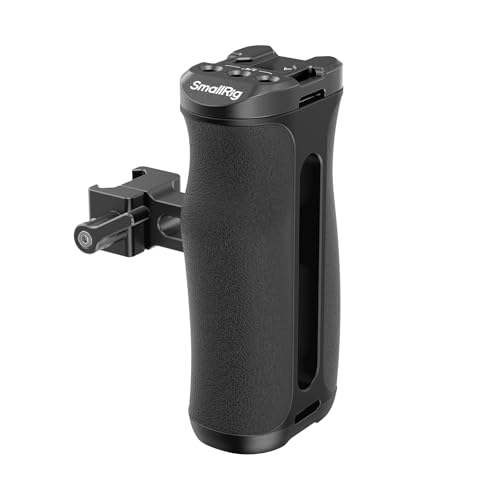
The Mini NATO Side Handle 4840 is designed to reduce arm strain during shooting. It attaches to cages via a NATO clamp or 1/4″-20 holes and includes a built-in magnetic wrench for easy adjustments. The 43mm up/down range helps users tailor the grip to their camera size, while the non-slip silicone palm surface ensures comfortable handling. It is compatible with left or right-hand use and supports a flexible shooting style for compact setups. The manufacturer notes a maximum recommended load of 6kg.
SmallRig Lightweight Mini Side Handle Kit
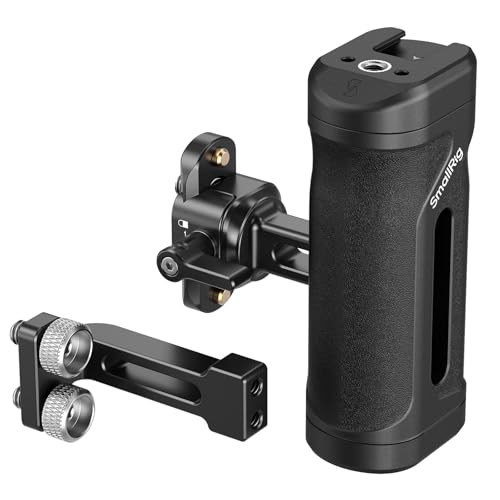
The Lightweight Mini Side Handle Kit combines a NATO clamp and 1/4″-20 threaded holes for flexible attachment to cages. It emphasizes ease of use with a quick adjustment range of 30mm and a magnetic hex wrench stored in the bottom for convenient access. The ergonomic design suits both left and right-handed operators, enabling quick switching to match the shooting scenario. This kit is intended for smaller rigs needing an unobtrusive yet sturdy grip with reliable balance.
Buying Guide: Key Purchase Considerations
- Rig compatibility: Confirm the side handle connects to standard 1/4″-20 or 3/8″-16 threaded holes and NATO rails used on your cage. Some handles offer dual mounting options for broader compatibility.
- Adjustability: Look for up/down travel that suits your camera size and preferred grip position. Most options offer 30–43 mm of movement to balance weight distribution.
- Material and grip: Aluminum bodies with non-slip silicone palms are common for durability and comfort. Consider anti-freeze properties if you shoot in cold environments.
- Left/right hand usability: Handles with built-in wrenches or quick-switch features simplify changing handedness during shoots, minimizing setup time.
- Weight and load rating: Ensure the load rating fits your rig, but remember the handle adds weight. Choose a model that does not overly burden the carry or affect balance.
- Accessory integration: Some handles include cold shoes, strap holes, or additional mounting points for microphones, lights, or monitors—plan for your accessory kit.
- Durability: Prioritize solid construction for frequent use and transport. Stainless screws and reinforced joints improve long-term performance.
When selecting a small rig side handle, assess your typical shooting scenarios—from light documentary work to compact narrative projects. If you frequently switch between left and right-handed operation or require quick toggling on a NATO rail, consider models with snap-on or built-in wrench mechanisms. For lightweight, compact rigs, mini handles with adjustable reach offer enough control without adding bulk. For larger cages, options with stronger load ratings and broader adjustment ranges help maintain balance as you adjust to different camera bodies and gimbals.