Best SLR vs Point and Shoot Cameras: Clear Comparisons for American Buyers
If you’re choosing between an SLR-style or a compact point-and-shoot, the decision hinges on how you plan to shoot, carry, and edit. This guide explains which type fits different photographers, from beginners to travelers, and highlights five solid options. The focus is on practical differences, not marketing fluff, to help you pick confidently for everyday use or special occasions.
Product Comparison Snapshot
| Product | Best For | Key Benefit | Limitations |
|---|---|---|---|
| Kodak PIXPRO FZ45 | Casual shooters seeking simplicity | Affordable 16MP sensor with 4x optical zoom | Compact features; basic video options |
| Acuvar 16MP Digital Camera Mini SLR Style | Beginners who want a DSLR-like feel | SLR-style body with 16X zoom and stabilization | Entry-level performance; not a true DSLR |
| Canon EOS Rebel T7 DSLR | Aspiring photographers wanting upgrade path | High 24.1MP sensor; built-in Wi‑Fi; versatile AF | Bulkier; lenses add cost |
| Ploomen 4K Digital Camera | Content creators and beginners who vlog | 56MP capture, 3″ flip screen, 16x zoom | Digital zoom quality varies; needs practice |
| Kodak PIXPRO FZ55 | Travelers wanting a light compact | 16MP sensor with 5x optical zoom | Limited advanced controls |
Introduction
Best for first-time shooters and travelers seeking ease, the choice between SLR-style and point-and-shoot cameras comes down to control, size, and how much you value interchangeable lenses. This guide targets five relevant options that illustrate the trade-offs between DSLR-like handling and compact, grab-and-go shooting. The top picks serve different buyers: beginners seeking an intuitive entry, travelers needing compact gear, and aspiring photographers aiming to grow with a better sensor and autofocus. The following sections present each product with practical strengths and a clear buyer note.
Buying Guide
What should you consider when choosing between SLR-style and point-and-shoot cameras?
- Sensor size and image quality: DSLRs and SLR-style cameras often offer larger sensors and higher resolution, which benefit low light and depth of field. Point-and-shoot models typically prioritize portability and ease of use.
- Lens flexibility: True DSLRs allow interchangeable lenses; most compact cameras do not. If you plan to shoot a lot of portraits or wildlife, a lens system and fast aperture can matter.
- Size and weight: If you travel light, a compact camera reduces bulk. For hobbyists who carry a camera daily, an SLR-style body with a versatile zoom can balance grip and performance.
- Controls and learning curve: Point-and-shoots emphasize auto modes and presets. SLR-style cameras usually offer manual or semi-manual modes for learning photography basics.
- Video capabilities: For vlogging and travel journals, check resolution, frame rate, stabilization, and mic options. Some compact cameras provide robust video features in a small package.
- Price and future growth: Entry-level DSLRs typically cost more upfront but may save time and money if you plan to grow with better lenses and accessories.
Product Comparisons
Kodak PIXPRO FZ45 Digital Camera

Best for casual shooters who want simplicity with a reasonable zoom. The 16MP sensor delivers everyday detail, and the 4x optical zoom helps frame shots without moving. Full HD video supports travel clips and family moments. This is a strong pick for a lightweight, beginner-friendly camera. Best for: travelers, families, or students who want reliable point-and-shoot performance without upgrading to a full DSLR system. Limitation: fewer advanced controls and manual options compared to higher-end cameras.
Acuvar 16MP Digital Camera Mini SLR Style
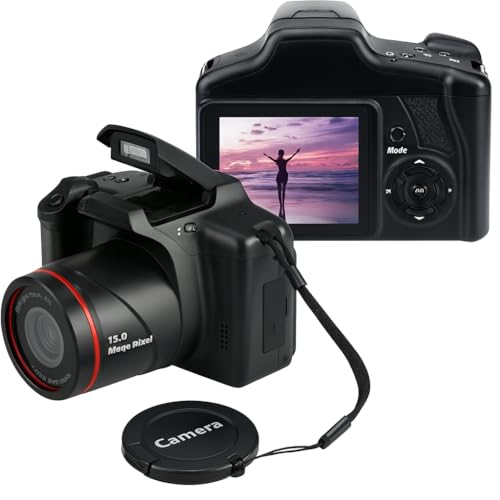
Best for beginners who want a DSLR-like feel without investing in multiple lenses. The 16MP sensor and 2.4″ LCD are beginner-friendly, and the 16X digital zoom provides reach for distant subjects. It also supports video and webcam usage for casual streaming. Choose this if you desire a familiar camera body and straightforward operation while staying within a compact footprint. Caution: Not a true DSLR; performance may lag behind true interchangeable-lens cameras in challenging lighting.
Canon EOS Rebel T7 DSLR

Best for aspiring photographers seeking a growth path with a real DSLR system. The 24.1MP APS-C sensor provides strong image quality, and built-in Wi‑Fi supports quick sharing. The T7 is a solid entry point into more advanced photography and interchangeable lenses. Better for users who want to learn exposure, composition, and post-processing. Limitation: Heavier and more expensive as you add lenses and accessories.
Ploomen 4K Digital Camera
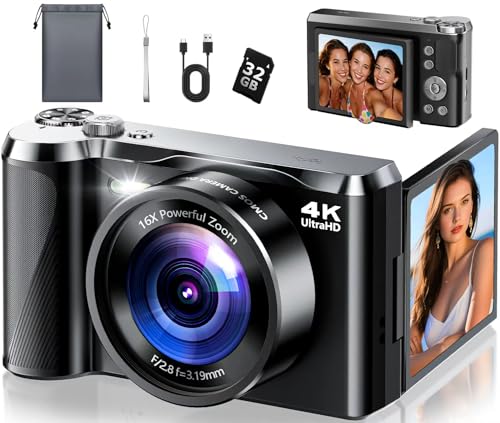
Best for content creators who want 56MP capture and a flip screen for selfies and vlogs. The 3″ 180° flip screen helps framing, and 16X zoom offers reach for distant scenes. It suits beginners who are building a video-focused channel. Caution: 56MP high-resolution stills can be memory-intensive; plan for ample storage and editing time.
Kodak PIXPRO FZ55 Digital Camera

Best for travelers seeking a compact with a bit more reach. The 16MP sensor paired with 5x optical zoom provides flexible framing in a small package. It records Full HD video for travel moments and family events. The camera suits mobile users who want a simple upgrade from a basic point-and-shoot. Caution: Smaller sensor size compared with higher-end DSLRs may limit performance in low light.
Buying Guide: Quick Comparisons by Use Case
- Travel and street photography: Opt for a compact with strong zoom and good auto modes (Kodak FZ45 or FZ55). These balance size, simplicity, and image quality without a large learning curve.
- Learning photography and future growth: A true DSLR like Canon EOS Rebel T7 provides room to grow with better lenses and manual controls. It’s ideal for those planning to improve skills gradually.
- Video-first creators: 4K-capable or high-resolution cameras with flip screens (Ploomen) help create vlogs and social content while staying portable.
- Budget-conscious beginners: Slr-style options such as Acuvar offer DSLR-like ergonomics at a lower price point, useful for practicing framing and basic exposure.
FAQ
- What is the main difference between SLR-style cameras and point-and-shoot? SLR-style cameras resemble DSLRs and often offer manual controls and zoom flexibility, while point-and-shoots focus on compact size and simple operation with limited manual options.
- Do I need interchangeable lenses to get good photos? Not necessarily. Point-and-shoots can produce excellent images for everyday use, while DSLRs or SLR-style cameras excel with interchangeable lenses and advanced controls.
- Is a larger megapixel count always better? Not necessarily. Sensor size, pixel quality, and processing matter more for real-world results, especially in low light and dynamic scenes.
- Which camera is best for beginners? For true simplicity, consider user-friendly point-and-shoots or SLR-style cameras with guided modes. If you want growth potential, a DSLR like the Canon Rebel T7 provides learning opportunities and future lens options.
- Should I prioritize video features? If video is a priority, look for good autofocus in video, stabilization, and a flip screen to frame shots easily, as seen in some compact and mirrorless options.
- What about price and accessories? Entry-level DSLRs may require lenses later, while compact cameras include most essential features in a single purchase. Budget for memory cards and batteries as needed.