Best Slide to JPEG Converter Options for Preserving Photos
Looking for a reliable slide-to-JPEG converter that’s easy to use and delivers clear results? This guide highlights five top picks ideal for different buyers—from casual family archivists to semi-professional collectors. Each option converts 35mm, 126, 110, and related slide formats into high-quality JPEGs, with built-in displays or direct-to-SD storage. Best for: quick digitizing on a budget, in-depth viewing and editing at home, or a compact, travel-friendly solution.
Overview table of selected products
| Product | Best For | Key Benefit |
|---|---|---|
| KODAK Slide N SCAN | Home archivists | 5” LCD, multiple film adapters |
| Magnasonic 24MP Film Scanner | High-resolution, all-in-one | HDMI output, built-in memory |
| KODAK SCANZA | Versatile formats | 3.5″ LCD with adapters for many film types |
| KODAK Mini Digital Film & Slide Scanner | Compact portability | 2.4″ LCD, fast loading |
| Suceem 22MP Film & Slide Scanner | Built-in storage included | 22MP sensor, 16GB internal storage |
KODAK Slide N SCAN Film & Slide Scanner
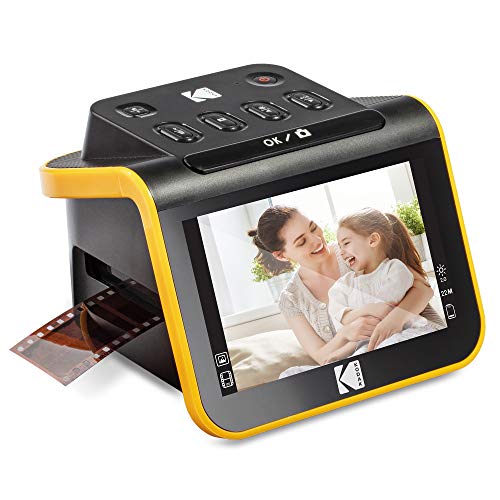
Best for: families with mixed film formats (135, 110, 126) who want a built-in display for quick previews. This scanner converts negatives and slides to JPEGs with up to 22MP quality and saves directly to a memory card. It includes a 5” LCD for gallery-style viewing and provides quick-load loading for faster batch scanning. Limitation: SD card not included, so you’ll need your own to store results.
Selected for its straightforward workflow and wide film compatibility. The 5” LCD is useful for immediate checks and simple edits, making it a strong choice for beginners who want a physical preview before saving files.
Magnasonic All-in-One 24MP Film Scanner

Best for: users who want high resolution and flexible viewing options. This model captures 24MP JPEGs from 35mm, 110, 126, and Super 8 film, with a built-in 5″ LCD and optional HDMI output to a TV or monitor. It includes internal memory for quick storage and an SD card slot for longer scans. Caution: HDMI cable is sold separately, so you’ll need to provide one if you want to view on a larger screen.
Why selected: its combination of high resolution, direct-to-display capabilities, and expandable memory makes it a versatile all-in-one solution suitable for multi-format archiving without a computer.
KODAK SCANZA Digital Film & Slide Scanner
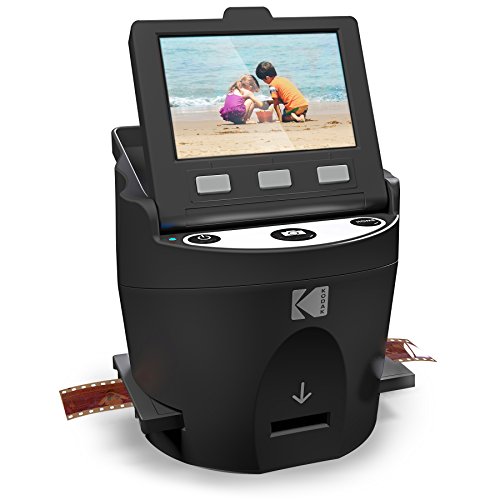
Best for: multi-format enthusiasts who need a wide adapter set. The Scanza handles 35mm, 126, 110, Super 8, and 8mm film with a large 3.5” LCD display and a user-friendly one-touch scan-and-save workflow. Selected for its broad format support and easy operation, which makes it a dependable choice for long-term archiving. Limitation: some users may prefer larger screens for detailed edits, as the display is 3.5 inches.
Why selected: its strong film-format compatibility and straightforward controls provide solid value for households with diverse collections.
KODAK Mini Digital Film & Slide Scanner

Best for: travelers or users with limited space who still want a capable slide-to-JPEG device. The Mini Scanner delivers 22MP JPEGs from 35mm, 126, 110, Super 8, and 8mm film. It features a 2.4” LCD with a simple interface and multiple adapters for fast loading. Caution: small screen size may be less ideal for precise color correction on complex images.
Why selected: its compact design, built-in editing previews, and broad format support make it a convenient on-the-go option without sacrificing image quality.
Suceem 22MP Film and Slide Scanner

Best for: buyers who want built-in storage to avoid always carrying an SD card. This scanner offers 22MP resolution with 16GB internal storage, and supports multiple film types including 135, 126, 110, and slides. It provides a quick preview and editing workflow on its display. Caution: internal storage, while convenient, can fill up quickly with high-resolution scans and may require periodic transfers to off-device storage.
Why selected: the integrated storage reduces accessory clutter and accelerates simple digitization tasks for casual users and small families alike.
Buying Guide: How To Choose The Right Slide-To-JPEG Converter
What film formats do you need to digitize?
Look for a scanner that supports the formats you own (35mm, 126, 110, Super 8, etc.). If you have a mixed collection, a model with broad format compatibility and interchangeable adapters will save time and reduce multiple devices.
Do you prefer a built-in display or external viewing options?
Devices with a built-in LCD let you preview and adjust directly on the unit, which is handy for quick edits and sharing. If you plan to monitor color accuracy on a larger screen, ensure HDMI output or a TV-out option is available.
Is storage important to you?
Some scanners include internal memory or built-in storage, while others rely on SD cards. Consider your scan volume and whether you want to minimize accessory cables. An SD card slot is convenient for expanding capacity on the fly.
How important is speed and ease of use?
Fast feed systems and “one-button” scanning simplify long sessions, especially when digitizing large archives. Look for quick-load feeders and intuitive menus to reduce handling time and preserve image quality during batch scans.
What about future-proofing and upgrades?
If you plan ongoing digitization, pick a model with robust software support, broad format compatibility, and reliable maintenance. A device with multiple adapters helps you adapt to new or rare slide formats without buying a new scanner.
Frequently Asked Questions
- What is the best slide-to-JPEG converter for beginners? A model with a built-in LCD, simple controls, and a straightforward save process is ideal for beginners. The Kodak Slide N SCAN is a strong starter option due to its clear display and film adapters.
- Can these scanners handle 8mm film? Some models handle 8mm and Super 8 film, such as Kodak SCANZA, which includes adapters for a range of formats. Verify each model’s format list before purchase.
- Do I need a computer to use these scanners? Many listed units are standalone and do not require a computer, though some offer USB or HDMI connections for direct viewing on a TV or monitor.
- Is internal storage enough for large archives? Internal storage helps in quick digitization, but for large collections, models with SD card expansion or USB transfer provide more capacity.
- What should I consider for color accuracy? Look for devices with adjustable brightness and color settings on the LCD, and consider using external displays for precise color evaluation when available.
- Are these scanners suitable for preserving family memories? Yes, these devices are designed to convert slides and negatives into high-resolution JPEGs, making it easier to preserve and share family histories.