Best Slide and Negative Digitizers for Preserving Old Photos and Negatives
For buyers looking to convert film negatives, slides, and old photos into crisp digital files, a dedicated slide and negative digitizer offers a simple, desktop solution with built-in screens. This guide highlights five reliable models, explains who each is best for, and explains key trade-offs. Whether you’re a casual hobbyist, a serious collector, or a family historian, these devices help you protect memories without a computer.
The top picks below are evaluated for ease of use, built‑in displays, compatibility with common formats (135, 110, 126 film, slides, 3R/4R/5R photos, and name cards in some models), and practical features like quick-feed trays, gallery modes, and standalone operation. The buyer table at the start of this article summarizes critical attributes to compare at a glance.
| Product | Best For | Key Benefit | Limitation |
|---|---|---|---|
| KODAK Slide N Scan Digital Film Scanner | Families preserving mixed slides and negatives | 5” LCD with gallery mode for immediate viewing | SD card not included |
| HP Touch Screen Film Scanner | Beginners who prefer intuitive touch controls | 13 MP sensor with simple USB/HDMI connection | Requires tray handling for fast scans |
| KODAK Slide N Scan Max | Memorabilia collectors needing a large display | Tiltable 7” LCD for editing previews | Some users may prefer larger storage options |
| DigitPro Photo Scanner | All‑in‑one solution for mixed media | 5” screen, 22 MP rendering, 8GB internal memory | Includes SD card but may be limited for very large jobs |
| DigitConvert 35mm/135 Film Scanner | Portable, budget-friendly slide-to-digital | 2.4” LCD and standalone operation | Smaller screen, fewer advanced features |
KODAK Slide N Scan Digital Film Scanner

The KODAK Slide N Scan Digital Film Scanner is designed for quick digitization of 135, 110, and 126 film formats as well as slides. It features a 5” LCD display to preview and edit images directly on the device, minimizing the need for a computer. This model is best for households with a mix of negatives and slides and for those who want a built-in gallery view to share memories instantly. A notable consideration is that the device saves files to an SD card, which is not included. Use this option if you want a straightforward, all-in-one scanner with a compact footprint.
Best for: Families and casual collectors who want a simple, stand‑alone workflow with a built‑in display. Why selected: Strong balance of format support, direct viewing, and the convenient quick‑load tray. Limitation: SD card not included, so you’ll need to purchase one separately.
HP Touch Screen Film Scanner

The HP FilmScan 7” Touch Screen Scanner emphasizes an intuitive, computer‑free workflow thanks to a 7″ touch‑screen interface and a 13 MP color CMOS sensor. It supports rapid scanning with a 50mm slide adapter and is compatible with 135, 126, and 110 formats. This model suits beginners who want a user‑friendly, direct‑to‑digital process with quick previews on a large screen. Caution: It relies on a physical tray insertion for fast feeds; users who digitize large batches should plan for batch workflow time.
Best for: Beginners and hobbyists who want an easy, visual workflow with a responsive touchscreen. Why selected: Clear touchscreen navigation, strong image processing for color and B/W, and rapid slide loading. Limitation: Requires manual tray handling for speed in high-volume sessions.
KODAK Slide N Scan Max Digital Film Scanner

The Kodak Slide N Scan Max upgrades the experience with a tiltable 7-inch LCD and a strong 13 MP sensor, making it ideal for detailed previews and on‑device edits before saving. With a quick‑feed tray, it simplifies scanning of stacks of negatives and slides. This device is best for memory preservation enthusiasts who want a bigger display for careful curation. Caution: Larger screen can make the device feel bulkier on a compact desk space.
Best for: Memorabilia collectors and families who want a larger preview area and ready gallery mode. Why selected: Superior viewing experience and reliable scan quality. Limitation: Slightly bigger footprint than smaller 5″ models.
DigitPro Photo Scanner
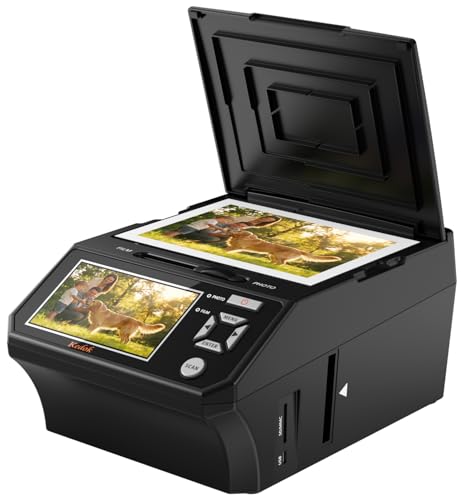
The DigitPro all-in-one photo scanner supports 35mm slides, 135/110 negatives, and printed photos, with an all‑in‑one 5″ display and 8GB internal memory plus an included SD card. It is designed for households that want a single device to handle varied formats, including name cards in addition to photos and slides. Best for: Families with mixed media (slides, negatives, and printed photos) who want a compact, standalone unit. Why selected: Broad format support in one device with an accessible 5″ screen. Limitation: Internal memory plus external SD may be necessary for larger projects.
Kedok Slide & Negative Scanner

The Kedok 5” LCD model provides an integrated screen for immediate viewing and sharing. It supports 135/110 film, slides, and name cards (with 8GB SD card included) and stores directly on the device. This option is well suited for gift-giving and household archiving. Best for: Gifting and family use where a stylish, user-friendly unit is desired. Why selected: Visual preview and multiple media support in one device. Limitation: Some users may prefer higher resolution or more storage for large collections.
35mm Film Scanner & Slide Scanner with 2.4″ LCD

The DigitConvert 35mm/135 Film Scanner emphasizes portability and a compact 2.4″ LCD for immediate preview and basic editing. It operates standalone with no PC required and saves to SD card up to 128GB. This is a good pick for seniors or travelers who want a budget-friendly, portable solution. Best for: Quick, low-volume digitization on the go. Why selected: Small form factor and straightforward operation. Limitation: Smaller display and fewer advanced features than larger units.
HP Touch Screen Film & Slide Scanner Digitizer
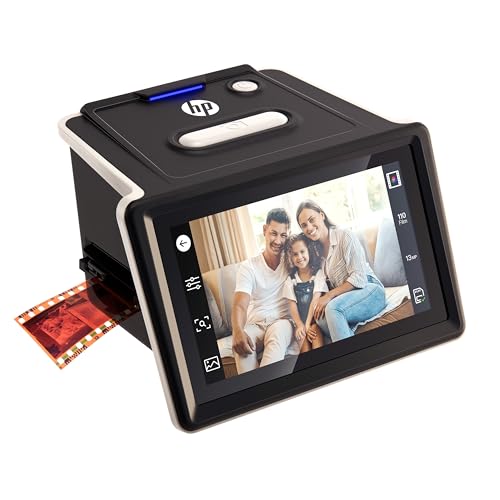
This HP model combines a 5″ LCD, USB-C, SD slot, and all-angle gallery mode with a 13MP CMOS sensor and 22MP interpolation for improved digital reproductions. It’s designed for users who value a gallery display and the ability to preview progressively. Best for: Enthusiasts who want a vivid gallery mode and strong image clarity without a computer. Limitation: Interpolation can inflate file sizes, affecting storage needs for large batches.
Buying Guide: Key Considerations For Choosing A Slide & Negative Digitizer
- Format compatibility: Verify support for your slide sizes and film types (135, 110, 126, 3R/4R/5R photos). Some devices also restore name cards and printed photos—useful for mixed media projects.
- Display size and quality: Larger screens simplify viewing and editing without a computer. Consider whether you want tiltable or all‑angle displays for comfortable framing.
- Standalone vs. computer‑dependent: Standalone scanners save time and keep workflows simple. If you plan to edit extensively, ensure the device offers high‑quality previews and optional PC integration.
- Storage and memory: Look for SD card compatibility and whether internal memory is included. For large collections, ensure ample storage or easy transfer paths.
- Ease of use: Quick‑feed trays, one‑touch scanning, and intuitive interfaces shorten the digitization process, especially for non‑technical users.
- Output quality: Sensor resolution (MP) and interpolation affect detail and usability of scanned images. Higher MP generally yields better results for archival purposes.
- Connectivity: USB, HDMI, and USB-C options influence compatibility with displays and TVs, especially when sharing digital copies in a living room setting.
Frequently Asked Questions
- What is a slide and negative digitizer?
A device that converts photographic slides and film negatives into digital image files with a built‑in screen for previewing and editing.
- Do these devices work without a computer?
Yes, most models are standalone and save directly to SD cards or internal memory, though some may offer optional PC connectivity for extended editing.
- Which format should I choose if I have many slides?
Look for a device with a quick‑feed tray and a larger display to preview and edit efficiently, such as a 7” tiltable LCD model.
- Is higher MP always better for film scanning?
Higher megapixels can capture more detail, but frame size, color fidelity, and the device’s processing also affect final results. Balance MP with sensor quality and storage needs.
- Can I reuse my old SD cards?
Most devices support standard SD/SDHC/SDXC cards. Check the maximum supported capacity to ensure compatibility with your archive size.
- What are common limitations to expect?
Standalone devices may have smaller screens or limited editing features compared to full computer workflows. Some units require separate SD cards or adapters for full efficiency.