Best Sharp Wide-Angle Lenses for Ultra-Clear Shots
Wide-angle photography rewards sharpness and detail across landscapes, architecture, and interiors. The picks below prioritize optical quality, contrast, and edge-to-edge sharpness across camera systems—from Sony and Canon to Micro Four Thirds. Each lens delivers crisp results at wide angles, with strong center-to-border performance, reliable build, and versatile framing for enthusiasts and professionals alike. The table below provides a quick snapshot of the five selected lenses and their key strengths.
| Product | Brand | Mount | Focal Length | Notable Strength |
|---|---|---|---|---|
| Sony FE 20mm F1.8 G | Sony | FE | 20mm | Sharp wide-open performance |
| Rokinon 12mm F2.0 NCS CS For MFT | Rokinon | Micro Four Thirds | 12mm | Bright f/2.0, edge-to-edge sharpness |
| SIRUI Night Walker 16mm T1.2 Cine Lens | Sirui | E Mount | 16mm | Cine-grade T1.2, fast aperture |
| Rokinon 14mm F2.8 For Canon EF | Rokinon | Canon EF | 14mm | Compact wide performance |
| Altura Photo 8mm F3.0 Fisheye For Canon | Altura Photo | Canon EF | 8mm | Dramatic ultra-wide perspective |
Sony FE 20mm F1.8 G Wide Angle Prime
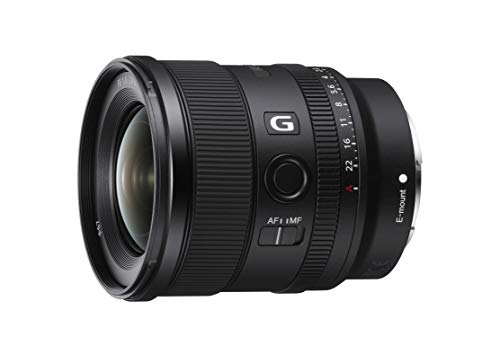
The Sony FE 20mm F1.8 G is a compact ultra-wide prime for Sony’s full-frame E-mount. Its bright F1.8 aperture supports high-contrast images in low light and allows precise control of depth of field. Optical performance remains sharp across the frame, with minimal coma at wide angles, making it a dependable choice for landscapes, cityscapes, interiors, and astrophotography where edge-to-edge clarity matters.
On APS-C bodies, the lens behaves as a slightly tighter wide option, offering a practical field of view without excessive distortion. The lens is lightweight and well-balanced for travel and street shooting, delivering reliable sharpness from center to corners for everyday use and dramatic wide scenes.
Rokinon 12mm F2.0 NCS CS For MFT

The Rokinon 12mm F2.0 NCS CS for Micro Four Thirds is a fast wide prime designed for architectural and landscape work on Olympus and Panasonic bodies. With a 35mm-equivalent focal length of 18mm and a bright f/2.0, it yields sharp detail across the frame, even when used wide open, and performs well in low-light scenarios that benefit from a wide field of view.
This lens is manual focus only. Users must enable M mode or Release Without Lens on some cameras. Its compact form, fast aperture, and short minimum focusing distance make it ideal for close interiors, dramatic architecture, star trails, and creative wide-angle shots where precise manual focus is preferred.
SIRUI Night Walker 16mm T1.2 Cine Lens

The SIRUI Night Walker 16mm T1.2 Cine Lens is a wide-angle option for Sony E-mount cameras that blends cinematic optics with sharp imaging. The large T1.2 aperture supports bright exposure and shallow depth of field control, while the 16mm focal length yields expansive landscapes and immersive scenes suitable for both stills and video.
With a close focus distance of 0.3m, this lens handles both broad vistas and intimate details in the same frame. Its manual focus design supports precise focus pulls and predictable rendering for cinematic sequences, while still delivering solid sharpness for still photography when needed.
Rokinon 14mm F2.8 For Canon EF

The Rokinon 14mm F2.8 IF ED is a classic Canon EF mount ultra-wide designed for landscapes, architecture, and astrophotography. It offers a broad field of view with solid sharpness across the frame when stopped down, and its compact design makes it a versatile option for travelers and street shooters seeking wide, crisp frames.
Key specs include a fast aperture of f/2.8 and a minimum focusing distance of 0.9 feet, plus a built-in petal-type hood to reduce flare. The lens provides reliable, consistent performance on Canon bodies and remains a popular choice for wide-angle enthusiasts who need dependable edge-to-edge sharpness.
Altura Photo 8mm F3.0 Fisheye For Canon
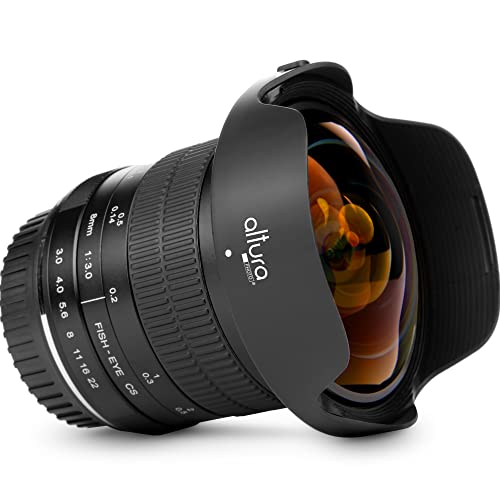
Altura Photo 8mm f/3.0 Professional Wide Angle Fisheye is a manual-focus fisheye for Canon EF-mount cameras. It delivers an extreme perspective with dramatic curvature and an expansive field of view, popular for creative landscapes, interior voyages, and immersive scenes where distortion is part of the aesthetic.
The lens features a robust metal construction and an aspherical element to help maintain clarity across the image. It is compatible with Canon APS-C cameras and can be used on full-frame bodies, yielding a more circular image with vignetting, which suits specific creative applications more than standard wide-angle work.
Buying Guide
Choosing a wide-angle lens hinges on how you shoot and what system you use. First, consider your camera’s sensor size and mount: full-frame, APS-C, or Micro Four Thirds. The same focal length behaves differently on each format, altering the perceived field of view and distortion. For example, a 20mm lens on Sony’s full-frame body is quite wide, while the same focal length on an APS-C body has a narrower field of view due to the crop factor.
Lens type and purpose matter. Cine lenses like the SIRUI Night Walker emphasize consistent T-stops and smooth manual focus pulls, ideal for video. Prime wide-angle lenses tend to be sharper across the frame than many zooms, especially when stopped down, while fisheye options deliver an unmistakable, curved perspective that can read dramatically in landscapes and creative projects.
Aperture and light performance are crucial. Fast apertures (for example, f/1.8 or f/2.0) improve low-light capabilities and depth-of-field control, but they often come with increased weight and cost. In cine lenses, T-stops provide a more accurate measure of light transmission than f-stops, which helps achieve consistent exposure during filming.
Manual versus autofocus is a practical consideration. Many wide-angle primes deliver exceptional sharpness, but some enthusiasts prefer manual focus for precise control in landscapes, architecture, or astro photography. If you shoot video, cine lenses with smooth focus ramps and consistent T-stops can be worth the extra investment, even if autofocus is available on other lenses.
Distortion and edge quality influence post-production. Rectilinear designs aim to keep lines straight, reducing distortion, whereas fisheye options intentionally bend lines for dramatic effect. Depending on your workflow, you may correct distortion in post, or embrace it for stylistic purposes. Some lenses in this list offer excellent edge-to-edge sharpness with minimal aberrations, which helps reduce excessive post-processing time.
Build quality, weight, and weather sealing affect daily use. If you travel or shoot on location, a compact, durable lens saves space and reduces fatigue. Cine lenses tend to be heavier but offer rugged construction and precision control, while more compact photo lenses excel in portability and quick street shooting.
Budget and value determine the best fit. Sharpness is essential, but compatibility with your camera system, availability of lens profiles, and the balance between price and performance should guide your choice. The five lenses listed here span those trade-offs, providing solid sharpness with varied system compatibility and uses—from landscape and architectural photography to cinematic video work and creative experiments.
Comparative Snapshot
| Lens | Mount | Focal Length (mm) | Max Aperture | Strength |
|---|---|---|---|---|
| Sony FE 20mm F1.8 G | FE | 20 | F1.8 | Overall sharpness, low-light performance |
| Rokinon 12mm F2.0 NCS CS | Micro Four Thirds | 12 | F2.0 | Edge-to-edge sharpness, fast aperture |
| SIRUI Night Walker 16mm T1.2 | E Mount | 16 | T1.2 | Cine-grade control, bright image |
| Rokinon 14mm F2.8 For Canon EF | Canon EF | 14 | F2.8 | Compact, reliable wide angle |
| Altura Photo 8mm F3.0 Fisheye | Canon EF | 8 | F3.0 | Dramatic perspective and distortion |