Best Secure Digital Memory Cards for High Capacity (And Reliability)
Find the right secure digital memory card for high-capacity needs and dependable performance. This guide helps buyers choosing SD/SDHC/SDXC cards for cameras, drones, printers, or industrial devices. The selections below are suitable for professionals and hobbyists who need durable, high-capacity storage with solid read/write speeds. Each product section explains who it’s best for and why it was chosen, plus a practical caution where relevant.
| Product | Capacity | Best For |
|---|---|---|
| SanDisk 256GB Extreme PRO SDXC UHS-I | 256 GB | 4K video shooters and burst photographers needing fast offload |
| SanDisk 128GB Extreme PRO SDXC UHS-I | 128 GB | Professional use with high-speed transfers |
| SanDisk 128GB Ultra SDXC UHS-I | 128 GB | Everyday Full HD capture with reliable performance |
| SanDisk 32GB Extreme PRO SDHC UHS-I | 32 GB | Compact setups needing strong speed in smaller capacity |
| INDMEM SD Card 2GB Class 4 | 2 GB | Older devices and simple data logging with basic needs |
SanDisk 256GB Extreme PRO SDXC UHS-I Memory Card

Capacity: 256 GB. Speed features include offload up to 200 MB/s and write up to 140 MB/s, designed to support 4K UHD and burst shooting. This card is best for professionals who need fast, reliable transfers and long-term storage for high-resolution footage. It is ideal for cameras and devices supporting UHS-I. A notable limitation is that actual speeds can vary with host devices and conditions.
Who it’s best for
- Professional videographers and photographers shooting 4K and beyond.
- Content creators who require quick card-to-method transfers during shoots.
Why selected
Chosen for its high capacity and sustained write performance, which helps reduce downtime between shots and minimizes buffer-related delays. It pairs well with compatible readers and devices that can harness the QuickFlow-like speeds SanDisk markets in this range.
Caution
Speed performance depends on the host device. If the camera or reader cannot utilize high speeds, you may not see the full offload rate. Ensure your device supports UHS-I and the card’s rated speeds for best results.
SanDisk 32GB Extreme PRO SDHC UHS-I
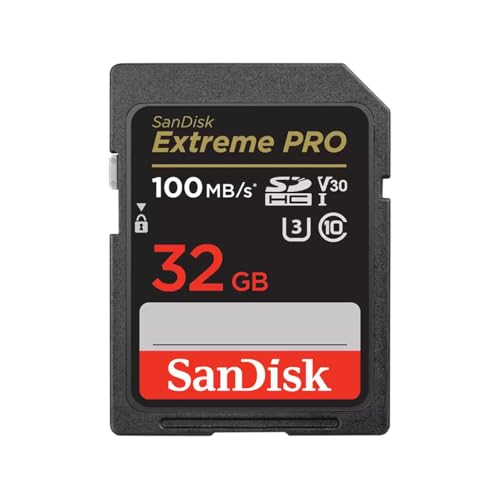
Capacity: 32 GB. This card is designed for high-speed performance in a compact capacity, supporting 4K video and rapid bursts when needed. Suitable for enthusiasts and professionals using action cameras, compact cameras, or mid-range DSLRs that require reliable speed in a smaller card size. Limitations include lower total storage compared to larger capacities, which may require more frequent card changes on long shoots.
Who it’s best for
- Travel shooters and hobbyists who want fast transfers without large card sizes.
- Users who prioritize speed for short sessions or limited video projects.
Why selected
This card provides strong sustained performance in a small capacity, making it a flexible choice when you need speed without packing multiple large cards.
Caution
Not ideal for long RAW video or high-volume daily use where large capacity is a must. Consider stepping up to 128 GB or 256 GB if you anticipate extensive recording sessions.
SanDisk 128GB Extreme PRO SDXC UHS-I
Capacity: 128 GB. Designed for demanding workflows, this card enables rapid offloads and reliable write performance for 4K and burst photography. Best for professionals who need robust performance in a moderately large capacity. A potential limitation is that speeds can vary with host devices and file attributes.
Who it’s best for
- Pro photographers and videographers who require steady performance for high-res work.
- Users upgrading from older SD cards who want improved speed and reliability.
Why selected
The 128GB Extreme PRO strikes a balance between capacity and speed, making it a versatile choice for many high-demand scenarios.
Caution
Verify device compatibility with UHS-I to maximize performance. If your camera supports higher-class speeds, a larger capacity card may be more future-proof.
SanDisk 128GB Ultra SDXC UHS-I
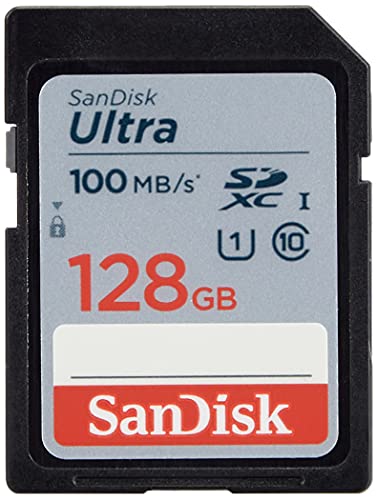
Capacity: 128 GB. Suitable for everyday photography and Full HD video, this card emphasizes reliable performance and broad compatibility with a range of devices. It is a good choice for casual shooters and hobbyists who want a balance between speed and capacity.
Who it’s best for
- Amateur and enthusiast photographers needing dependable storage for daily use.
- Users who value broad device compatibility and straightforward operation.
Why selected
The Ultra line emphasizes dependable performance for everyday capture, making it a solid all-around option when high-end speed is not the primary requirement.
Caution
Performance may vary with high-end 4K workflows; for heavy 4K or high-burst tasks, consider a PRO class card for faster transfer rates.
SD Card 512MB (2 Pack) Class 4

Capacity: 512 MB per card (2-pack). This is an entry-level option for very old devices or simple data logging tasks. Best for legacy hardware with limited storage and lower bandwidth needs. A limitation is the small capacity, which is insufficient for modern media files or extended projects.
Who it’s best for
- Users maintaining older devices that require SD compatibility.
- Light-duty data logging or small-file tasks.
Why selected
Included for completeness in a high-capacity-focused guide, showing that different devices still use SD storage, even in small capacities.
Buying Guide: Secure Digital Memory Cards For High Capacity
What to consider: capacity, speed, and compatibility
Capacity determines how much data you can store before swapping cards. Speed class (C10, U1, U3, V30, etc.) indicates how quickly data can be written and read. Ensure your device supports the card’s speed class to avoid bottlenecks.
Which card is best for 4K video
Look for UHS-I or higher cards with V30 or higher ratings. For 4K, speed and sustained write performance matter more than peak speeds. The SanDisk Extreme PRO options highlighted here are strong contenders for 4K work.
Best practices for safeguarding data
Always format cards in the target device if possible and eject properly to prevent data corruption. Maintain backups of important files and consider using multiple cards to distribute storage across shoots or projects.
Matching devices to cards
Older devices may work better with Class 4 or lower-capacity cards. Modern cameras, drones, and laptops typically benefit from higher-capacity, higher-speed cards. Check device manuals for recommended card types and speed requirements.
Durability and reliability considerations
High-end cards often include improved durability and error correction. Built-in ECC helps detect and correct transfer errors, contributing to more reliable long-term storage in challenging environments.
Frequently Asked Questions
- What capacity should I choose for travel photography? A balance of capacity and cost is common. 128 GB or 256 GB is typical for travel photography and 4K video in many setups, reducing the need to swap cards frequently.
- Do I need PRO-rated cards for 4K video? For reliable 4K video, UHS-I with V30 or higher is recommended. PRO-class cards offer faster sustained writes, which helps with continuous shooting.
- Can I use any SD card in my camera? Most devices support a range of SD formats (SD, SDHC, SDXC). Check device compatibility and the maximum supported capacity and speed class.
- What is the advantage of ECC on SD cards? ECC corrects data transfer errors, improving reliability in environments with interference or wear on the card.
- Is higher capacity always better? Not always. If your device can’t utilize large capacities or speeds, you may not gain practical benefits. Choose capacity to fit typical shooting sessions.
- How should I format an SD card? Use the target device to format when possible to ensure compatibility and proper file system settings. Backup files before formatting.