Best Scanners for Negatives and Slides: Top Picks to Digitize Your Archives
Transform old negatives and slide reels into vivid digital photos with reliable scanners designed for film and slides. The following five models are selected for broad format support, easy loading, and clear LCD previews, helping collectors, photographers, and families preserve memories with minimal effort.
| Product | Brand | Key Feature | Best For |
|---|---|---|---|
| KODAK Slide N SCAN | KODAK | 5” LCD, supports 135/126/110, SD card save | All-in-one slide and negative digitizing |
| HP FilmScan | HP | 5” LCD, direct SD/PC save, continuous feed | Fast workflow with easy previews |
| Magnasonic All-in-One 24MP | Magnasonic | 5” display, HDMI out, 24MP scans | Home viewing and TV display integration |
| Kodak SCANZA Digital Film & Slide Scanner | KODAK | 3.5” LCD, 14/22MP options, wide inserts | Versatile film types including Super 8 |
| DigitPro Film And Slide Scanner | DigitPro | 5” LCD, 22MP, SD card support | Straightforward one-device digitization |
Each of these models emphasizes ease of use, high-resolution capture, and convenient storage options, making them strong candidates for converting aging film into durable digital files. The selection below provides a balanced mix of brands, formats, and display capabilities to suit different archiving needs and viewing preferences.
KODAK Slide N SCAN: All-In-One Film and Slide Digitizer

The KODAK Slide N SCAN enables quick conversion of 135, 110, and 126 film and 50mm slides to digital JPEGs. It features a 5” LCD display for on-device viewing and editing, with direct saving to an SD card (not included). The scanner supports continuous loading via a quick-feeding tray and includes a 50mm slide holder plus adapters for multiple film formats. This model is suitable for users who want a self-contained device with an integrated screen for previewing results before sharing.
Performance notes: The built-in 5” screen helps verify scans without a computer, and HDMI output provides options for larger displays. If your archive includes varied negatives and slides, this unit’s broad format compatibility is advantageous. Memory and file management rely on SD cards, so plan card capacity accordingly.
HP FilmScan Touch Screen Film & Slide Scanner
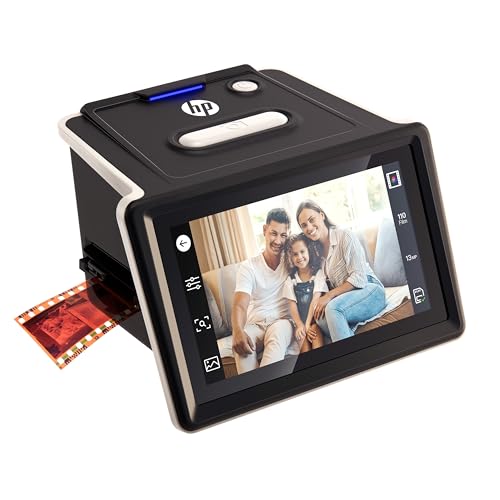
HP’s FilmScan pairs a 5” touch display with straightforward controls to view, convert, edit, and save both color and black-and-white slides and negatives. It saves directly to an SD card or computer, making it convenient to build a digital library quickly. The device supports color and B&W negatives and 135 (35mm), 110, and 126 formats. It’s well-suited for users who prefer touch-based navigation and the option to run slides in a gallery display or digital picture frame mode.
Important considerations: Ensure you have compatible memory cards and consider whether you want an integrated gallery mode for ongoing slideshow display. The setup emphasizes ease of use over advanced color management features.
Magnasonic All-in-One 24MP Film Scanner
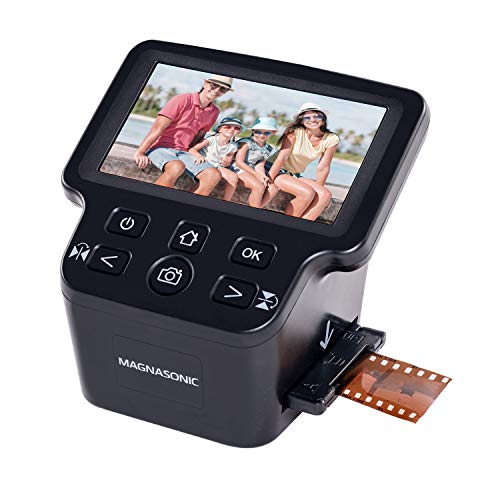
The Magnasonic FS71 All-in-One scanner captures 35mm, 126, 110, and Super 8 film, plus 135/126/110 slides, converting them to high-resolution 24MP JPEGs. It includes a 5″ LCD to preview scans, and offers HDMI output for viewing on larger screens. Built-in memory and an SD card slot expand storage capacity, making it a strong choice for users who want a standalone device with flexible routing options to displays or TVs.
Considerations: While the unit provides robust scanning capabilities, users should verify compatibility with their specific film types and plan for external storage if scanning large collections. HDMI output is a plus for sharing on a TV or monitor, but may require additional cables.
Kodak Slide N Scan Max Digital Film Slide Scanner

The Kodak Slide N Scan Max combines a large 7” LCD with gallery mode to preview and edit 13/22MP scans of 135, 110, and 126 formats, including 50mm slides. It emphasizes easy-load film inserts and includes adapters for multiple film types plus a 50mm slide holder. The larger display helps with precise color and exposure checks during scanning and editing before saving to SD cards (not included).
Use cases: This model is ideal for users who want more screen real estate to inspect color and detail before finalizing scans. The broader display can improve accuracy when digitizing aged or fragile slides.
DigitPro Film And Slide Scanner

DigitPro’s model digitizes 35mm, 126, 110 negatives, and 50mm slides with a 5” LCD display and one-touch scanning. It offers built-in 128MB memory and an SD card slot up to 64GB, making it a compact, user-friendly option for straightforward digitization workflows. The one-touch approach minimizes complexity, appealing to casual users or those scanning smaller batches.
Key considerations: While straightforward, verify that the SD card format is compatible with your computer or editing workflow. The 128MB internal memory is modest, so relying on external storage is common for larger libraries.
Buying Guide: How to Choose The Best Scanner For Negatives And Slides
- Format support: Ensure the scanner handles your negatives (35mm/135, 126, 110) and slide sizes (50mm, standard frames) and whether it supports Super 8 or 8mm if you have older film.
- Image quality: Look for devices offering at least 14–24MP optical resolution and a good CMOS sensor for color accuracy, detail, and dynamic range.
- Display and workflow: An internal LCD helps preview and adjust on-device; consider HDMI output if you want to view scans on a larger screen, and assess ease of use for batch conversions.
- Storage: Check built-in memory, SD card support (capacity and format), and whether files save directly to computer. Plan for sufficient card space for large archives.
- Ease of loading: Quick-feed trays and included adapters reduce handling time and minimize damage to fragile films or slides.
- Connectivity: HDMI, USB, and direct SD saving can streamline your workflow, but verify compatibility with your computer or TV/monitor.
- Display size: A larger LCD (5”–7”) aids in previewing and editing, though smaller screens can be sufficient for casual use if the device is portable.
- Ease of use vs. advanced features: Some models prioritize one-touch scanning and simple edits; others offer more color management and advanced controls. Choose according to your comfort level and storage needs.
- Maintenance and accessories: Consider included cleaning tools, slide holders, adapters, and whether HDMI cables or batteries are included or sold separately.
When selecting a scanner, balance format support and file quality with your typical batch size and preferred viewing method. For family archives, a model with a strong LCD display and straightforward saving options may be preferable. For more serious collectors, a device offering higher megapixel output and broader format compatibility can better preserve fine detail across generations.