Best Film Negative Scanners for Quick, High-Quality Digitizing
Old film negatives and slides deserve a modern home. This guide highlights top scanners designed to convert 35mm, 126, 110, and even Super 8 and 8mm film into high-resolution JPEGs with user-friendly displays. The selections below balance built‑in displays, easy-loading trays, and reliable image quality to suit hobbyists and collectors alike. Use the buying guide to compare key features and decide which scanner best fits your archival needs and viewing preferences.
| Product | Brand | Display | Media Formats | Notes |
|---|---|---|---|---|
| KODAK Slide N SCAN | KODAK | 5” LCD | 135, 126, 110 film; slides | |
| HP FilmScan | HP | 5” LCD | 135, 110, 126 film; slides | |
| Magnasonic FS71 | Magnasonic | 5” LCD | 35mm/126/110/Super 8 film; slides | |
| Kodak Slide N Scan Max | KODAK | 7” LCD | 135, 110, 126 film; slides | |
| Kodak SCANZA | KODAK | 3.5” LCD | 35mm, 126, 110, Super 8 & 8mm |
KODAK Slide N SCAN Film & Slide Scanner

The KODAK Slide N SCAN combines a 5” LCD display with a quick-Feeding Tray for continuous loading of negatives and slides. It supports 135, 110, and 126 film formats and 50mm slides, transforming color and B&W originals into JPEG files stored on an SD card (not included). The device includes a 50mm slide holder, adapters for multiple film sizes, and USB/HDMI connections. This model emphasizes ease of use and immediate previewing, making it suitable for family photo archiving or occasional sharing on a digital frame.
HP FilmScan Touch Screen Scanner
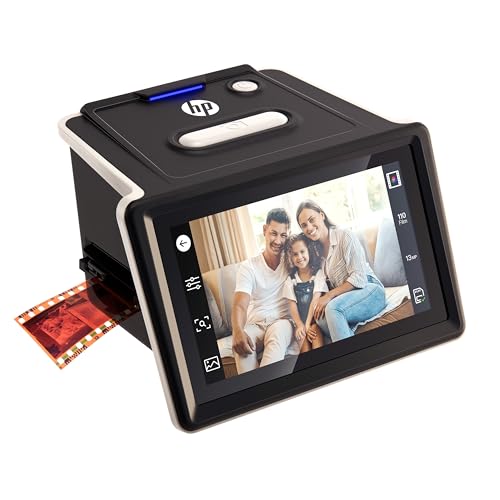
The HP FilmScan offers a 5” LCD with touch controls for quick previews and edits of both color and black-and-white negatives and slides. It saves files directly to an SD card or a computer, enabling fast sharing or reminiscence. Its easy-Load Tray supports continuous import of reels and slides, compatible with 135, 110, and 126 formats. This model emphasizes a straightforward workflow from scanning to saving, making it suitable for casual historians and hobbyists alike.
Magnasonic All-in-One 24MP Film Scanner
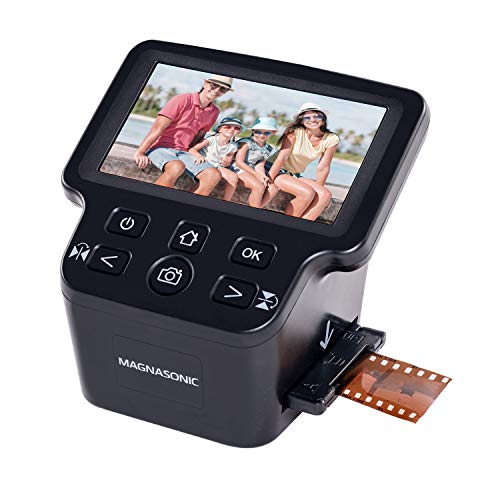
Magnasonic’s FS71 is an all-in-one unit that scans 35mm/110/126/Super 8 film and 135/126/110 slides into 24MP JPEGs. It features a built-in memory and an SD card slot for expanded storage, plus a 5″ LCD for direct viewing. The option to output via HDMI allows for larger screen viewing on a TV or monitor, making it versatile for archiving and sharing on existing home entertainment setups.
Kodak Slide N Scan Max Digital Film & Slide Scanner

The Kodak Slide N Scan Max features a 7” LCD display for gallery-style previews and editing. It supports 13/22MP capture for color and black-and-white negatives across 135, 110, and 126 formats, with 50mm slides. The kit includes a 50mm slide holder, adapters for multiple films, a cleaning brush, and USB cables. It emphasizes a larger viewing area to facilitate quick checks before saving compared to smaller-screen models.
Kodak SCANZA Digital Film & Slide Scanner
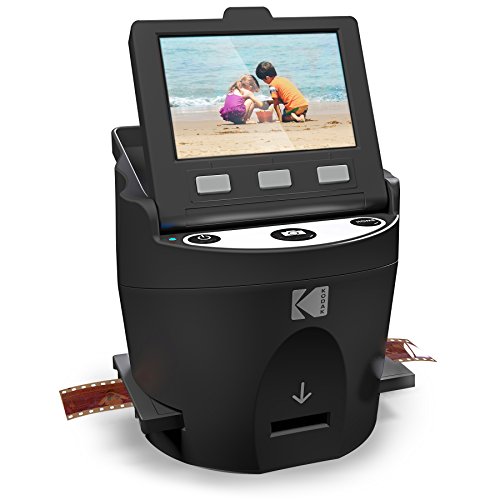
The Kodak SCANZA focuses on 14/22MP scanning for 35mm, 126, 110, Super 8, and 8mm negatives and slides. It features a large 3.5” LCD with adjustable brightness and tilt for comfortable viewing, and comes with multiple film inserts and adapters for flexible operation. Its one‑touch scan and save workflow streamlines digitizing large batches of film for archival projects.
Buying Guide: Key Purchase Considerations
- Film formats supported: Verify compatibility with your negatives (35mm, 110, 126, Super 8, 8mm) and slides. Some scanners excel at a subset, so match formats to your collection.
- Display quality and usability: A larger LCD helps with previews and color checks. Consider tilt or adjustable displays for comfortable viewing during edits.
- Batch loading and speed: Quick-feeding trays speed up workflows. If you have large archives, look for models with continuous loading and reliable adapters.
- Storage and transfer options: SD card support is common; ensure capacity aligns with your archival needs. USB/HDMI outputs offer additional viewing flexibility on bigger screens.
- Image quality and resolution: Look for 14–24MP effective scanners for sharp reconstructions. Balance resolution with noise performance and color accuracy.
- Ease of use: One‑touch scanning and built‑in editing tools simplify the process for non-technical users.
- Physical design and ergonomics: Front‑panel controls and accessible ports reduce strain during long sessions.
- Future-proofing: Consider expandability and whether the device supports newer media types or larger cards for long-term archiving.
- Software and file formats: JPEG is common, but some scanners offer RAW or TIFF options. Check compatibility with your editing workflow.
When choosing, weigh the balance between display size, supported formats, and the speed of batch scanning. If your priority is quick previews and simple save steps, models with large LCDs and easy one‑touch workflows are advantageous. For deeper archival projects with mixed formats, a scanner with broad format support and reliable adapters reduces the need for separate devices.