Best Rectilinear Wide-Angle Lenses for Sony E-Mount and More
Looking for rectilinear wide-angle lenses that keep straight lines intact while capturing expansive scenes? This guide highlights top options ideal for landscapes, architecture, and astrophotography. Each lens is chosen for reliable performance, clear color rendition, and suitability for different camera systems. Best for landscape shooters, architectural photographers, and travel creators who want natural perspective with minimal distortion.
Quick comparison table
| Product | Mount/Sensor | Key Benefit | Best For |
|---|---|---|---|
| VILTROX 14mm f/4 AF | Sony E-mount, Full Frame | Very wide field of view with low distortion | Epic landscapes, architecture, astro |
| Rokinon RK12M-E-SIL 12mm f/2.0 | Sony E-mount | Bright, fast wide angle | Low-light landscapes, architectural interiors |
| 7artisans 10mm F3.5 | APS-C mirrorless | Lightweight ultra-wide, non-fisheye | Travel vlogging, cityscapes |
| Nikon 14mm f/2.8D ED | F-mount DSLR | Rectilinear, sharp across frame | Full-frame landscapes on Nikon bodies |
| Sony FE 20mm F1.8 G | Sony E-mount, Full Frame | Fast aperture, compact design | Street, landscapes, travel |
VILTROX 14mm f/4 AF for Sony E

The VILTROX 14mm f/4 AF is a full-frame rectilinear wide-angle lens designed for Sony E-mount. It delivers a 112-degree field of view, making it suitable for epic landscapes, architectural photography, and astro shots that require sharp edges with minimal distortion. The optical design includes 12 elements in 9 groups with two High Refractive elements, four Extra-low Dispersion elements, and two Aspherical elements to control chromatic aberration and flare. Minimum focusing distance is 0.13 meters (13 cm), enabling detailed close-ups within a wide scene. Best for shooters who want a compact option with strong edge-to-edge performance on full-frame Sony bodies. Caution: as with many wide-angle lenses, distortion can be noticeable at the extreme edges if not corrected in post.
Who this is for: Landscape and architectural photographers who need a wide, immersive field of view without heavy distortion, plus astro enthusiasts seeking sharp, high-contrast results at night.
Rokinon RK12M-E-SIL 12mm F2.0
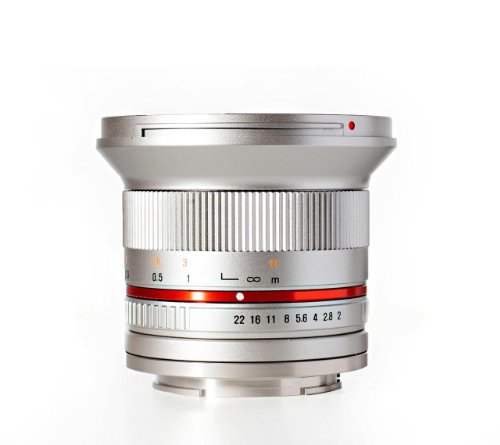
The Rokinon RK12M-E-SIL 12mm f/2.0 is a manual-focus ultra-wide lens for Sony E-mount. It offers a broad 98.9-degree angle of view (18mm equivalent on full-frame), with a fast maximum aperture for low-light conditions. The manual focus design emphasizes precise control for landscapes and architectural shots. Best for photographers who value a bright, fast aperture and tall edge-to-edge sharpness in a compact package. Limitation: being manual focus only, it requires careful focusing, especially at wide angles and near subject distances.
Who this is for: Enthusiasts and professionals who prefer direct manual control and plan to work with tripod setups for landscapes or interiors.
7artisans 10mm F3.5 Ultra Wide for APS-C

The 7artisans 10mm F3.5 lens is designed for APS-C mirrorless cameras. It provides a non-fisheye wide-angle view suitable for architecture, landscapes, and street scenes. Its lightweight build (about 130 grams) makes it ideal for travel, vloggers, and mobile creators who need a compact setup. The lens features a fixed F3.5 aperture with a 10-blade diaphragm for potential starburst effects at smaller apertures. Best for on-the-go shooters who want a very portable wide-angle option with minimal distortion and a natural perspective.
Who this is for: Travel and vlog creators who prioritize weight and size without sacrificing a wide field of view on APS-C sensors.
Nikon 14mm f/2.8D ED

The Nikon 14mm f/2.8D ED is a classic rectilinear ultra-wide designed for Nikon DSLRs. Its blend of hybrid aspherical elements and ED glass helps reduce distortion and chromatic aberration for sharp, true-to-life landscapes and architecture. The rectilinear construction keeps straight lines from bending in the frame, which is essential for precise composition in architectural photography. Best for Nikon shooters who want a reliable, fixed prime with a proven track record for wide-field accuracy. Caution: designed for Nikon F-mount DSLRs, requiring appropriate camera compatibility or adapter on modern bodies.
Who this is for: Photographers working with Nikon DSLRs needing a proven rectilinear wide-angle for landscapes and architecture.
Sony FE 20mm F1.8 G
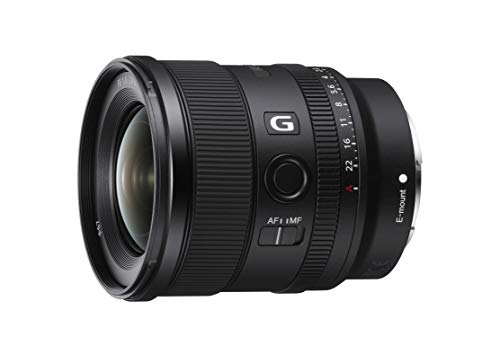
The Sony FE 20mm F1.8 G is a compact, full-frame rectilinear wide-angle prime with a fast F1.8 aperture. Its lightweight design supports handheld shooting and street photography while providing high-resolution performance across the frame. Best for Sony users who want a bright, everyday ultra-wide option for landscapes, cityscapes, and travel. Limitation: edge performance and sharpness are strong, but some may prefer a higher-end G Master for critical edge-to-edge performance in very demanding projects.
Buying Guide: Key Considerations for Rectilinear Wide-Angle Lenses
When choosing a rectilinear wide-angle lens, consider sensor size, field of view, distortion control, and practical use case. Below are important questions to guide your decision:
- What camera system (mount) will you use? Ensure the lens mount matches your body (Sony E, Nikon F, etc.).
- Is the lens designed for full-frame or APS-C? Full-frame lenses often perform best on corresponding bodies, while APS-C versions provide a tighter field of view).
- Do you need a fast aperture for low-light work or do you primarily shoot in daylight? Wide apertures like f/2.0–f/1.8 help with night and astro photography, while slower apertures still offer sharp results with stopped-down settings.
- How important is weight and portability? Travel and vloggers benefit from compact, lightweight designs.
- What about autofocus versus manual focus? Some modern Sony lenses offer reliable AF, while others (like certain Rokinon options) rely on manual focus for precise control.
- What level of distortion correction do you expect in post-processing? Most rectilinear designs maintain straight lines, but minor distortion can still occur at extreme edges.
FAQ
What is the main advantage of a rectilinear wide-angle lens?
It preserves straight lines, avoiding the exaggerated curved lines common with fisheye lenses, which is essential for architecture and landscapes.
Are wide-angle lenses suitable for handheld shooting?
Many modern rectilinear lenses offer fast apertures and lightweight designs that improve handheld performance, but a tripod is often recommended for clean landscapes and interior shots.
Can I use a full-frame rectilinear lens on an APS-C camera?
Yes, but the effective focal length will be multiplied by the crop factor, giving a tighter field of view. Some lenses offered in APS-C variants are optimized for that sensor size.
Do all rectilinear lenses support autofocus?
No. Some budget or specialty wide-angle lenses are manual focus only. Check the product specs to confirm autofocus capability.
Which lens is best for astrophotography?
Great low-light performance and minimal distortion are key. Lenses with wide apertures (f/2.0 or faster) and good coma control are preferred for star fields.
Is distortion correction necessary in post-processing?
Some distortion is expected at very wide angles. Most editing software can correct this, but rectilinear lenses generally maintain straight lines better than fisheye designs.