For American night skies, a fast wide-angle prime is a cornerstone of successful astrophotography. The lenses below span ultra-wide to wide angles across Sony E-mount and Canon RF-mount systems, prioritizing sharpness, edge-to-edge performance, and light gathering. Each option is evaluated for Milky Way captures, star fields, and landscapes, helping you choose a lens that suits your camera, budget, and shooting style. Whether you shoot with a Sony α system or a Canon EOS R setup, these primes offer strong performance under dark skies.
| Product | Brand | Mount | Focal Length | Max Aperture | Notes |
|---|---|---|---|---|---|
| Sony 14mm F1.8 GM Ultra-Wide | Sony | Sony E | 14mm | f/1.8 | Ultra-wide, high resolution with minimal aberrations |
| Canon RF 16mm F2.8 STM | Canon | Canon RF | 16mm | f/2.8 | Compact, budget-friendly ultra-wide with smooth AF |
| Sony FE 14mm F1.8 GM | Sony | Sony E | 14mm | f/1.8 | G Master quality, excellent coma control and contrast |
| Sony FE 20mm F1.8 G | Sony | Sony E | 20mm | f/1.8 | Bright, compact wide prime with versatile field of view |
| Sony FE 24mm F1.4 GM | Sony | Sony E | 24mm | f/1.4 | G Master sharpness with smooth bokeh |
The following sections feature five carefully selected lenses that best align with astrophotography goals, ranging from Milky Way panoramas to star-field detail and night landscapes. Each lens section provides a concise overview, camera compatibility, and practical considerations for night-sky imaging.
Sony 14mm F1.8 GM Ultra-Wide

The Sony FE 14mm F1.8 GM delivers edge-to-edge sharpness with a bright f/1.8 aperture, making it a standout for night skies and landscapes. Its optical design relies on two XA (extreme aspherical) elements, plus multiple ED and Super ED elements, to preserve detail across the frame and deliver clean star points. The Nano AR Coating II minimizes internal reflections, preserving contrast in challenging light, while the nine-blade circular aperture supports smooth, natural background blur for foreground interest against star fields.
Astrophotographers will appreciate the lens’s performance for Milky Way shots, star trails, and wide vistas. Its internal focus and robust construction suit field work, but users should consider a sturdy tripod and careful balance on gimbals or trackers due to its weight and size. This lens pairs well with high-resolution Sony cameras for ultra-sharp night imagery and cinematic vistas.
Canon RF 16mm F2.8 STM

Canon’s first ultra-wide fixed focal length RF lens offers compact design and practical performance for Canon EOS R-series shooters. The fixed f/2.8 aperture delivers usable light gathering for night scenes, while the compact size keeps it maneuverable for travel and stargazing sessions. The STM motor provides smooth, quiet autofocus ideal for video work or time-lapses under dark skies. While not the brightest prime, it offers affordable access to wide-field astro imaging and landscape shots on Canon bodies.
For beginners and enthusiasts, this lens provides a balance of image quality, portability, and budget-friendly operation. It’s a sensible choice for EOS R users who want an ultra-wide perspective without committing to faster, heavier primes. Its performance remains solid for star trails, horizon scenes, and Moon-lit landscapes, especially when paired with a stable tripod and good tracking plans.
Sony FE 14mm F1.8 GM

The Sony FE 14mm F1.8 GM is a flagship ultra-wide prime built for exceptional astrophotography performance. It integrates two XA elements, one aspherical element, and two ED elements, complemented by a Super ED element and Nano AR coating II to deliver outstanding edge-to-edge sharpness, high contrast, and minimal chromatic aberration. A bright f/1.8 aperture enhances low-light capabilities, enabling short exposures with rich star color while preserving detail from foreground to sky.
Auto-focus is fast thanks to advanced XD (Extreme Dynamic) Linear Motors, ensuring precise tracking of stars in stills and video workflows. The lens’s balance and compact footprint suit ground-based astro work and astro photography on gimbals. For discerning astrophotographers using Sony bodies, this lens represents high-end optical performance with a robust, weather-resistant build that supports extended night sessions.
Sony FE 20mm F1.8 G
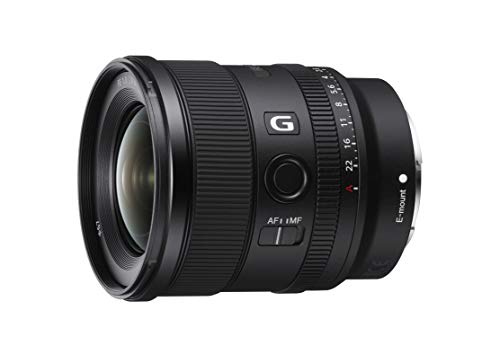
The Sony FE 20mm F1.8 G offers a compact, lightweight wide-angle option with a fast F1.8 maximum aperture, ideal for night skies and landscapes. The 20mm perspective provides a generous field of view without the extreme distortion sometimes seen at 14mm, making it versatile for star-field composition and foreground integration. It’s designed for both full-frame and APS-C bodies, delivering crisp resolution, effective coma control, and a practical balance of weight and performance for travel astro shoots.
For shooters who want a portable option with strong image quality, the 20mm prime serves as a reliable workhorse for Milky Way shots, aurora photography, and city-light landscapes. Its compact footprint makes it a good partner for gimbals and handheld shooting on longer sessions, while still preserving sharpness and clean color rendition across the frame.
Sony FE 24mm F1.4 GM
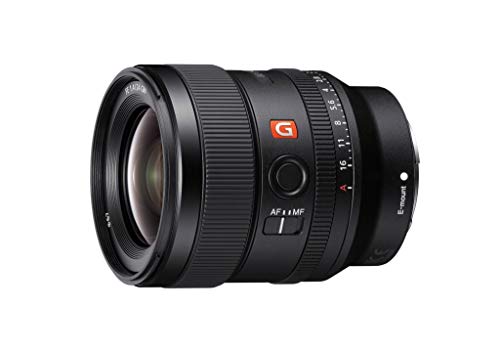
The Sony FE 24mm F1.4 GM blends classic wide-angle utility with high-speed performance. The f/1.4 maximum aperture enables excellent light gathering for night skies, while the 24mm focal length provides a comfortable balance between sky coverage and foreground inclusion in astrophotography and landscapes. The G Master design emphasizes edge-to-edge sharpness and refined bokeh, delivering clean star points and natural gradient across the frame even at wide apertures.
Ideal for Milky Way photography, star-field landscapes, and astro videography, this lens minimizes aberrations and color fringing through its sophisticated optical stack. Its performance makes it a strong choice for photographers who demand high-resolution results with minimal post-processing, especially when paired with high-ISO capable cameras and stable mounts.
Buying Guide
Choosing the right prime lens for astrophotography involves balancing field of view, speed, and optical quality. Ultra-wide options around 14–16mm excel for broad star fields, Milky Way cores, and expansive landscapes, while 20–24mm lenses offer versatile coverage for more foreground context or travel shoots. Fast apertures (f/1.4–f/1.8) improve light gathering and enable shorter exposures, reducing star trailing in certain conditions.
Optical design matters for clean night imagery. Primes featuring XA and ED elements with Nano AR Coating II are specifically designed to minimize coma, chromatic aberration, and internal reflections, preserving edge-to-edge sharpness and accurate color in star fields. Weight, balance, and weather sealing become practical considerations when shooting in outdoor environments or on tracker rigs.
System compatibility and ergonomics are essential. Ensure you choose a lens compatible with your camera brand and mount (Sony E or Canon RF) and consider whether you prefer autofocusing convenience or manual focus for precise star focusing. A sturdy tripod, remote shutter, and planning tools for star-tracking sessions will further improve results, especially on longer exposures or time-lapse sequences.
Scenario-Based Recommendations
- Milky Way Core Shots: Prefer ultra-wide primes (14–16mm) with maximum apertures of f/1.4–f/1.8 for bright star fields and shorter exposures to minimize star trailing.
- Star Trails and Landscapes: A 16–20mm lens with a fast aperture balances sky and foreground, while keeping processing needs reasonable.
- Astro Video and Time-Lapses: A lens with smooth autofocus and reliable performance at longer sequences provides consistent footage and frame-to-frame stability.
These lenses offer a mix of extreme and practical options for astrophotography enthusiasts. When selecting, assess your primary use (Milky Way photography, star trails, or landscapes with starry skies) and your camera system to maximize performance while keeping the gear manageable for field work.