Best Planetary Cameras for Telescopes Top Picks
Choosing the best planetary camera for your telescope turns clear, high-contrast detail into a routine part of night-sky imaging. The five cameras below balance color and monochrome options, from beginner-friendly to advanced cooled sensors. Each model works with standard USB interfaces and popular capture software, helping you capture crisp Moon details, planetary bands, and fleeting celestial moments with confidence.
| Product | Brand | Key Feature |
|---|---|---|
| SVBONY SC715C Planetary Camera | SVBONY | 1.45 μm IMX715 sensor, 4K-ready, low noise, 512MB DDR3 cache |
| SVBONY SV105 Telescope Camera | SVBONY | 1.25″ IMX307 color sensor, beginner-friendly, plug-and-play |
| SVBONY SV305C Astrophotography Camera | SVBONY | IMX662 sensor, 2.1MP, improved red response, low readout noise |
| SVBONY SC432M Monochrome Cooled Camera | SVBONY | Global shutter, 120 fps, 9 μm pixels, cooled |
| FIBONAX 1080P Telescope Camera | FIBONAX | 2MP, 1080P at 30fps, removable IR-cut filter |
SVBONY SC715C Planetary Camera

The SC715C is designed for high-detail planetary imaging with the IMX715 sensor. Its 1.45 μm pixels deliver strong resolution with a broad dynamic range, reducing noise in short-exposure captures of the Moon and bright planets. The camera’s 4K-capable output supports sharp, cinematic sequences, while the 512MB DDR3 cache minimizes frame delays for smoother videos during stacking and processing. Users can expect robust performance without excessive optical complexity, and the camera can often deliver impressive results without relying on a Barlow lens in suitable setups.
In practical terms, SC715C pairs well with a range of telescope apertures and is compatible with common imaging software. The color output provides immediate feedback, and the USB 3.0 interface ensures quick data transfer to a computer. This model suits photographers upgrading from entry-level devices who want clearer planetary details, higher dynamic range, and more consistent results across observing sessions.
SVBONY SV105 Telescope Camera
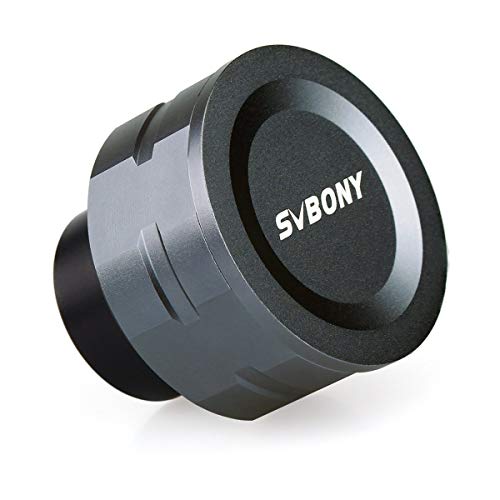
The SV105 is positioned as an entry-level option that makes planetary and lunar imaging approachable. Built around a 1.25″ IMX307 color sensor, it is well suited for beginners who want to see real-time results without a steep setup. The camera is designed for plug-and-play operation, and many users can capture video directly to a laptop or PC. For software, it supports Windows with Sharpcap Capture, Linux with AstroDMx Capture, and Android USB Camera compatibility, enabling flexible field testing and quick reviews.
While not a high-end specialized imager, SV105 provides solid image quality for learning the craft. Its compact form fits many standard 1.25-inch focusers, making it a practical first step into planetary and lunar imaging. The combination of ease of use and broad software compatibility makes it a good choice for hobbyists who want to experiment with live viewing and simple recording on a budget, while still achieving meaningful planetary detail.
SVBONY SV305C Astrophotography Camera

The SV305C sits as a color entry-level camera with solid performance for planetary and lunar images, and it is especially suitable for EAA scenarios. Powered by the IMX662 sensor on a 1.25″ interface, it benefits from a back-illuminated design and a 2.9 μm pixel size that helps manage brightness and exposure effectively. Its low readout noise and improved red spectral response contribute to clearer, more natural-looking planetary images, making it a practical option for enthusiasts exploring more advanced imaging without jumping to a cooled or mono setup.
Designed to be easy to integrate with existing equipment, SV305C fits into standard focusers and provides reliable color data that many observers find immediately informative. The camera’s balance of sensitivity, noise performance, and straightforward operation makes it a sensible step up from basic USB webcams while maintaining accessibility for those expanding their planetary imaging skills.
SVBONY SC432M Monochrome Cooled Camera

The SC432M is a monochrome, cooled option built for high-speed planetary imaging. It uses a global shutter and 9 μm pixels, enabling clean captures of fast-moving targets such as the Moon’s edge or planetary rotate frames with reduced rolling shutter artifacts. With a 1.1″ frame footprint and high sensitivity, the camera offers a favorable balance of resolution and light collection in a compact package, making it a strong choice for users who want to push toward more demanding monochrome workflows.
Cooling minimizes thermal noise during longer sessions, which helps maximize detail when stacking and processing. The global shutter enhances accuracy for rapid sequences, while the USB 3.0 interface supports quick transfers to a computer for live viewing and efficient post-processing. This camera is well-suited for experienced observers who want to optimize image quality in variable observing conditions.
FIBONAX 1080P Telescope Camera

The FIBONAX 1080P camera offers a budget-friendly color option with 2MP resolution at 1080P and 30fps, making it a practical entry point for beginners interested in planetary video. A removable infrared-cut filter helps improve contrast for brighter targets and reduces stray light pollution, supporting crisper Jupiter bands and clearer Moon images during quick sessions. Its lightweight 110g aluminum body aids telescope balance, which is beneficial for beginner mounts and portable field setups.
Designed for plug-and-play use with standard 1.25-inch adapters, the FIBONAX model is accessible to new observers who want rapid results without complex assembly. While not competing with high-end cooled or mono cameras, it delivers solid, straightforward imaging that supports learning, practice, and exploration of basic planetary videography on a range of beginner-friendly telescopes.
Buying Guide
- Sensor type and color vs monochrome: Color cameras (like SC715C, SV105, SV305C, FIBONAX) provide immediate color previews; monochrome options (SC432M) offer higher sensitivity and control for narrowband or high-contrast imaging when paired with filters.
- Pixel size and sensor footprint: Larger pixels (e.g., 9 μm in SC432M) collect more light per frame, aiding performance in dim conditions, but color cameras with smaller pixels may require longer exposures or stacking for peak detail.
- Frame rate and exposure strategy: High frame rates (up to 120 fps on SC432M) help capture fleeting moments and optimize stacking of sharp frames; balance with exposure length to avoid saturation on bright targets.
- Cooling vs no cooling: Cooled cameras reduce thermal noise during longer sessions, improving faint detail; uncooled models are more affordable and lightweight but may exhibit more noise in extended runs.
- Interface and software compatibility: USB 3.0 is common and fast; drivers vary by model, but many options support plug-and-play with popular software like Sharpcap, AstroDMx Capture, or others across Windows, Linux, and Android.
- Optical compatibility and adapters: Check your telescope’s focuser size (1.25″ vs 1.5″ or larger) and whether you need a Barlow lens to achieve desired magnification for planetary imaging.
- Ease of use for beginners vs performance for advanced users: Entry-level cameras emphasize ease and quick results; advanced models emphasize image quality with features like monochrome output, higher dynamic range, and faster frame rates.
- Portability and field readiness: Lighter cameras reduce telescope balance issues and are easier to use in mobile setups, while more robust models may require stable mounts and additional power considerations.
| Camera | Sensor Type | Pixel Size / Sensor | Best For | Notable Feature |
|---|---|---|---|---|
| SVBONY SC715C | Color | IMX715, 1.45 μm | Planetary imaging | 4K-ready, low noise, 512MB cache |
| SVBONY SV105 | Color | IMX307, 1.25″ | Beginner planetary imaging | Plug-and-play, driver-free |
| SVBONY SV305C | Color | IMX662, 1.25″ | General planetary/EAA | Low readout noise, red sensitivity |
| SVBONY SC432M | Monochrome | IMX432, 9 μm | High-speed planetary imaging | Global shutter, 120 fps, cooled |
| FIBONAX 1080P | Color | 2MP, 1.25″ | Beginner planetary video | 30fps, removable IR-cut filter |