Best Outdoor Security Cameras That Do Not Require a Subscription
Looking for reliable outdoor security cameras that won’t lock you into monthly fees? You’re in the right place. These options emphasize local storage or free storage solutions, long battery life, and solar or wireless setups. They’re best for homeowners who want simple, fee-free monitoring, remote properties, or anyone who prefers privacy-friendly local recording. Below are five strong picks with clear reasons to choose each, plus practical buying guidance and FAQs.
| Product | Best For | Storage | Power |
|---|---|---|---|
| Vivideye Security Cameras Wireless Outdoor 5G & 2.4G | Solar-powered, wire-free setups | 128GB local storage (built-in) | Solar-powered |
| GMK Security Cameras Wireless Outdoor 4 Pack | Budget-friendly multi-camera coverage | Local storage; optional cloud (not required) | Battery-powered |
| realhide 2026 Enhanced 2K UHD | Wide-view, color night vision | Flexible storage options (local SD up to 256GB or cloud) | Battery-powered |
| aosu Security Cameras Outdoor 4 Kit | 4-camera solar setup with tracking | Local storage via aosuBase (32GB) | Solar-powered |
| Naseto 300° Pan Wireless Outdoor | All-around coverage and AI alerts | SD card up to 256GB; lifetime free cloud storage | Battery-powered |
Vivideye Security Cameras Wireless Outdoor 5G & 2.4G

Best for remote, solar-powered setups with local storage. This system offers 128GB of secure local storage and a 4-channel hub, enabling up to three months of loop recordings. It is completely wire-free and powered by an included solar panel, with dual-band Wi-Fi support for stable connections. Data is encrypted and stored locally, reducing reliance on cloud services. This makes it an attractive choice for off-grid locations or homes aiming to minimize ongoing costs. A limitation is the need for sun exposure to maintain power.
GMK Security Cameras Wireless Outdoor 4 Pack

Best for multi-camera coverage with flexible storage options. The 4-pack delivers 2K color video with strong night vision and wide angles, suitable for monitoring multiple entry points. It operates on 2.4GHz Wi-Fi (not 5GHz) and uses battery power for easy placement. It supports local storage and offers optional cloud storage. Choose this if you want a scalable, wire-free system and can manage stand-alone storage rather than ongoing service fees. A potential limitation is the lack of 5GHz Wi‑Fi compatibility, which may affect range in some locations.
realhide 2026 Enhanced 2K UHD Security Cameras

Best for high-resolution color night vision with flexible storage. Realhide offers 2K UHD clarity and a built-in spotlight for true color night vision, enabling better detail in low light. It supports both local SD storage (up to 256GB) and cloud storage, allowing users to choose their preferred backup method. This makes it suitable for those who want high-quality visuals and the option to rely on cloud backups if desired. A caution: cloud storage availability may vary by plan and region, so verify options if you expect cloud use.
aosu Security Cameras Outdoor 4 Kit

Best for a complete solar-powered, four-camera setup with auto-tracking. The aosuBase local storage provides 32GB and encrypted recordings, with solar power that aims for continuous operation. It emphasizes cross-camera tracking and simultaneous multi-area viewing, which helps when monitoring larger areas. Best for properties where sun exposure is reliable. A potential limitation is the reliance on solar power; prolonged cloudy periods could affect performance if storage or network connectivity is challenged.
Naseto 300° Pan Wireless Outdoor
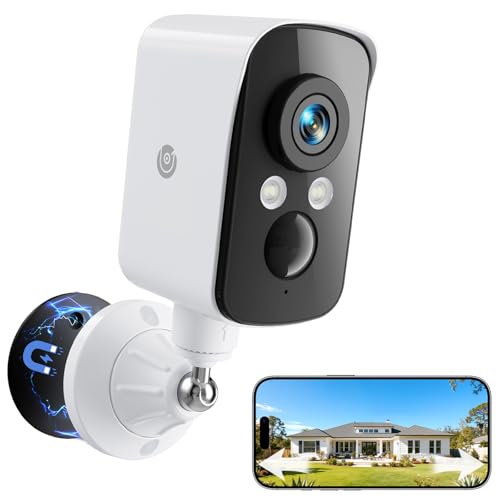
Best for all-around coverage and AI-enabled alerts. Naseto provides a 300° pan capability with 2K resolution and 2-way talk, along with lifetime free cloud storage for seven days and local storage via SD card up to 256GB. This makes it a strong option for owners who want broad coverage and a no-subscription cloud option. Limitations include the trade-off of shorter rolling cloud storage unless using local storage for longer retention.
Buying Guide
What should I prioritize for subscription-free setups?
Focus on local storage capacity, battery life, and whether the camera is solar-powered or battery-powered. Local storage reduces ongoing costs, while solar power supports longer, uninterrupted operation in sunlit areas. Consider the type of Wi-Fi supported (2.4GHz vs 5GHz) and the number of cameras you plan to deploy.
How important is video quality and night vision?
Look for at least 2K or 4MP resolution for clearer facial and detail recognition. Color night vision improves visibility in low light. Check field of view and pan/tilt capabilities to ensure coverage in your layout.
What storage options should I expect?
Many systems offer local storage (SD card or built-in memory) with optional cloud storage. Local storage is cheaper over time, but cloud storage can provide easier access from anywhere. Verify how recordings are protected and how long data remains accessible without a plan.
Are solar-powered cameras reliable year-round?
Solar reliability depends on daily sun exposure. Panels should receive adequate light for consistent operation. If your site experiences long overcast periods, consider models with larger panels or a backup power option.
What about installation and compatibility?
Choose camera sets that are easy to install, wire-free, and compatible with your home network (prefer 2.4GHz if 5GHz is limited in your area). Check mounting options, weather resistance (IP rating), and whether the system supports multi-camera control from a single app.
How do I compare total costs?
Editorially compare upfront hardware costs, local storage capacity, solar vs. battery power, and any optional cloud storage. Subscription-free is the keyword, but confirm any trial periods or regional limitations on cloud features.
FAQ
- Do these cameras truly require no subscription? Yes. Each model emphasizes local storage or a free cloud option, with no mandatory ongoing monthly fees.
- Can I add more cameras later? In most cases, yes. Look for systems marketed as multi-camera kits or expandable ecosystems.
- Is solar power enough during winter? Solar power can be limited in short days; verify panel wattage and battery capacity for your climate, and consider a backup option if needed.
- What storage is best for long-term footage? Local SD cards or built-in memory are cost-effective for long-term retention; cloud storage provides easier remote access but may involve fees if not included.
- Will these work without a strong internet connection? Local storage still records events, but access and live viewing may be limited if the Wi-Fi signal is poor.
- Do these cameras support voice assistants? Several models offer Alexa compatibility for live feed viewing and control through voice commands where supported.