Best Outdoor Motion Activated WiFi Camera for Home Security and Wildlife Monitoring
Outdoor motion-activated WiFi cameras blend surveillance with wildlife observation, offering cordless convenience, either via solar power or cellular data. This article highlights five top options designed for rugged outdoor use, with varying connectivity and night-vision capabilities. Each model is evaluated on setup simplicity, battery or power options, motion detection, and field of view to help you choose the right fit for your backyard, property perimeter, or wildlife monitoring needs.
| Product | Brand | Key Feature | Connectivity | Power |
|---|---|---|---|---|
| MAXDONE Solar Trail Camera WiFi Bluetooth – 4K 64MP | MAXDONE | 4K video, 64MP photos, solar-Charged | Independent hotspot (not home Wi‑Fi) | 6000mAh battery |
| MRSCRET 4K 60MP WiFi Trail Camera | MRSCRET | 4K/60MP, colour LCD preview | Wi‑Fi via app (not home Wi‑Fi) | Battery-powered |
| Vimtag Security Camera Outdoor 2.5K | VIMTAG | 2.5K live stream, color night vision | 2.4/5GHz Wi‑Fi | Powered by external supply or battery |
| Mysight 4G LTE Cellular Trail Camera | Mysight | 2K video, 360° view with SIM | 4G LTE cellular | Solar + battery |
| MAXDONE Solar Trail Camera 5200mAh | MAXDONE | Strong battery, solar charging, 64MP | hotspot only (not home Wi‑Fi) | 5200mAh |
MAXDONE Solar Trail Camera WiFi Bluetooth
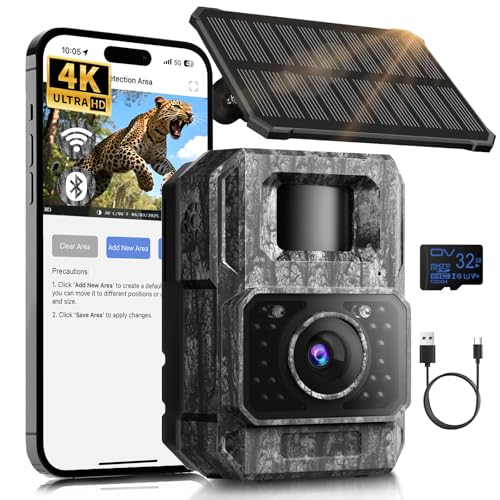
The MAXDONE model is designed for outdoor use with a self-contained WiFi hotspot for setup and file transfer. It is not a household Wi-Fi camera and does not connect to home networks. The device relies on a 6000mAh rechargeable battery and supports multiple charging modes, including solar and Type-C, enabling long-term operation without frequent battery changes. A notable benefit is its autonomous operation for monitoring wildlife or a backyard, even when a connection to the internet is unavailable. The camera’s solar panel design improves charging efficiency by adjusting for sun angle, terrain, and seasonal changes.
Key features include 4K video capture and 64MP photo resolution, with IP66 weather resistance for outdoor durability. The setup range for hotspot connections is approximately 10–15 meters in open spaces, and storage is local, without ongoing subscription fees. This model suits remote locations where cellular coverage is impractical and continuous local recording is preferred.
MRSCRET 4K 60MP WiFi Trail Camera

The MRSCRET trail camera combines high-resolution 4K video and 60MP stills with a built-in 2.0-inch color LCD for real-time preview. It includes a 32 GB SD card and provides night vision powered by three infrared sensor sets, delivering clear black-and-white images after dark. The device can send pictures to a paired mobile device via the Trailcam Go app, enabling remote viewing and downloading. Note that this camera requires a local hotspot or independent network for remote use, and it does not connect to a home Wi‑Fi network.
With a rugged waterproof build, this model is designed for outdoor wildlife detection and security monitoring. The combination of high-resolution daytime imagery and reliable night vision makes it suitable for monitoring trails, yards, and larger outdoor areas where a traditional indoor camera would not suffice.
Vimtag Security Camera Outdoor 2.5K

The Vimtag outdoor camera offers 2.5K live streaming and color night vision, delivering clearer daytime footage and more vibrant nighttime images. It supports dual-band WiFi (2.4 GHz and 5 GHz) for more stable connectivity and is rated IP66 for weather resistance. The camera provides instant motion and sound alerts with an adjustable sensitivity setting, and it includes two-way audio for real-time communication. A built-in spotlight and siren enhance deterrence and alert capabilities, making it suitable for front yards, driveways, and backyards where a visible security presence is desirable.
Mysight 4G LTE Cellular Trail Camera

The Mysight 4G LTE cellular trail camera uses a built-in SIM card to operate without home Wi‑Fi, enabling remote monitoring in areas with cellular coverage. It supports 2K HD video and up to 50-foot night vision, with 355° horizontal and 110° vertical full pan-and-tilt to reduce blind spots. The solar charging option plus a battery helps ensure continuous operation. Smart PIR detection and two-way talk functionality are included to minimize false alarms and facilitate interaction with wildlife or guests from the app. This model is well-suited for hunting, wildlife observation, and remote security where internet access is intermittent.
MAXDONE Solar Trail Camera 5200mAh
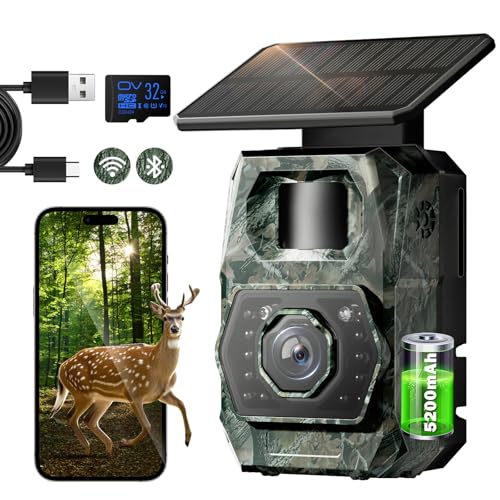
This MAXDONE model emphasizes a large 5200mAh rechargeable battery paired with solar charging, enabling long-term field deployment with minimal maintenance. It uses a hotspot for setup and file transfer in close proximity, and it does not connect to home Wi‑Fi. The camera captures clear 64MP photos and 4K videos, delivering robust detail for wildlife monitoring or perimeter surveillance. The solar-assisted charging design supports year-round operation in varied outdoor conditions, making it suitable for remote properties, cabins, or large estates where battery swaps are inconvenient.
Buying Guide: Key Considerations And Comparisons
- Connectivity and remote access: Decide between cameras with home Wi‑Fi compatibility, cellular (4G/5G) options, or standalone hotspot setups. If you need remote viewing without internet in the field, hotspot-enabled models are preferable.
- Power and running cost: Solar charging reduces maintenance, but panel positioning matters. Battery capacity (mAh) and optional Type-C charging influence uptime and replacement frequency.
- Image quality and night vision: For wildlife, 4K video or 64MP photos yield higher detail. Color night vision requires adequate lighting or built-in spotlights; black-and-white night vision is common in infrared-only models.
- Field of view and motion detection: Wide angles (360° or 355° pans) reduce blind spots but may require more power. Adjustable detection sensitivity helps reduce false alarms from wind or foliage.
- Durability and weather rating: IP66 or higher indicates good protection against rain, dust, and temperature changes. Metal housings often withstand harsher environments than plastic.
- Local vs cloud storage: Local microSD support is common; cloud plans may require subscriptions. Consider storage size and ease of access when choosing.
- Ease of setup: Models offering simple app-based setup with clear prompts and quick pairing reduce installation time. Verify whether the app supports your device ecosystem (iOS/Android).
- Privacy and data handling: Some cameras transfer data via local hotspots or private networks, avoiding third-party servers. Review data flow and privacy settings when privacy is a priority.