Best on-Camera Light Meters for Photographers: Precise Exposure Tools
Choosing the right on-camera light meter helps photographers achieve consistent exposure across scenes, film stocks, and digital sensors. The five models below span compact pocket meters to pro-grade units, including vintage-camera friendly options and modern digital readouts. Each entry highlights key strengths to help you compare performance at a glance.
| Product | Brand | Key Strength |
|---|---|---|
| Sekonic LiteMaster Pro L-478D-U | Sekonic | Ambient and flash metering with multi-mode display |
| Sekonic Twin Mate Light Meter | Sekonic | On-camera shoe mount, quick aperture/shutter readings |
| CHI L.D. Light Meter Lite | CHI | Integrated laser rangefinder for distance and exposure |
| LightMate Lite 2R | LightNova | High-contrast OLED, long battery life |
| Dr.meter LX1330B Digital Illuminance Meter | Dr.meter | FC/LUX toggle; fast 2 readings per second |
Sekonic LiteMaster Pro L-478D-U Light Meter

The Sekonic LiteMaster Pro L-478D-U is a professional-grade light meter designed for photographers who require precise exposure across ambient and flash lighting. Its large color LCD, intuitive touch controls, and fast response support a wide range of workflows from portraits to cinema. The meter reads ambient and flash simultaneously and can display the percentage of flash in the total exposure, helping you dial in exact lighting ratios without guesswork.
Designed for versatility, this model offers multiple modes and two motion-capture options to adapt to dynamic scenes. It supports easy shutter-speed and frame-rate adjustments for both still photography and video work, making it a staple in studios and field shoots alike. Its compact form stays near the camera, and the build is rugged enough for daily use. For professionals who rely on repeatable exposure and accurate flash control, the LiteMaster Pro delivers dependable performance.
Sekonic Twin Mate Light Meter
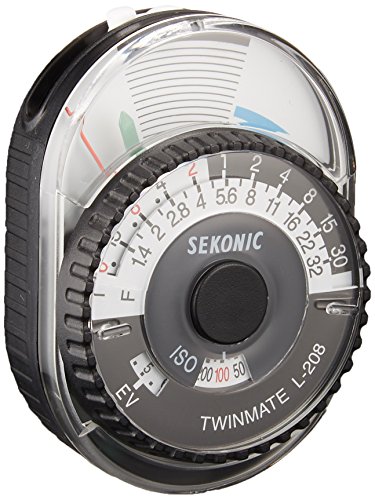
The Sekonic 401-208 Twin Mate is a compact, portable light meter built for fast, on-camera exposure decisions. Its two-dial design provides instant readings of aperture and shutter combinations with a simple dial ring, enabling quick adjustments on location or in the studio. The device mounts on the camera shoe for hands-free operation and can be used with one hand, freeing the other for adjusting reflectors or controlling a tripod.
With its on-camera convenience and a focus on rapid, reliable measurements, the Twin Mate excels in settings where light changes quickly—events, fashion shoots, or street photography. It handles both ambient and flash exposure with ease, helping you balance mixed lighting without guesswork. A practical choice for photographers who value speed and portability without sacrificing accuracy.
CHI L.D. Light Meter Lite

The CHI L.D. Light Meter Lite combines precise metering with a built-in laser distance measure, making it a compelling option for film photography and Leica enthusiasts. It provides fast, accurate exposure calculations and distance readouts with a single tap, helping photographers frame scenes quickly. The Lite version also offers 30-degree wide-angle metering, expanding versatility for varied compositions and ensuring more reliable exposure across uneven lighting.
With a pocket-friendly footprint and an all-in-one approach, this meter suits shooters who want distance and exposure data in one device. The integrated laser rangefinder remains useful for precise focus in low-light environments, while the meter’s exposure readouts support quick decisions in studios or on location.
LightMate Lite 2R Light Meter

The LightMate Lite 2R is a compact, high-precision light meter with a 0.96-inch OLED screen for clear readings. It features long battery life, a built-in rechargeable battery with USB-C charging, and adjustable screen brightness for visibility in bright sun or dim studio environments. The meter supports multiple exposure modes, including aperture-priority and shutter-priority, plus modes like automatic trigger metering and average metering. A 30-degree metering lens covers most shooting scenarios, while features like ND compensation and screen flip aid usability in tight spaces.
Designed for film and digital shooters alike, this meter emphasizes portability and ease of use without sacrificing essential metering functions. Its rechargeable power and readable display make it suitable for fieldwork where battery service and quick decisions matter most.
Dr.meter LX1330B Digital Illuminance Meter

The Dr.meter LX1330B is a versatile illuminance meter that covers a wide 0-200,000 Lux range, making it suitable for both indoor and outdoor lighting assessments. It delivers fast readings, typically two measurements per second, enabling quick comparisons between different lighting setups. The unit offers FC to Lux conversion, giving users flexibility in preferred measurement units. A Peak data recording feature captures the highest light pulse value—useful for evaluating sudden brightness spikes such as flash or laser exposure.
While often used for horticulture and architectural lighting, the LX1330B remains a practical option for photographers who require a straightforward, responsive lux meter with simple conversions and peak tracking for challenging lighting conditions.
Buying Guide
When selecting an on-camera light meter, consider how you shoot and what you need to measure. Different models excel in distinct contexts, from fast-run-and-gun street work to controlled studio setups and vintage-camera projects. Below are key considerations to help you decide which meter best fits your workflow.
- Exposure focus: Decide whether you need ambient-only metering, flash and ambient combined metering, or distance-enabled metering. For portrait and event work, meters that measure both ambient and flash are especially valuable.
- Units and calibration: Choose between Lux and Foot-Cc (Fc) scales, and consider easy FC/LUX conversions if you work with both film and digital formats. Look for meters with calibration options and a clear display of exposure readings.
- Metering modes and readouts: Evaluate whether you need simple single-shot readings, continuous or auto modes, and different metering angles (e.g., 30° or 60°). A wide-angle metering readout helps in scenes with uneven lighting.
- Portability and durability: For on-location work, compact size, light weight, and robust construction matter. Battery life and rechargeable options (USB-C) are additional practical considerations for long shoots.
- Display and usability: A bright, high-contrast display, intuitive controls, and accessible menus shorten setup time on busy shoots. Touch controls or dial-based interfaces suit different user preferences.
- Compatibility with equipment: If you rely on flash, check TTL compatibility or dedicated flash metering modes. For vintage cameras or cine setups, ensure the meter supports the specific exposure workflows you use.
- Maintenance and service: Consider how easy it is to calibrate, replace batteries, or service the meter. Durable units with simple interfaces reduce downtime during shoots.
- Budget and value: Balance features and accuracy against price. For many users, a mid-range meter with strong core metering performance provides the best value before moving to higher-end pro models.
In practical terms, choose a meter that aligns with your typical shooting conditions. If you often work with flash-heavy setups, prioritize a model with ambient-plus-flash metering and a clear readout. If you shoot on vintage cameras or film stock, a compact meter with reliable readings and a robust build can be more valuable than a feature-rich, but heavier, option. For videographers, a meter with a quick response, stable LCD, and ease of integration with fast-changing lighting is essential. Finally, confirm the model’s battery life and charging options to ensure it remains ready on longer shoots.