Best Night Time Cameras for Wildlife: Top Trail Cams for Night Observation
Discover reliable night-time wildlife monitoring with trail cameras designed for stealth, clarity, and long battery life. This guide highlights five top picks that deliver sharp night images, quick triggers, and durable builds for outdoor use. Each option excels in low-light performance to help observers capture nocturnal behavior without disturbing animals.
| Product | Brand | Key Features | Night Vision Range |
|---|---|---|---|
| KJK Trail Camera | KJK | 36MP Photos, 2.7K Video, 0.1s trigger, 130° wide view | Up to 75 ft |
| GardePro A3S Trail Camera | GardePro | 64MP Photos, 1296P Video, Starvis sensor | Up to 100 ft |
| MAXDONE Solar WiFi Trail Camera | MAXDONE | 4K/64MP, solar power, WiFi/Bluetooth, rechargeable | 65 ft |
| MAXDONE Solar Trail Camera WiFi Bluetooth | MAXDONE | 4K/64MP, solar, advanced charging, IP66 | Up to 50 ft |
| Zivolixd 4K 84MP WiFi Trail Camera | Zivolixd | 84MP photo, 4K video, 130° wide, mobile WiFi | Not specified |
KJK Trail Camera 36MP 2.7K Night Vision

- Ultra-clear Photos and Videos: 36MP stills and 2.7K video with a 2.0” HD TFT screen.
- Low Glow Night Vision: 22 LEDs with 850nm infrared for up to 75 ft night range.
- Fast Trigger: 0.1s trigger speed with a 130° wide angle.
- Uses adaptive illumination to avoid overexposure in darkness.
The KJK trail camera combines high-resolution daytime imagery with discreet nighttime capture. Its compact display helps preview captures on-site, while the low-glow LEDs minimize disturbance to wildlife. The broad detection angle ensures comprehensive field coverage for monitoring animals at night or during dusk and dawn hours.
GardePro A3S Trail Camera
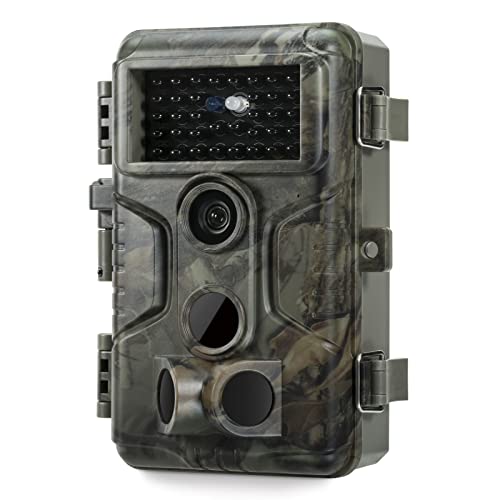
- 64MP Photos & 1296P HD Videos for ultra-sharp footage.
- Starvis sensor enhances low-light performance with long-range night vision to 100 ft.
- Non-cellular, non-WiFi operation reduces power use and disturbance.
- Efficient battery life for extended field sessions; simple SD card retrieval reveals captured moments.
The A3S emphasizes high-resolution daytime imagery paired with robust night performance. Its Starvis sensor yields clearer nighttime shots, making it suitable for long-term wildlife observation without frequent battery changes or network distractions.
MAXDONE Solar WiFi Trail Camera
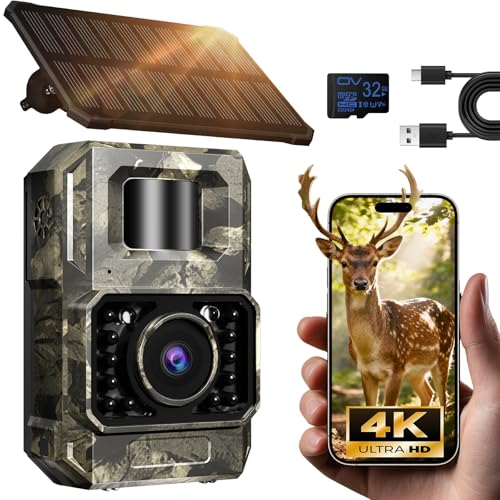
- Ultra-Low Power WiFi and Bluetooth with TrailCam GO app for preview and transfer.
- Rechargeable solar power with a detachable solar panel; eco-friendly design.
- Low-Glow night vision up to 65 ft with adaptive lighting.
- Local data processing; no cloud dependency and no home Wi-Fi required.
This MAXDONE model blends solar charging with wireless control, enabling longer field use and on-site data management. Its 65-foot night vision and adaptive lighting help capture clear nocturnal activity in remote areas without internet connectivity.
MAXDONE Solar Trail Camera WiFi Bluetooth
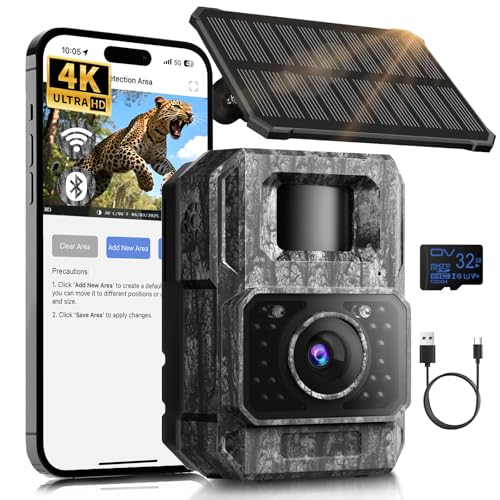
- 4K 64MP imaging with a split solar panel design for efficient charging.
- Rechargeable 6000mAh battery supports battery power, solar charging, and Type-C charging.
- IP66-rated weather resistance suits harsh outdoor environments.
- Night vision up to 65 ft and 355° pan/110° tilt views for broad coverage.
Designed for extended field durability, this MAXDONE model emphasizes independent operation and flexible mounting. The long-lasting solar setup and wide coverage help wildlife researchers monitor expansive habitats with fewer field visits.
Zivolixd 4K 84MP WiFi Trail Camera

- 84MP photos and 4K video deliver exceptional detail day or night.
- Built-in WiFi for quick access and sharing; 130° wide-angle lens.
- Night vision with motion activation; IP-rated waterproof design.
- Suitable for outdoor wildlife detection and documentation.
The Zivolixd model emphasizes maximum image fidelity and convenient wireless access. With an ultra-wide field of view and high-resolution capture, it supports thorough nocturnal surveys while keeping setup and data transfer straightforward in remote locations.
Buying Guide
- Image quality and نورnight performance: Compare megapixel counts and video resolutions (4K vs 2.7K/1296P). Look for cameras with low-glow infrared LEDs to reduce disturbance and extend battery life.
- Trigger speed and detection: A sub-0.2 second trigger helps capture quick wildlife movements. A wide detection angle (120–130° or more) increases the chance of catching passing animals.
- Power source and endurance: Solar charging, rechargeable batteries, and energy-efficient sensors extend field time. Consider whether the camera supports external power or power banks for extended trips.
- Connectivity: WiFi or cellular options enable remote viewing and alerts. For remote locations, non-WiFi options reduce disturbance and dependency on cellular networks.
- Durability and weather sealing: IP66/IP67 ratings and rugged housings ensure operation in rain, dust, and cold temperatures. Verify field-replaceable components for longevity.
- Storage and usability: Large capacity SD cards and easy on-device previews help with quick data collection. Built-in LCD screens can aid setup in the field.
- Privacy and data handling: If using WiFi or cellular, review data transfer methods and any cloud storage policies. Local-only operation reduces exposure.
- Cost of ownership: Consider total cost including batteries, solar panels, memory cards, and potential maintenance across seasons.